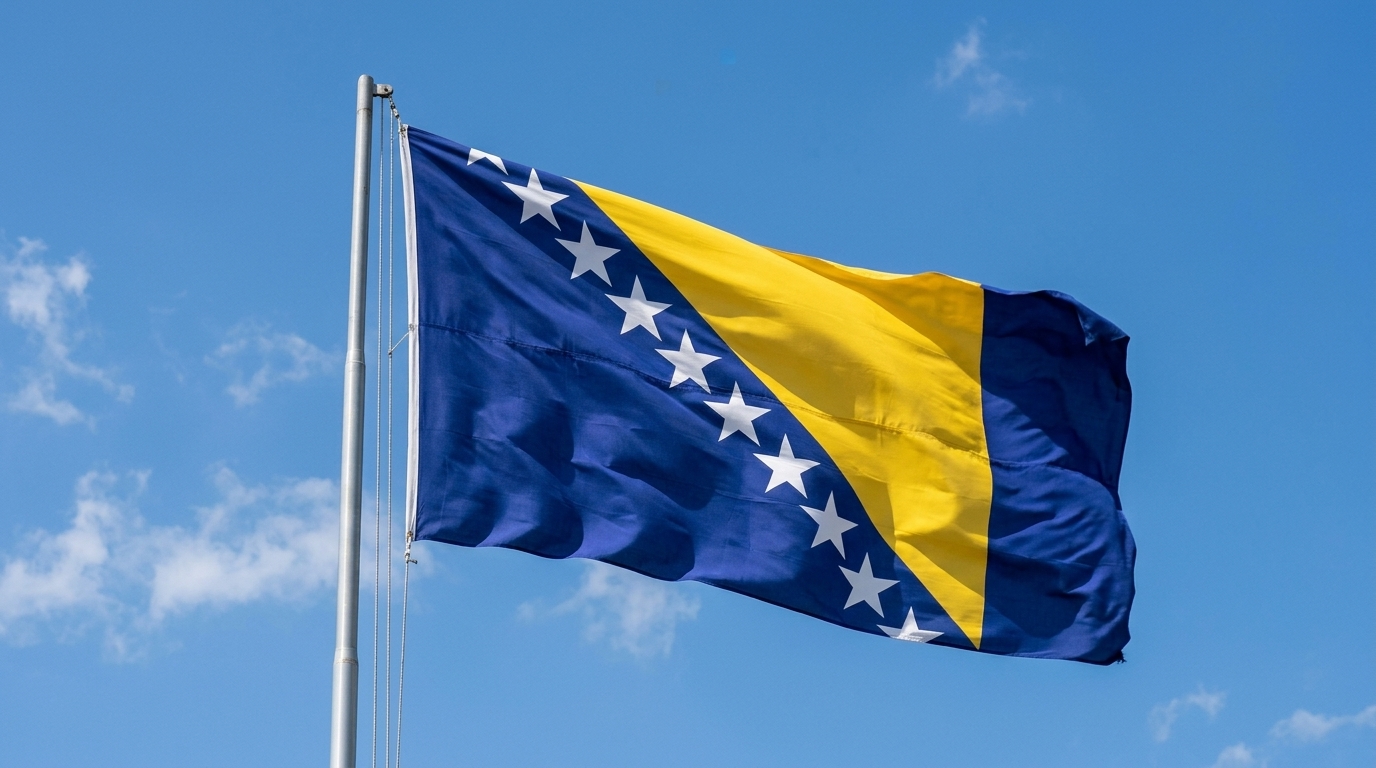
With Bosnia and Herzegovina’s general elections less than three weeks away, the 2026 election campaign has entered an increasingly important stage, with national identity, political confrontation and social media playing prominent roles in messages reaching voters. Analysts cited in recent local reporting say many political actors have continued to emphasize familiar national and identity based themes, while detailed explanations of how proposed economic and social policies would be implemented have received less attention.
The official campaign began on September 4 and will continue until October 3 at 7 a.m., when the election silence period begins. Voters will go to the polls on October 4 to elect members of the state Presidency and Parliamentary Assembly, as well as representatives to the Federation of Bosnia and Herzegovina and Republika Srpska institutions. The Central Election Commission has registered more than 3.4 million voters for this year’s election.
Communication specialist Mladen Bubonjić, speaking about the first part of the campaign, said political parties have presented various program goals but have not always provided voters with detailed explanations of how those promises would be carried out. The distinction is important in a campaign where economic issues such as wages, employment, living costs and public services are among the concerns facing households across the country.
Instead, much of the political communication has continued to revolve around questions of national identity and competing political narratives. Bosnia and Herzegovina’s political system is structured around three constituent peoples, Bosniaks, Croats and Serbs, and disputes concerning the country’s institutions, the relationship between the state and its entities, and the country’s political future have long been central to election campaigns.
Bosnia and Herzegovina Election Campaign Focuses on Identity and Policy
Recent academic research into Bosnia and Herzegovina’s previous election campaigns provides additional context for the current discussion. A 2026 study examining the 2022 general election found that emotionally charged political communication frequently drew on themes such as fear, resentment, pride and perceptions of political or national dignity. The research concluded that these forms of communication could displace discussion of policy issues and reinforce divisions between political communities.
The campaign is also taking place in a media environment that looks different from previous election cycles. Large rallies and traditional political gatherings remain part of the campaign, but individual candidates and parties are making much greater use of social networks to communicate directly with voters. Semir Hambo, editor of Klix, told local media that social media activity has become particularly prominent, with individual candidates increasingly using their own online channels.
The growing role of digital platforms has also created new challenges for election coverage and political communication. The organization Zašto ne has warned about the possibility of misleading and manipulative narratives spreading online during the 2026 campaign, particularly around the European Union and Bosnia and Herzegovina’s EU accession process. The group says it is monitoring how established narratives are being used during the campaign and whether certain patterns become more pronounced as election day approaches.
Election related online communication has been an area of monitoring in Bosnia and Herzegovina for several years. Zašto ne previously examined the use of Facebook, Instagram, YouTube, X and TikTok during the 2024 local elections, looking at political content, media activity and the responses of major online platforms. Its work highlights how social media has become an increasingly important part of the country’s electoral environment.
The Central Election Commission has also placed particular emphasis on the tone of political communication. At the beginning of the official campaign, the commission reminded political parties, candidates, supporters and media organizations of the legal restrictions concerning hate speech. It called on political actors to conduct their campaigns peacefully and warned that violations of election rules can result in sanctions, including financial penalties and other measures provided for under election law.
The issue of campaign rhetoric has also attracted attention from international election observers and institutions. During the 2025 early election for president of Republika Srpska, the OSCE assessment found that national identity and questions surrounding the country’s state structure were major campaign themes, while broader social and economic issues received less attention. Although that was a different election, the findings provide some context for analysts who see recurring patterns in political communication in Bosnia and Herzegovina.
Final Weeks Bring Focus on Digital Campaigning and Election Coverage
At the same time, there are efforts to strengthen the quality of election reporting and public information. In early September, the Council of Europe supported training for journalists and media professionals in Bosnia and Herzegovina focused on professional, accurate and balanced election coverage. The training also addressed newer challenges involving artificial intelligence, disinformation, social media and the way algorithms can amplify political information.
As October 4 approaches, analysts cited in the original report expect political rhetoric to become more intense. Political analyst Marko Lucović said the sharper phase of campaigning could emerge close to election day, following patterns seen during previous electoral cycles. Such assessments describe a possible change in the intensity of political messaging rather than a prediction about the election’s outcome.
For voters, the final weeks of the campaign will provide an opportunity to compare the different parties’ and candidates’ stated priorities, policy proposals and explanations of how they intend to implement them. The campaign’s emphasis on national and political questions means that economic and everyday issues will remain an important area for voters to assess alongside the broader constitutional and identity related debates that have shaped politics in Bosnia and Herzegovina.
The 2026 election campaign is therefore entering its final phase with several competing features: familiar national themes, increasingly prominent digital campaigning, continued debate over economic and social priorities, and official warnings about responsible political communication. Whether the final weeks bring a broader emphasis on concrete policy proposals or continue along the same lines will become clearer as October 4 draws closer. The final result will ultimately be determined by voters across Bosnia and Herzegovina when they cast their ballots.