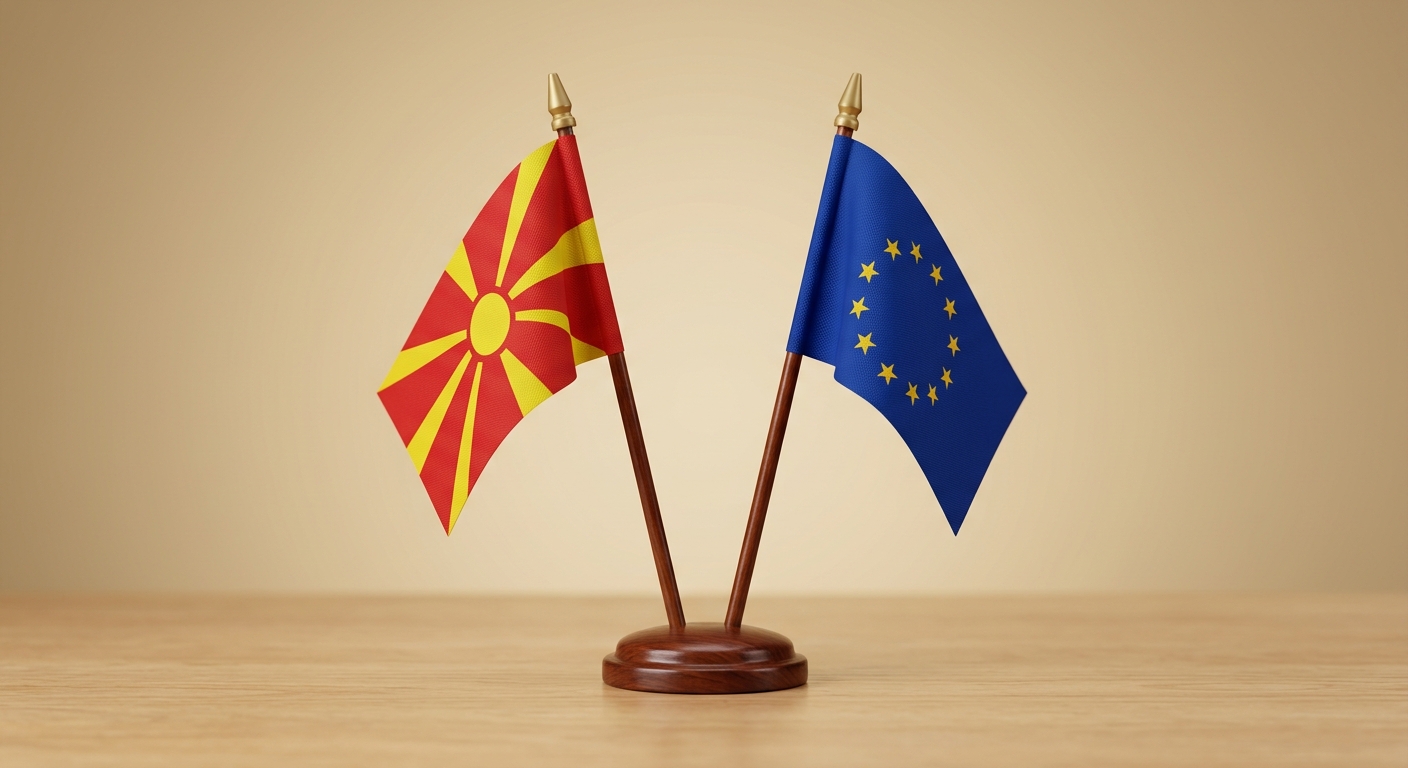
Macedonia is intensifying diplomatic contacts with European Union officials ahead of European Commission President Ursula von der Leyen’s expected visit to the Western Balkans, with the country’s stalled accession process and relations with Bulgaria again at the center of attention. President Gordana Siljanovska Davkova, Prime Minister Hristijan Mickoski and Foreign Minister Timcho Mucunski have all recently emphasized the need for greater European involvement in resolving outstanding issues and creating a clearer path toward EU membership.
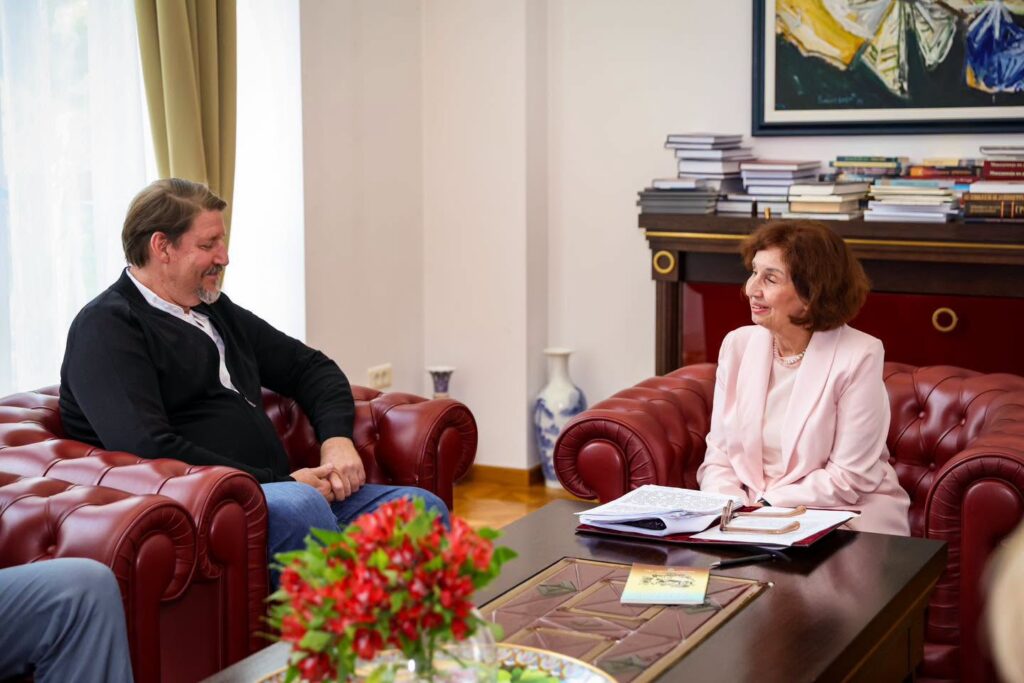
Siljanovska Davkova met European Parliament rapporteur Thomas Waitz in Skopje, accompanied by EU Ambassador Michalis Rokas. Their discussions focused on Macedonia’s European integration, possible ways to unblock the accession process and the future of EU enlargement. The meeting came shortly before the European Commission’s latest assessment of the country and as Skopje seeks greater emphasis on what it describes as a merit based accession process.
Macedonia EU Accession Remains Focused on Bulgaria and Reforms
A central issue in the discussions is the relationship between bilateral disputes and EU enlargement. Siljanovska Davkova has argued that disputes involving history, language and national identity should not become permanent obstacles to the formal accession process. She has also pointed to the EU principle of respecting national identities and the obligation of member states to cooperate in good faith, arguing that enlargement should be protected from what her office considers political blockages.
The issue has particular importance because Macedonia’s accession framework is linked to commitments agreed by the EU in 2022. The EU formally opened the initial phase of accession negotiations with Macedonia in July 2022, following the Council’s decision to open negotiations in 2020. The negotiating framework provides for the fundamentals of the accession process to be addressed first, including rule of law reforms and other opening benchmarks.
One of the most sensitive elements of that framework is the constitutional change concerning the inclusion of citizens belonging to other peoples, including Bulgarians. The European Commission has continued to identify this change as one of the steps Macedonia committed to undertake under the 2022 framework. Its 2025 assessment also called for further progress on judicial independence, the fight against corruption and the functioning of democratic institutions.
The government in Skopje has taken a different emphasis, arguing that progress should come through a predictable process in which both sides build confidence. Mickoski has proposed that the European Union or another international participant be present in future discussions with Bulgaria, particularly when issues concerning minority rights and the accession process are discussed. His position is that greater European involvement could provide additional guarantees and help create conditions for a more predictable dialogue.
Foreign Minister Timcho Mucunski has expressed a similar position, saying that Macedonia wants to advance toward EU membership but does not want to enter a process without a clear understanding of its potential outcome. He has argued that European institutions or EU member states could play a larger role in future contacts between Skopje and Sofia, particularly because trust between the two sides remains limited.
The Bulgarian question has been one of the major obstacles to Macedonia’s movement from the initial stage of accession negotiations toward substantive negotiations. The EU has simultaneously stressed that enlargement remains merit based and that candidate countries must meet the conditions agreed with member states. The European Council has previously called for progress on the outstanding issues between Bulgaria and Macedonia while also emphasizing reforms in areas such as the rule of law, judicial independence, corruption and minority rights.
EU Enlargement Debate Adds New Options for Macedonia
At the same time, the debate is taking place as France and Germany are promoting a new approach to EU enlargement. In June 2026, the two countries proposed additional incentives for candidate countries through a more gradual integration process. Their initiative calls for making the accession system more efficient and allowing faster and deeper integration based on the Copenhagen criteria and progress on reforms.
The proposal does not replace the existing accession process or automatically guarantee membership. Instead, it envisions candidates gaining greater participation in EU policies and programs as they meet specific requirements. The idea is intended to provide tangible benefits during the years before full membership while maintaining the principle that progress depends on individual performance.
Macedonia’s government has expressed interest in this broader discussion about gradual integration. Such an approach could provide additional opportunities for candidate countries to participate more closely in European structures before completing the full accession process. However, the country’s existing obligations under the negotiating framework would remain relevant, including the reform benchmarks and commitments agreed by the EU and Macedonia.
Prime Minister Mickoski has also been using international meetings to discuss the country’s EU perspective. During his recent visit to the United States, he met with EU foreign policy chief Kaja Kallas alongside other Western Balkan leaders. The discussions covered regional challenges, cooperation and common priorities concerning stability and security. The contacts demonstrate that Macedonia is continuing to raise its accession concerns with European officials at several diplomatic levels.
The expected visit by von der Leyen therefore comes at a significant moment for Skopje. European Commission leadership is closely involved in the enlargement process, while the Commission’s country assessments provide detailed evaluations of progress in reforms and the conditions required for advancement. For Macedonia, the visit provides another opportunity to discuss both its European aspirations and the obstacles that have prevented the accession process from moving forward more quickly.
The government is also seeking greater clarity over the EU’s future enlargement policy. Mucunski has pointed to expectations that new European initiatives could provide additional opportunities for Western Balkan countries and other EU candidates. The French-German proposal is one indication that major EU member states are considering ways to make enlargement more dynamic while retaining the principle that reforms and the Copenhagen criteria remain central to accession.
For Skopje, the challenge is therefore taking place on two connected levels. The government wants greater European involvement in the dispute with Bulgaria and a more predictable accession process, while the EU continues to expect Macedonia to implement commitments already included in the negotiating framework. The European Commission has also made clear that progress on domestic reforms remains an important part of the country’s path toward opening the first negotiating cluster.
The coming period could consequently be important for Macedonia’s European agenda. Contacts with EU officials are increasing, the government is advocating a larger role for Brussels in the dialogue with Bulgaria, and France and Germany are promoting ideas for gradual integration that could reshape parts of the enlargement debate. None of these developments by themselves resolves the outstanding accession issues, but together they demonstrate that the country’s EU path remains an active subject of discussion in European capitals.
Ultimately, Macedonia’s progress toward EU membership will depend on a combination of political dialogue, implementation of agreed commitments and domestic reforms. Skopje is seeking stronger European involvement and a process it considers more predictable and merit based, while EU institutions continue to assess both bilateral commitments and reforms inside the country. The expected engagement with von der Leyen will provide another opportunity for those positions to be discussed as Macedonia seeks to move its long running EU accession process into a more active phase.