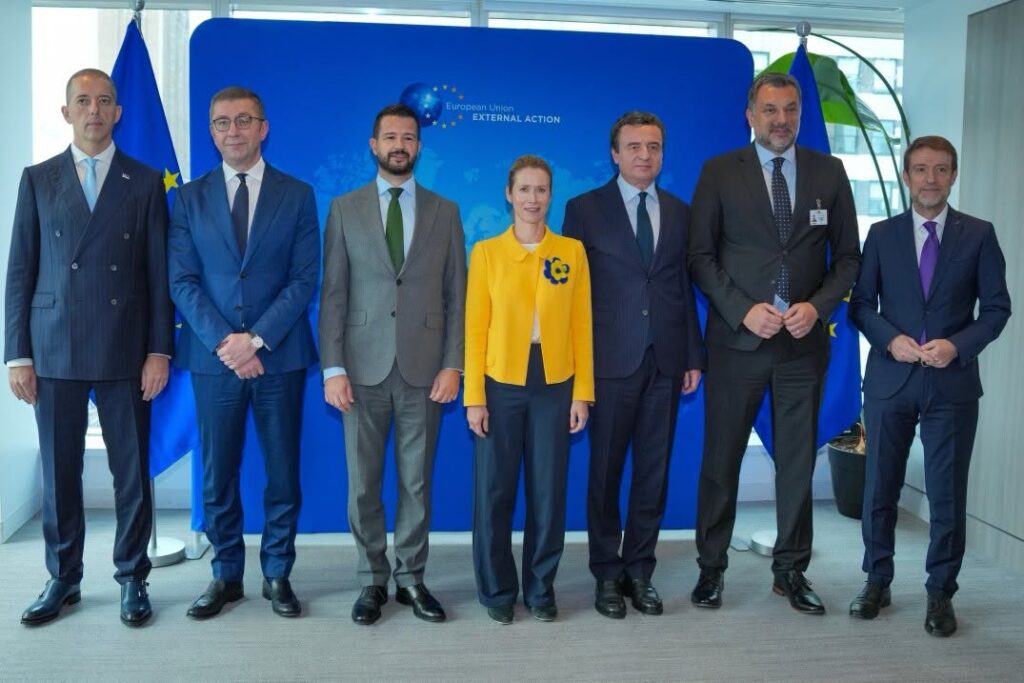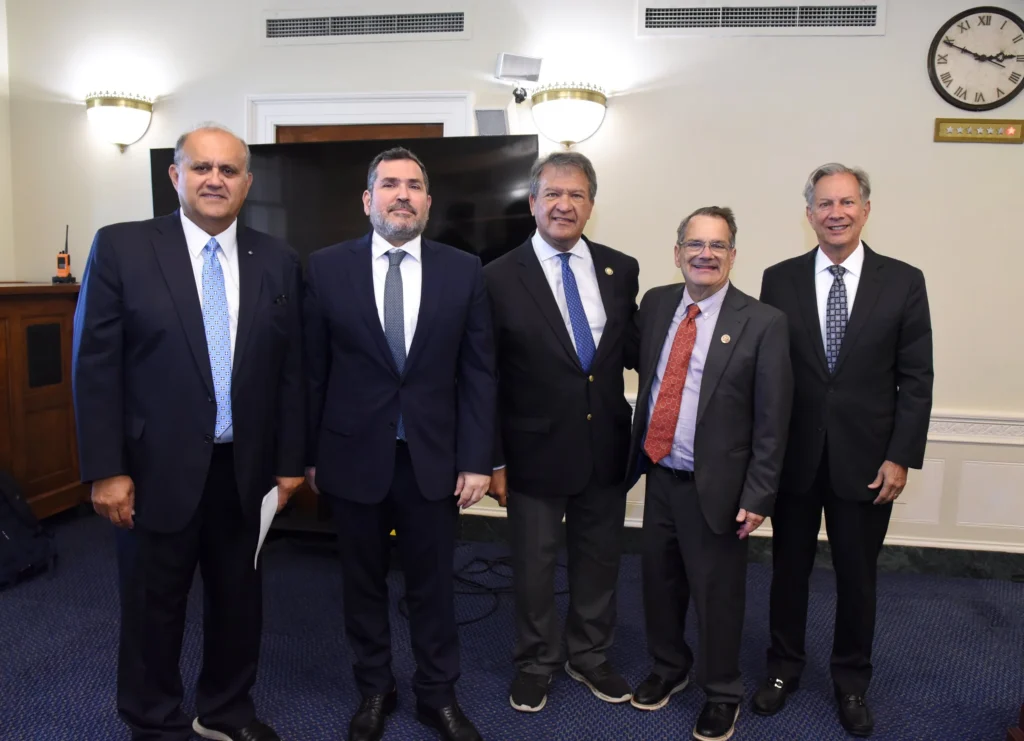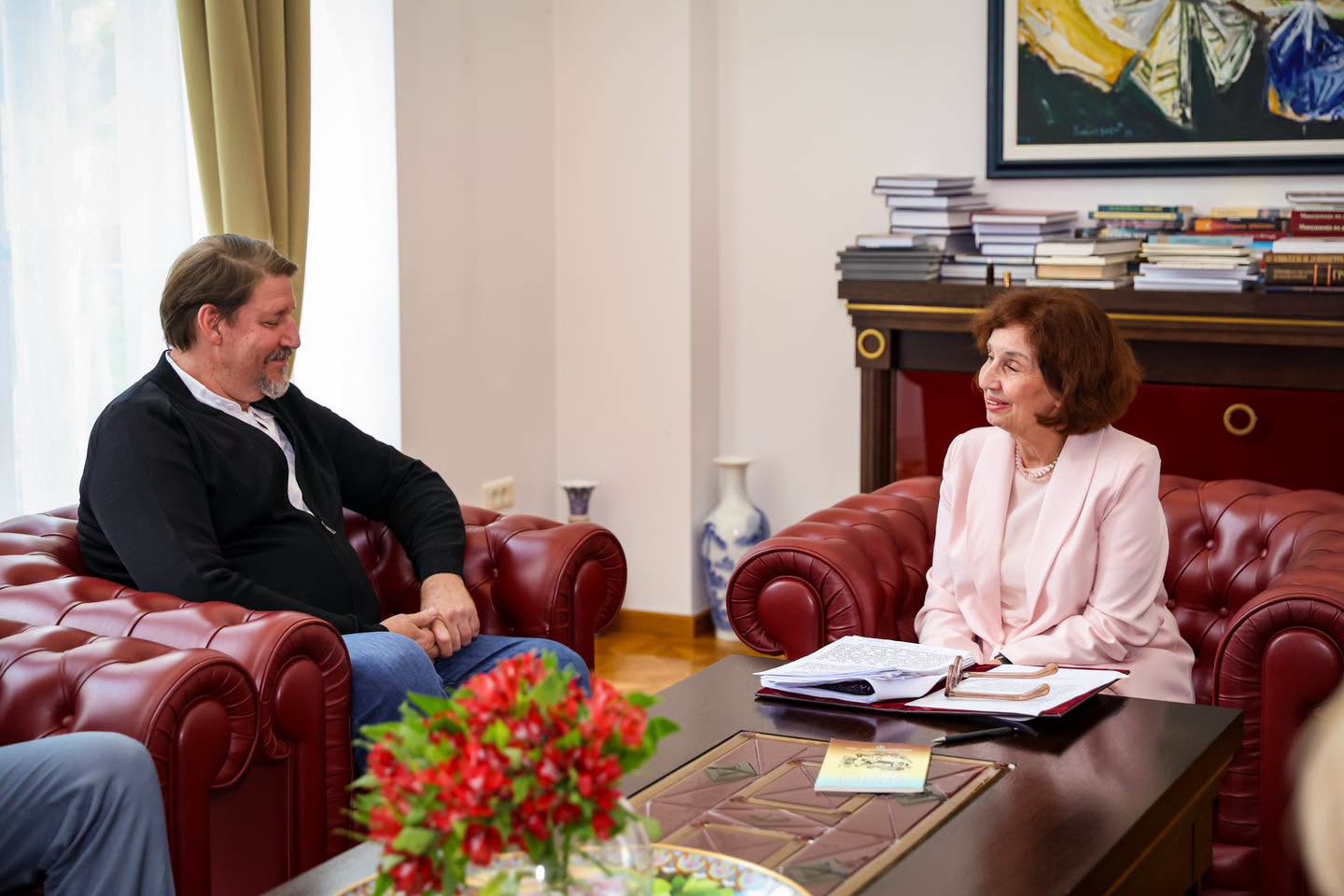
Macedonia’s President Gordana Siljanovska Davkova met with European Parliament rapporteur Thomas Waitz and EU Ambassador to Macedonia Michalis Rokas in New York, with the country’s European integration process at the center of discussions. The meeting focused on the obstacles facing Macedonia’s accession path, the future of EU enlargement and the relationship between bilateral disputes and the formal accession process. The talks come as European institutions continue assessing the country’s reforms and the conditions required for progress toward opening the first negotiating cluster.
Siljanovska Davkova emphasized the position that bilateral disputes should be separated from the formal EU accession process. She also welcomed what her office described as Waitz’s objective approach to the country and his position that bilateral questions should not determine the formal stages of accession. The president argued that greater protection of the merit based principle could help prevent political disagreements between individual countries from affecting the broader enlargement process.
Macedonia’s EU Accession Path Faces Political and Reform Challenges
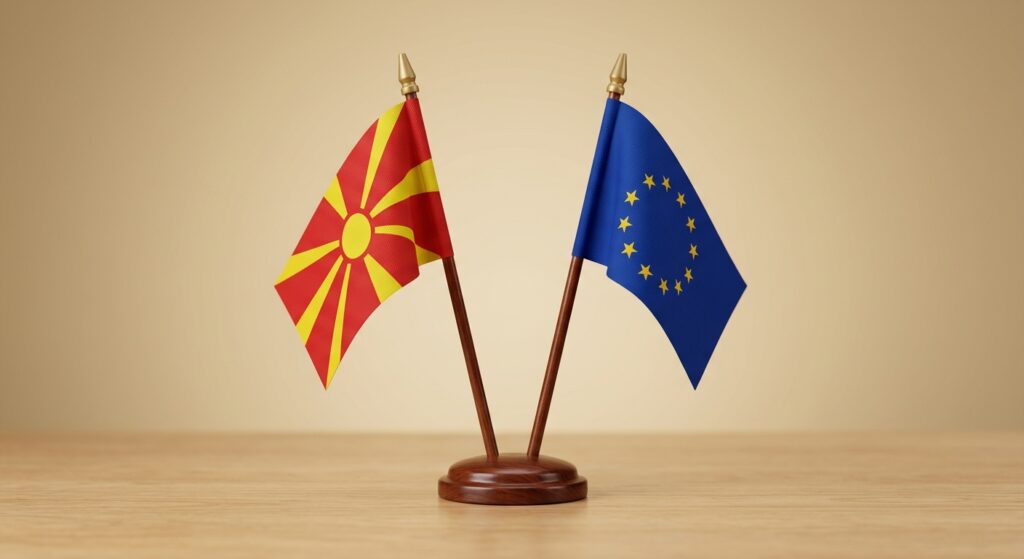
The issue is particularly important for Macedonia because its EU accession process has been shaped by disputes with neighboring countries. The country received EU candidate status in 2005, while EU leaders agreed in March 2020 to open accession negotiations. The first intergovernmental conference was held in July 2022, after which the European Commission began its screening process. That screening process was completed in December 2023.
Macedonia has not yet moved into the substantive opening of negotiating clusters. The European Commission’s 2025 assessment said further action was needed on the opening benchmarks and identified constitutional changes concerning the inclusion of citizens belonging to other peoples, including Bulgarians, as a condition connected to the country’s negotiating framework. The Commission also called for progress in areas including judicial independence, the fight against corruption and the functioning of democratic institutions.
The constitutional issue is closely connected to the relationship between Skopje and Sofia. Under the 2022 EU framework, Macedonia committed to constitutional changes intended to include Bulgarians among the communities recognized in the country’s Constitution. The Macedonian government has questioned the political circumstances surrounding that requirement, while Bulgarian authorities and EU institutions have maintained that implementation of the agreed framework is necessary for further progress.
During the meeting with Waitz, Siljanovska Davkova also referred to provisions of the Treaty on European Union concerning respect for national identities and sincere cooperation between member states. Her position is that the use of bilateral conditions involving questions of identity, history and language should not become an obstacle to the wider accession process. These arguments form part of a broader discussion within Macedonia about how enlargement rules should balance the interests of individual EU member states with the principle that candidate countries should advance according to their reform performance.
Waitz, meanwhile, presented his own assessment of the situation and discussed activities concerning relations between Macedonia and Bulgaria. According to the presidency, he emphasized the importance of constructive steps by both sides and reiterated the EU’s commitment to enlargement. His role as the European Parliament’s rapporteur gives him a central role in preparing Parliament’s assessment of developments in Macedonia, although accession decisions ultimately involve the EU member states and other EU institutions.
The European Parliament’s legislative records confirm Waitz’s role as rapporteur for the Parliament’s work concerning Macedonia. His responsibilities include following developments in the country and contributing to Parliament’s position on its European integration process.
EU Enlargement Keeps Macedonia Accession Debate in Focus
The meeting also took place ahead of the European Commission’s next assessment of enlargement progress. The Commission’s annual enlargement reports evaluate reforms across areas such as democracy, rule of law, public administration, economic development and fundamental rights. The EU has repeatedly stated that the pace of accession depends heavily on the progress made by candidate countries in implementing reforms and meeting the conditions established within their negotiating frameworks.
For Macedonia, this means that the accession debate involves both political and technical elements. The government continues to seek movement toward the opening of negotiating clusters, while the European Commission’s assessments focus on the implementation of reforms and the constitutional commitment included in the 2022 framework. The two sides therefore approach the process from somewhat different perspectives: Skopje has emphasized the need for a predictable and merit based process, while EU institutions continue to assess whether previously agreed conditions and reform priorities are being fulfilled.
The European Union has also stressed that enlargement remains a strategic priority, particularly in the current geopolitical environment. The European Commission’s 2025 Enlargement Package described enlargement as an important instrument for strengthening prosperity, democracy, security and stability across Europe. At the same time, the Commission has emphasized that candidate countries must make progress on rule of law and institutional reforms rather than relying solely on political commitments.
The question of bilateral disputes has broader implications for the Western Balkans. Macedonia is not the only candidate country whose EU path has been affected by disagreements with neighboring states, and the question of how bilateral issues should be handled within enlargement policy has become part of the wider debate over the EU’s future expansion. For candidate countries, the issue is whether accession should primarily be determined by compliance with EU standards and reforms, while member states retain their ability to protect their national interests within the EU’s decision making system.
For Skopje, the latest meeting provides another opportunity to present its position directly to European representatives. Siljanovska Davkova’s emphasis on separating bilateral questions from accession reflects the government’s broader argument that Macedonia should be evaluated primarily on reforms and its fulfillment of European standards. At the same time, the country’s EU path remains tied to commitments already incorporated into the negotiating framework.
Macedonia therefore enters the next phase of its European integration process with several issues still unresolved. The country has completed the screening stage and has functioning structures for EU integration, but the substantive opening of negotiations remains dependent on further steps. The European Commission has called for stronger implementation of reforms and the constitutional changes outlined in the 2022 Council conclusions, while Macedonian officials continue to argue for a clearer and more predictable merit based process.
The meeting between Siljanovska Davkova and Waitz ultimately highlights the two sides of Macedonia’s EU debate: the country’s demand for a credible, merit based accession process and the EU’s requirement that previously agreed commitments and domestic reforms be implemented. Whether the process moves forward will depend on developments in Skopje-Sofia relations, constitutional and institutional reforms, and decisions within the EU. For now, both Macedonia and EU representatives continue to frame enlargement as a strategic objective, while significant political and procedural questions remain to be resolved.