Macedonia’s Deputy Prime Minister and Minister of Transport, Aleksandar Nikoloski, is in Brussels for a two day working visit focused on infrastructure development, economic policy and the country’s path toward European Union membership. During meetings with European Commission representatives and other European leaders, Nikoloski is expected to discuss major transport projects, the EU Growth Plan for the Western Balkans and the broader enlargement process.
Nikoloski described the visit as an opportunity to present Macedonia’s progress and strengthen cooperation with European institutions. He said the country had achieved significant results under the Growth Plan and emphasized its position in the region. The discussions are also expected to cover current economic and political developments, as well as the implementation of infrastructure projects considered important for the country’s long term development.
A central part of the visit is Nikoloski’s participation in events organized by Friends of Europe, a Brussels based policy organization. According to the minister, one of the sessions will bring together around 200 participants, including European commissioners, members of the European Parliament, government leaders, ministers and representatives of the business sector. The discussions will focus on Europe’s future and the political and economic factors shaping the continent.
Transport connectivity is another major priority on the agenda. Nikoloski is scheduled to speak at a summit dedicated to transport corridors, where European Union officials and representatives of European financial institutions will discuss infrastructure development and regional connections. The minister is expected to highlight Macedonia’s transport projects and the role of international financing in supporting them.
Macedonia Highlights Corridor VIII and EU Infrastructure Investment
Among the projects expected to feature prominently is the railway connection along Corridor VIII toward Bulgaria. The corridor is part of a wider regional transport network intended to improve links between the Adriatic and Black Sea regions. Nikoloski pointed to approximately €150 million in European support for the railway project, describing it as an important contribution to the country’s infrastructure plans.
The railway connection is designed to strengthen trade and transport links between Macedonia, Bulgaria and other parts of southeastern Europe. Its completion could provide businesses with additional routes for moving goods, improve regional access and support economic activity along the corridor. The European Commission has also identified Corridor VIII as a strategically important project within the EU’s wider connectivity agenda.
However, the project has faced delays and implementation challenges. The European Commission’s 2025 country report for Macedonia noted that railway construction along Corridor VIII had been affected by contractual difficulties and that further efforts were needed to accelerate work. The report also stressed the importance of completing other priority road and rail projects to improve productivity and the competitiveness of the economy.
Beyond transport, the Brussels meetings will address the EU Growth Plan for the Western Balkans, which links financial support to reforms and closer economic integration. The plan is intended to help participating countries strengthen their economies, improve institutional performance and gradually benefit from closer access to the EU single market. For Macedonia, its implementation is connected to reforms and investment priorities that could affect businesses, public services and infrastructure.
The visit also comes ahead of an expected visit to Skopje by European Commission President Ursula von der Leyen. Nikoloski described the Brussels transport summit as an opportunity to discuss major infrastructure priorities before her arrival. The timing places transport investment and EU cooperation at the center of the country’s diplomatic agenda.
EU Enlargement and Macedonia’s European Integration Agenda
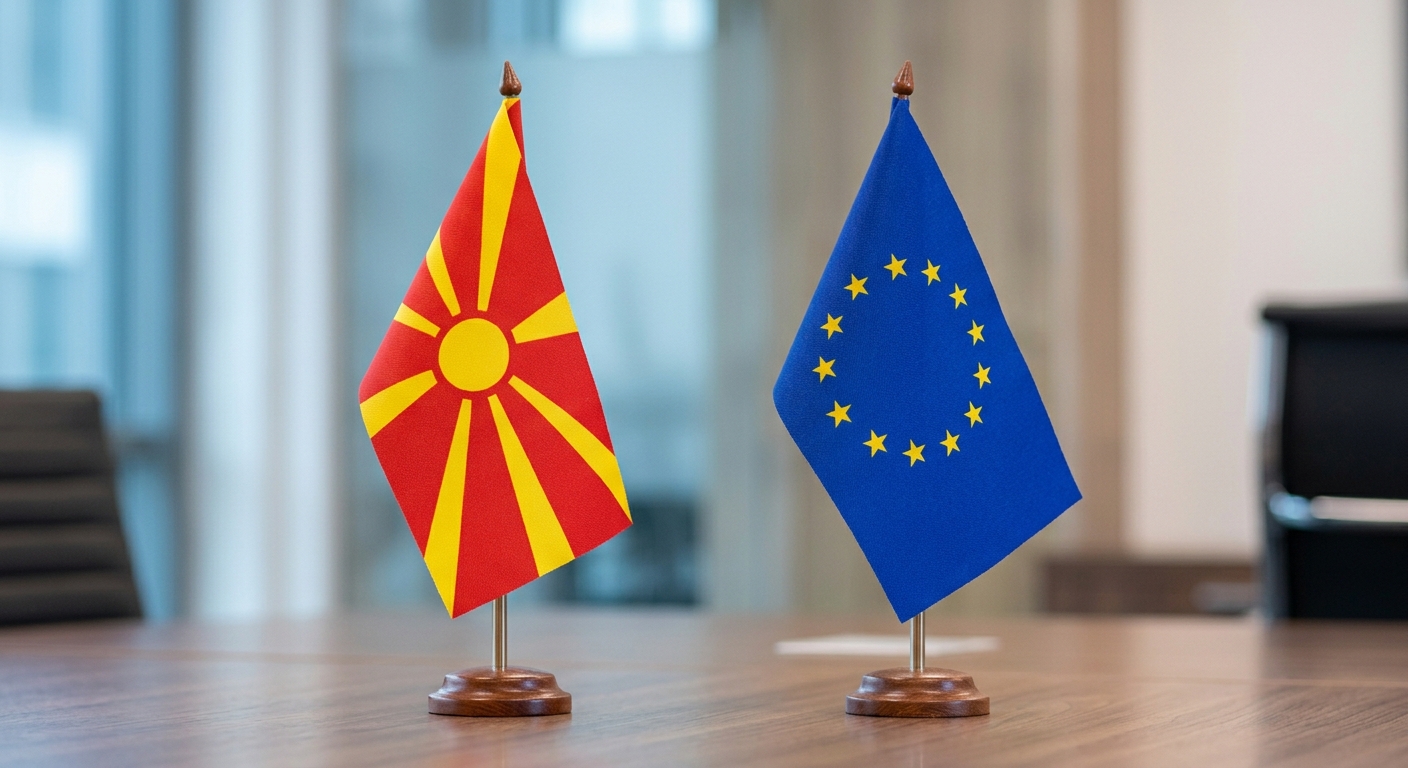
EU enlargement is another key issue on the minister’s schedule. At a separate Friends of Europe session, Nikoloski is expected to join discussions with representatives from Ukraine, Moldova and the Western Balkans about the future of EU membership and the steps needed to advance the process. He argued that candidate countries should not face political blockages from existing EU members and expressed hope that Bulgaria would take steps that could allow Macedonia’s accession negotiations to move forward.
Macedonia formally opened EU accession negotiations in 2022, but the process has not advanced to the next stage. A key condition in the agreed framework is a constitutional amendment that would include Bulgarians among the communities recognized in the country’s Constitution. The issue has remained politically sensitive and has continued to shape relations between Skopje and Sofia, as well as the country’s broader European integration efforts.
The Brussels visit therefore combines economic diplomacy with a wider effort to maintain momentum on EU membership. Infrastructure investment, access to European funding and progress on reforms are closely connected to Macedonia’s ambitions to strengthen its economy and deepen its ties with the European Union. The meetings provide an opportunity to discuss these priorities directly with European officials, although any concrete progress will depend on subsequent decisions, project implementation and the political process surrounding accession.
Nikoloski’s agenda reflects the government’s effort to present infrastructure development and economic growth as central elements of Macedonia’s European future. While European support for major projects offers opportunities to improve connectivity and regional cooperation, delays and unresolved political issues remain significant challenges. The outcome of the Brussels discussions, alongside upcoming engagements in Skopje, will help indicate how cooperation with EU institutions may develop in the months ahead.