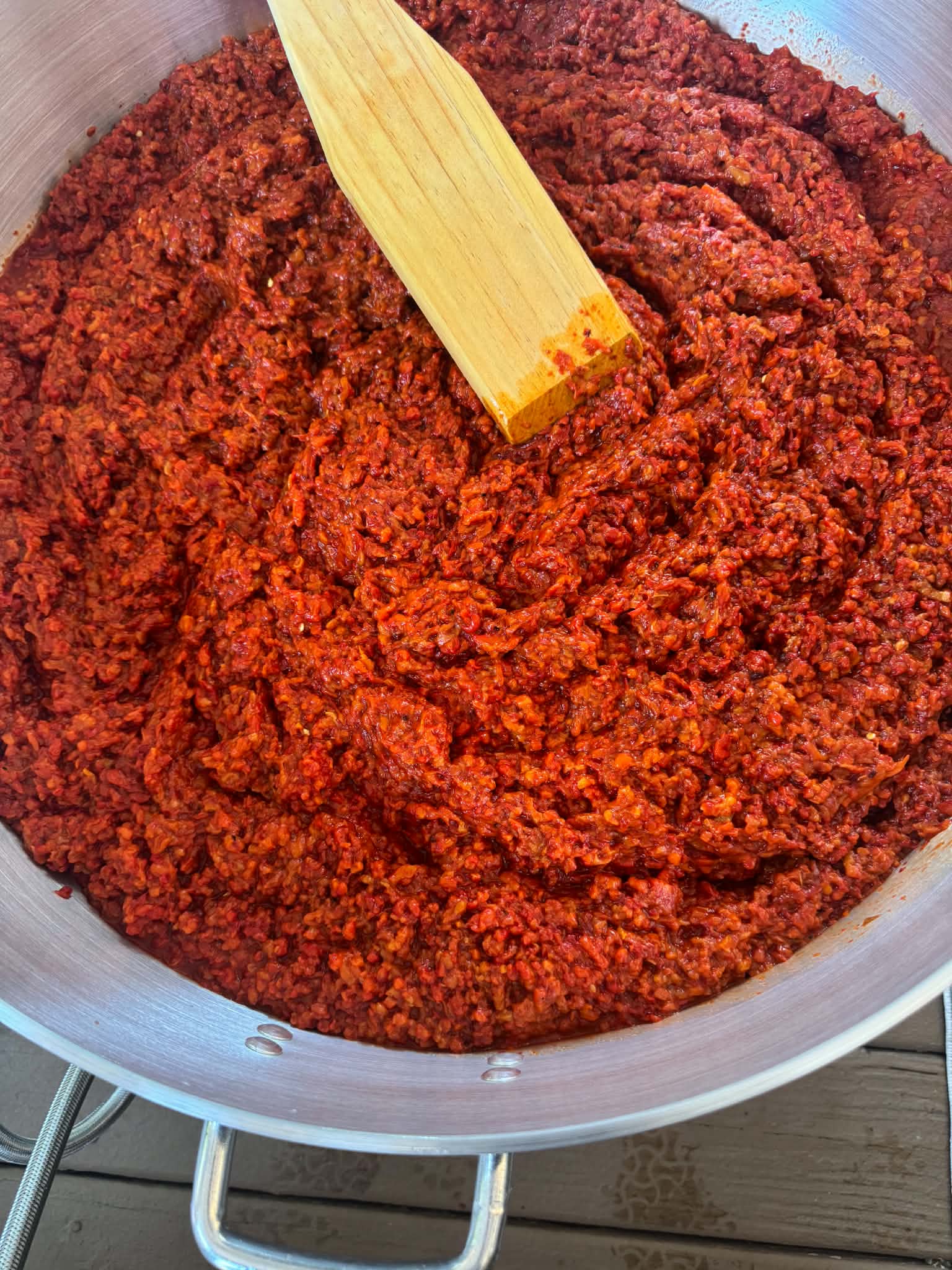
It is the season of homemade winter preserves, ajvar and roasted peppers — a time when kitchens across the Balkans fill with familiar aromas and generations-old traditions.
Our love for traditional food never disappears. Today, supermarkets offer almost everything, including ajvar, lutenica and pindjur. But nothing can replace the smell and taste of freshly made ajvar, spread on a piece of warm bread and topped with white cheese.
That is why one Macedonian family in the Chicago area decided to make their own traditional Macedonian ajvar — just as it is made back home.
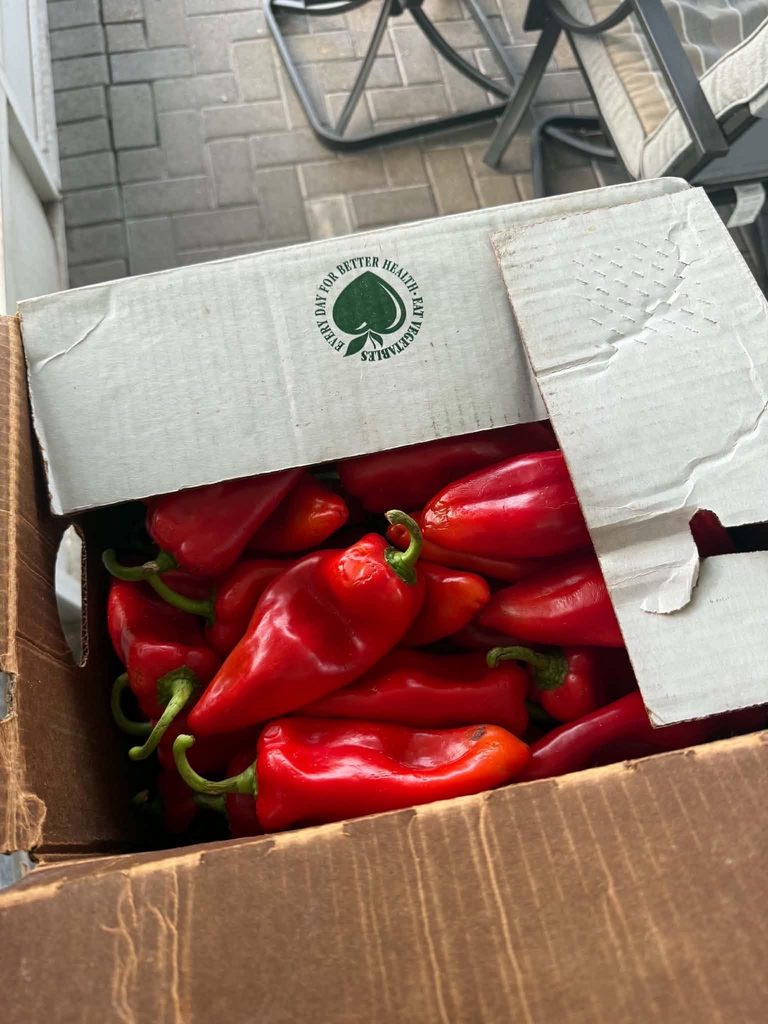
From a Local Farm to a Macedonian Kitchen. The family first purchased red peppers and eggplants locally in Orland Park, a Chicago suburb. They found their peppers at a local farm, choosing the kind that would help recreate the authentic taste of homemade Macedonian ajvar.
Finding the right peppers, however, was not easy, as the season was already coming to an end.
“It is not easy to find good red peppers because the season is kind of coming to an end. But we were lucky, and I hope we will make really good ajvar this year. It is our first year making homemade ajvar, but we will keep this tradition going every year,” said the woman preparing the ajvar.
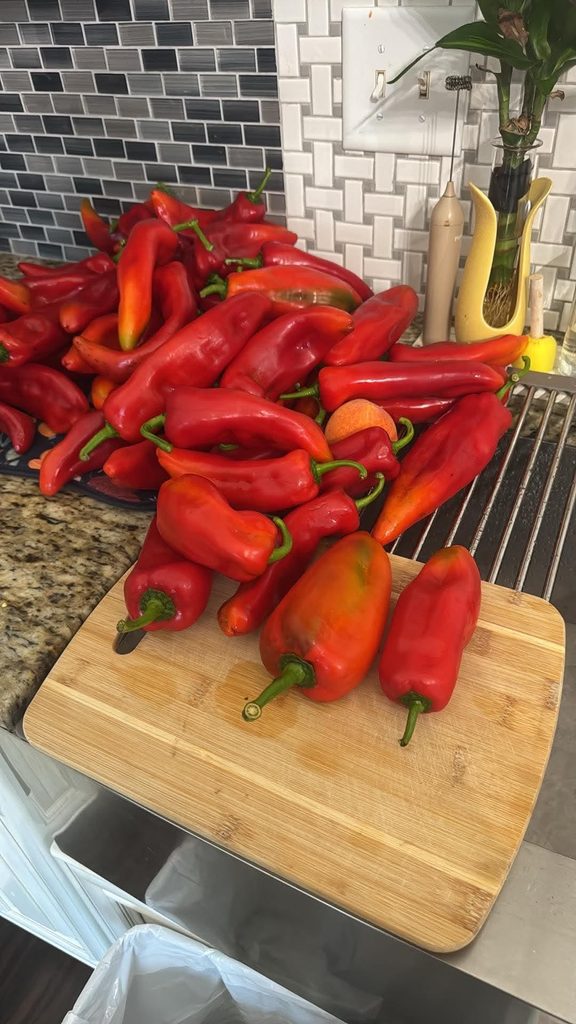
Once the peppers were ready, the next step was roasting.
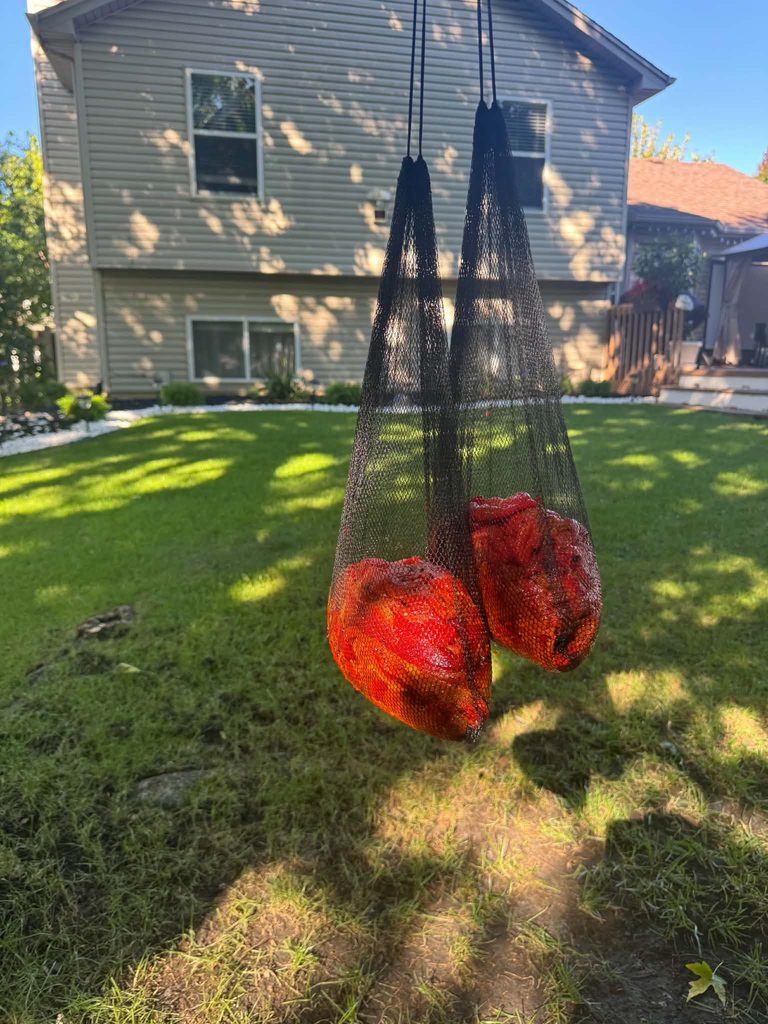
The peppers and eggplants were placed on a grill and roasted until they were perfectly cooked. They were then put into bags and left to “sweat,” making them easier to peel.
After peeling came another important step — draining the vegetables. The excess water had to be removed before the vegetables could be ground and prepared for cooking.
The Art of Making Ajvar
Once drained, the roasted peppers and eggplants were ground. Then came the most important part: cooking the mixture.
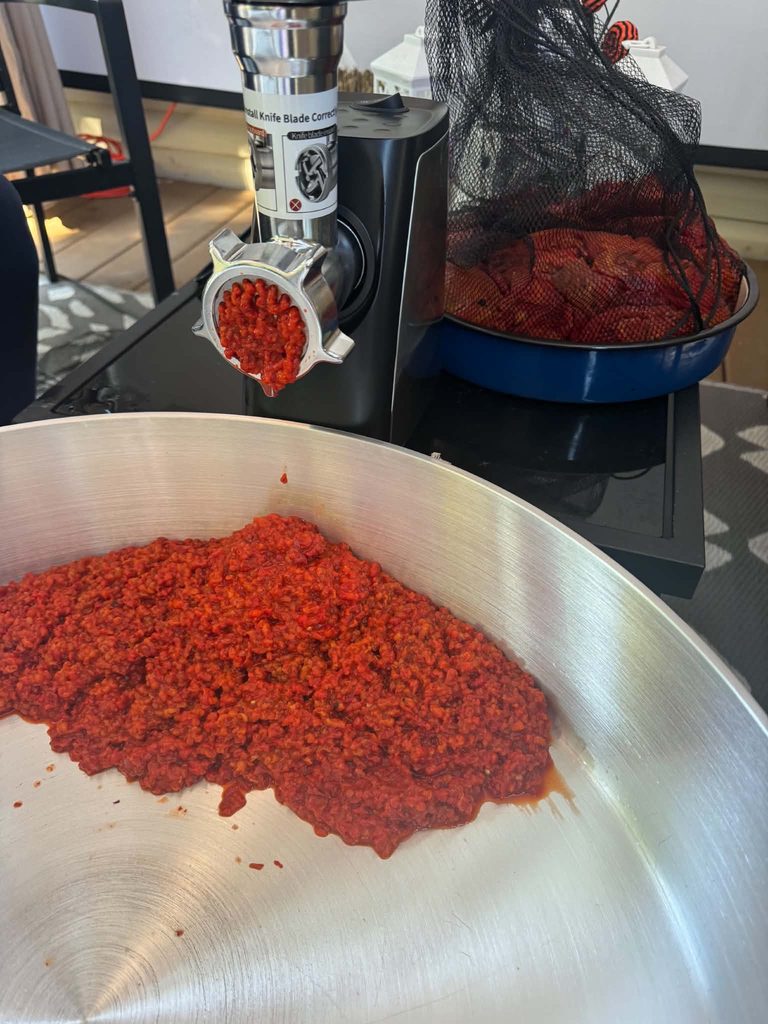
The ajvar was cooked in a large pan over a gas burner. Traditionally, ajvar is often prepared over a wood-burning stove, but times and circumstances change, and families adapt while keeping the tradition alive.
As the mixture slowly cooked, oil and salt were added to create the right taste and consistency.
And this is where the real art of ajvar-making begins.
The perfect ajvar requires just the right amount of oil and salt. It needs to cook long enough to develop its rich flavor and texture, but not so long that it becomes overcooked.
That final stage is where the experience and skill of the person making the ajvar truly makes a difference.
For Macedonians, Serbs and people throughout the Balkans, making ajvar is much more than preparing food. It is a tradition passed down from generation to generation.
From the Pan to the Jar
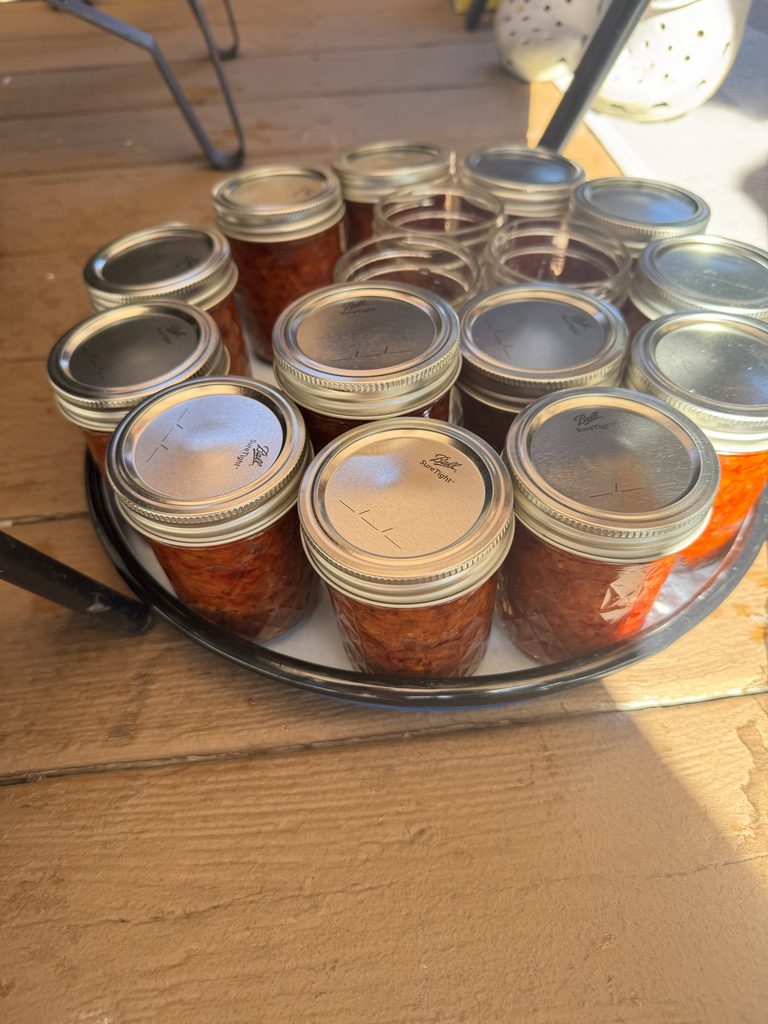
Once the ajvar was ready, it was immediately transferred into previously washed and warmed glass jars.
The jars were carefully sealed and vacuumed so the ajvar could be preserved throughout the year — or, as most homemade-ajvar lovers know, until it gets eaten!
The Best Part — The First Taste
And finally comes everyone’s favorite part: the tasting.
How did this year’s ajvar turn out?
There is only one proper way to find out.
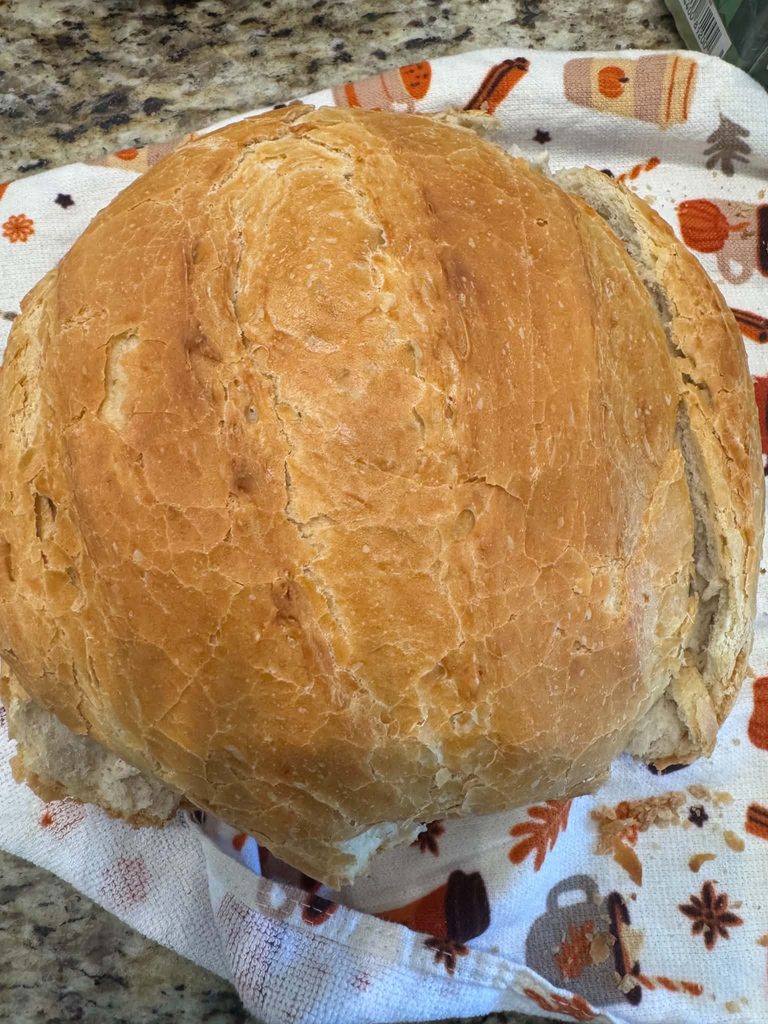
A slice of warm bread, a generous spoonful of freshly made ajvar and a piece of white cheese on top.
One bite, and suddenly, a kitchen in suburban Chicago feels a little bit like home in Macedonia.
So, here’s to tradition, family, good food and keeping the flavors of home alive — even thousands of miles away.
Nazdravje!
Photocredit: Home made by M/instagram