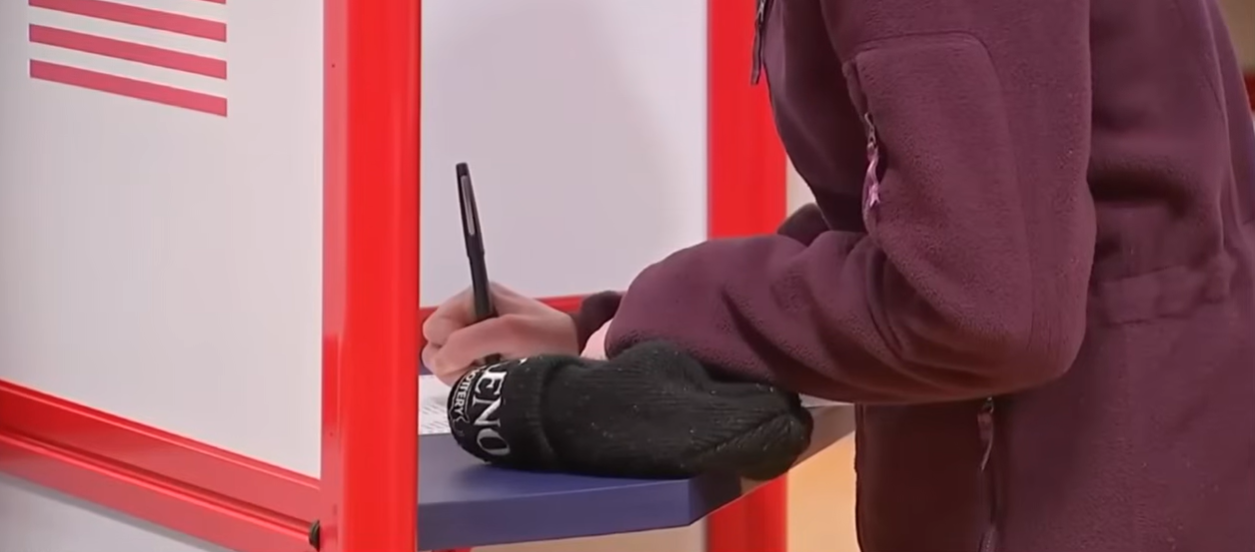
Voters will weigh major policy questions on November 3, including transgender athletes’ participation in sports, abortion access, voter identification requirements and redistricting battles that could influence control of Congress through 2028.
Transgender Sports Restrictions on the Ballot in Four States
Arizona, Colorado, Nebraska and Washington will ask voters to decide measures restricting transgender girls and women from competing on female sports teams.
Supporters argue that sex-based restrictions protect fairness and opportunities for female athletes. Opponents say the measures discriminate against transgender students and could expose young people to intrusive scrutiny of their sex or gender.
The proposals differ by state. Arizona’s measure also addresses access to school bathrooms and locker rooms, while Washington’s proposal would require documentation to verify eligibility for girls’ sports. Nebraska’s proposal would place restrictions in the state constitution, and Colorado’s measure would establish sex-based eligibility rules for school and college athletics.
Colorado voters will also consider a proposal to prohibit certain gender-transition surgeries for minors. In Missouri, voters will decide whether to repeal the reproductive-rights protections approved in 2024 and restore significant abortion restrictions, while also prohibiting gender-transition procedures for minors.
Abortion Rights Face Another Major Test
Abortion access remains a central issue in state-level elections following the U.S. Supreme Court’s 2022 decision overturning Roe v. Wade and ending the federal constitutional protection for abortion.
In Idaho, voters will consider a proposal to establish a right to abortion until fetal viability, generally around 24 weeks of pregnancy, subject to applicable medical standards.
Missouri presents a different battle. Voters approved constitutional protections for reproductive healthcare in 2024, but a new measure backed by the Republican-controlled legislature seeks to reverse those protections and prohibit most abortions, with exceptions specified in the proposal.
The results could reshape reproductive healthcare access in both states.
Voting Rules: Photo Identification and Mail-In Ballots
Voting requirements are another point of contention.
California voters will consider Proposition 39, which would require government-issued identification to vote. Colorado and Nevada will consider proposals involving identification information for mail-in voting, while Arizona voters will decide whether to impose a photo-identification requirement for mail ballots.
Supporters of stricter identification rules argue that they strengthen election security and public confidence. Critics raise concerns about potential barriers for eligible voters who lack the required documents or face difficulties obtaining them.
The details and implementation of each proposal vary by state, making the wording of the ballot measures particularly important.
Redistricting Battles Could Affect Congress Through 2028
The fight over congressional district boundaries is extending beyond state legislatures and into ballot boxes.
In Missouri, voters will decide whether to approve a Republican-backed congressional map that could break up the state’s only Democratic-leaning district.
In Maryland, voters will consider a proposal that could give the Democratic-controlled legislature greater flexibility to redraw congressional boundaries. Such a change could put the state’s only Republican-leaning seat at risk in the 2028 elections.
The measures are part of a broader national struggle over redistricting, in which both parties seek to influence the boundaries that determine how congressional districts are represented.
Because congressional maps can remain in place across multiple election cycles, the decisions could have consequences well beyond November 2026.
California’s Proposition 40: A Proposed One-Time Billionaire Tax
One of the most closely watched economic proposals is California’s Proposition 40, which would impose a one-time wealth tax of 5% on covered assets held by billionaires who were California residents on January 1, 2026.
Under the proposal, 90% of the revenue would go toward healthcare services, with the remainder allocated to education, food assistance and administrative costs. The state’s Legislative Analyst estimates that the measure could generate tens of billions of dollars in temporary revenue over several years.
The proposal has divided California Democrats.
Supporters say the tax could raise substantial funding for healthcare and other public services. Opponents, including Governor Gavin Newsom, warn that it could encourage wealthy residents and business owners to leave the state, potentially reducing future tax revenue.
The proposal would also raise complex questions about valuing assets, administering the tax and responding to potential legal challenges.
Montana Measure Targets Corporate Election Spending
Montana voters will consider a measure aimed at restricting corporate spending in elections, challenging the legal framework established by the U.S. Supreme Court’s 2010 Citizens United v. Federal Election Commission decision.
That ruling held that the government generally cannot restrict independent political expenditures by corporations and unions. It helped pave the way for the growth of super PACs, which can raise and spend unlimited sums independently of candidates, provided they follow applicable rules against coordination.
Supporters of Montana’s proposal argue that corporate political spending gives large financial interests excessive influence over elections. Opponents of restrictions on such spending point to constitutional protections for political expression.
The measure’s ultimate effect would depend on its language and how it fares under federal constitutional law.
Why These Ballot Measures Matter
While the congressional races will draw national attention, state ballot measures offer voters a direct say on policies affecting healthcare, education, elections, taxation and civil rights.
Some proposals could immediately change state law, while others could amend state constitutions or influence political representation for years.
With Election Day approaching on November 3, the results will help determine not only the direction of state policy but also the political landscape heading toward the 2028 presidential election.