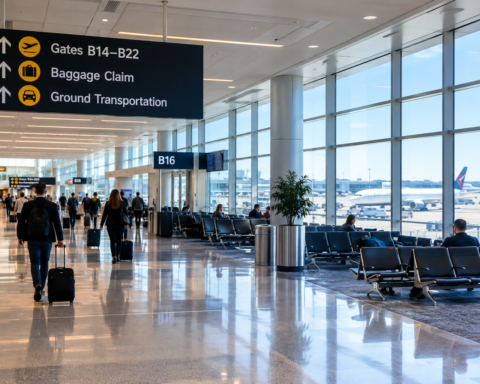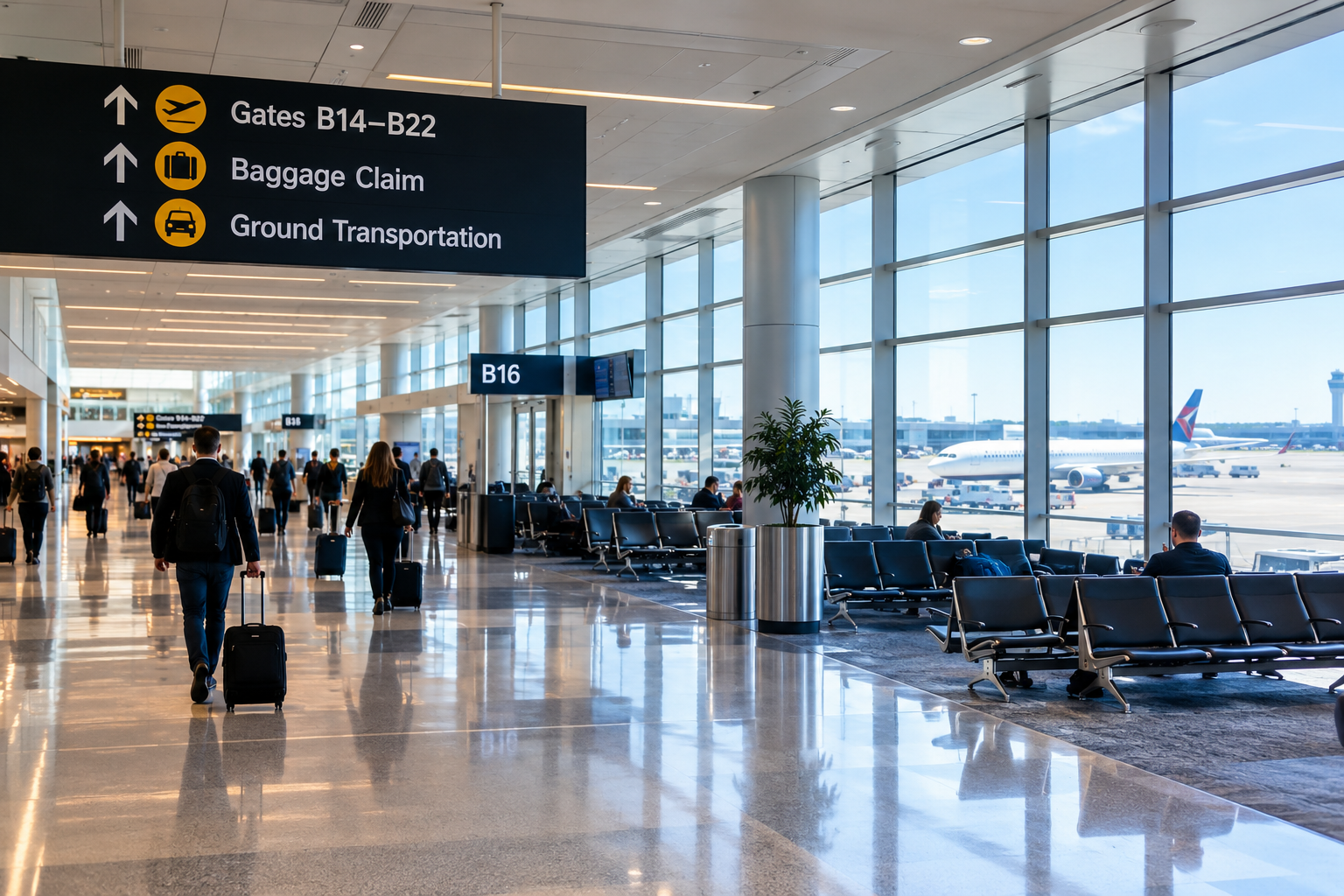
Construction has officially begun on one of the largest components of Chicago O’Hare International Airport’s long-term expansion plan. City officials marked the start of work Tuesday on Concourse E, a new gate wing at Terminal 2 with a price tag of $917 million.
What the New Concourse Will Include
According to the airport, the new concourse will feature more than a dozen boarding gates, spacious gate lounges, nearly 21,000 square feet (approximately 1,950 square meters) of restaurant and retail space, and a new public art program.
Airport officials say the project will “enhance the passenger experience through expanded amenities and seamless connectivity within the O’Hare terminal complex.”
The two-level structure will extend more than 1,000 feet, or approximately 300 meters. Passengers will primarily access it through an underground pedestrian tunnel connecting it to the new Concourse D, which is scheduled for completion in late 2028.
Construction Timeline and Project Phases
The first phase of construction is scheduled to begin in late 2026, with the first 14 gates expected to open in 2030.
The second phase, valued at $277 million, will add another 10 gates. Work on this phase will begin only after the O’Hare Global Terminal is completed.
Once both phases are finished, the new concourse will have a total of 24 gates by 2034.
Key Project Figures
- $917 million – Cost of the first construction phase
- $277 million – Cost of the second phase
- 14 gates – Expected to open in 2030
- 24 gates – Total planned capacity by 2034
Part of the Largest Expansion in O’Hare’s History
The new Concourses D and E, together with the O’Hare Global Terminal, are central components of the ORDNext program, the largest expansion of the airport’s terminal complex in its history.
O’Hare’s modernization program began eight years ago and was initially expected to be completed by 2028. The updated timeline for Concourse E now extends major parts of the undertaking well into the next decade.
The expansion is intended to modernize the airport, increase passenger capacity and improve the overall travel experience at one of the busiest aviation hubs in the United States.