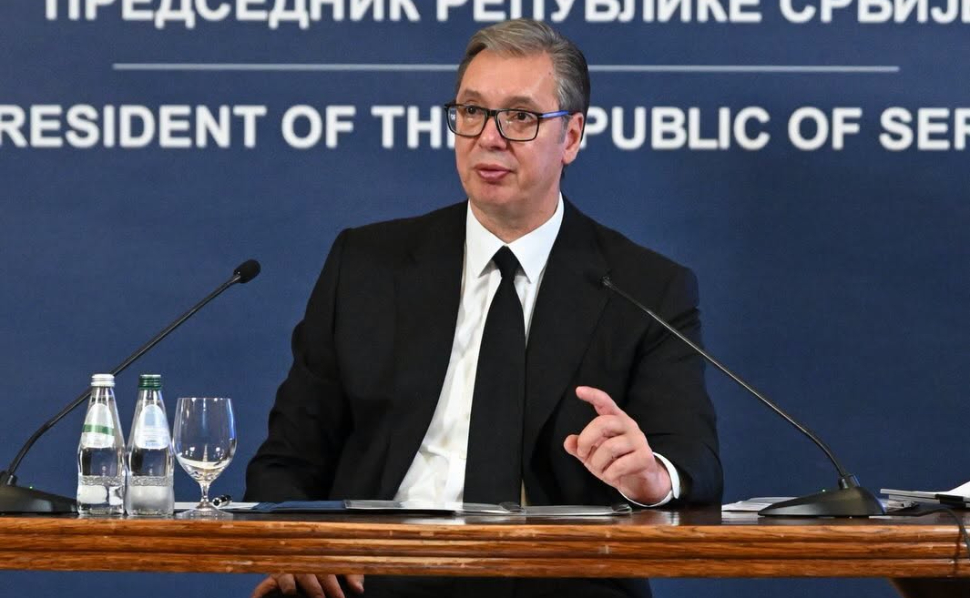
Serbian courts have revealed the names of 23 people pardoned by former President Aleksandar Vucic. The list includes former officials, people accused of attacking students and political activists.
The Higher Courts in Belgrade and Novi Sad released the names on November 2. The Ministry of Justice had sent the courts the pardon decisions that Vucic signed on September 27.
Before leaving office, Vucic announced pardons for 49 people. However, the public did not know most of their identities.
The new information has raised questions about the decisions and their impact on Serbia’s justice system.
Former Officials and Student Attack Suspects Among Those Pardoned
One of the most prominent names is Dijana Hrkalovic, a former senior official at Serbia’s Interior Ministry.
Hrkalovic faced charges of influence peddling. Prosecutors had accused her of using her position to interfere with police investigations.
The list also includes Marko Pavlovic, who faced an attempted aggravated murder charge.
Prosecutors accused Pavlovic of driving into a crowd and hitting student Sonja Ponjavic in Belgrade on January 16, 2025.
The incident happened during a public tribute to the victims of the Novi Sad railway station disaster.
In addition, the Novi Sad court named several people accused of violence during protests.
They include Stevica Kis, Aleksandar Kocic, Ognjen Stankovic and Nemanja Naraci.
The charges against them included violent behavior at public gatherings. Some also faced charges involving serious injuries.
Another person on the list, Gorski Matovic, faced charges linked to an attack on students outside the Serbian National Theater in Novi Sad.
The pardons ended criminal prosecution in these cases. However, the charges themselves did not establish guilt.
Student Activists Also Receive Pardons
The decisions also cover 12 activists from Novi Sad.
Authorities had accused them of preparing acts against Serbia’s constitutional order and calling for political change through violence.
Among them are Mila Pajic, Doroteja Antic and several other activists involved in Serbia’s protest movement.
Meanwhile, the list includes former judge Dragana Zivadinovic and Nebojsa Djokic, who faced separate criminal charges.
Another beneficiary, Milos Dugalic, received relief from the remaining portion of a prison sentence.
The pardons have drawn attention because they cover people from different sides of Serbia’s political conflict.
Vucic announced the decisions shortly before leaving office. However, he did not initially release the full list.
The country’s organized crime prosecution service has also requested documents from the Justice Ministry concerning the pardon process.
As a result, questions remain about how officials reviewed the cases and why they selected particular individuals.
For Serbians living abroad, the developments offer another important look at the country’s political changes and the future of its justice system.