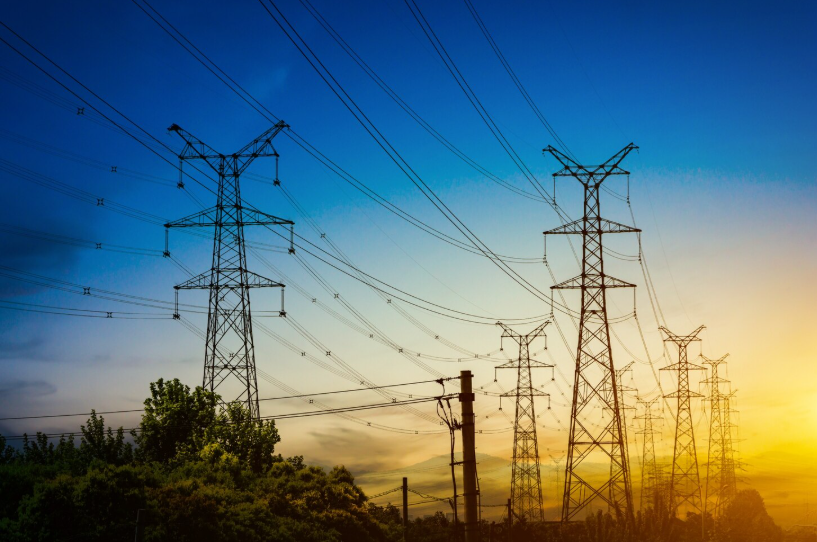
The Financial Times examines a major paradox behind America’s technology boom: data centers are being built at record speed, while new high-voltage transmission lines can take a decade or more to complete.
American technology companies are pouring enormous sums into artificial intelligence, but the expansion is running into an old problem: the electricity grid.
Data centers require a constant and reliable supply of electricity, yet the infrastructure needed to deliver that power is not expanding at the same pace, according to an analysis by the Financial Times.
In 2013, nearly 4,000 miles of new high-voltage transmission lines were built in the United States. By 2024, that figure had fallen to fewer than 900 miles.
One example is the 102-mile Cardinal-Hickory Creek transmission line, which faced 13 years of delays involving permits, disputes and coordination among various institutions.
Meanwhile, demand for electricity continues to grow.
Who Will Pay the Price?
If electricity cannot be delivered to new data centers in time, companies may postpone projects or build their own power-generation facilities.
But expanding the energy infrastructure also comes at a cost to the public. Depending on how new investments are financed, some of the expenses could eventually be passed on to consumers through higher electricity bills.
There are also risks associated with relying too heavily on a small number of major customers. If technology companies change or abandon their expansion plans, utilities and communities could be left with costly infrastructure investments.
The United States and China Follow Different Models
In the United States, decisions about energy infrastructure are divided among grid operators, state governments, federal agencies, local communities and landowners.
This system provides multiple layers of oversight, but it can also slow down construction and complicate the approval process.
China, by comparison, relies on a more centralized approach to infrastructure planning, allowing authorities to coordinate major projects differently.
The Digital and Green Transitions Must Go Hand in Hand
The digital and green transitions are not two separate projects. New digital services, data centers and AI systems require a stable energy supply, while renewable energy sources depend on a modern and reliable power grid.
That means progress cannot be measured solely by the number of data centers built or servers purchased. The real challenge is whether the energy infrastructure can support this expansion reliably and sustainably over the long term.