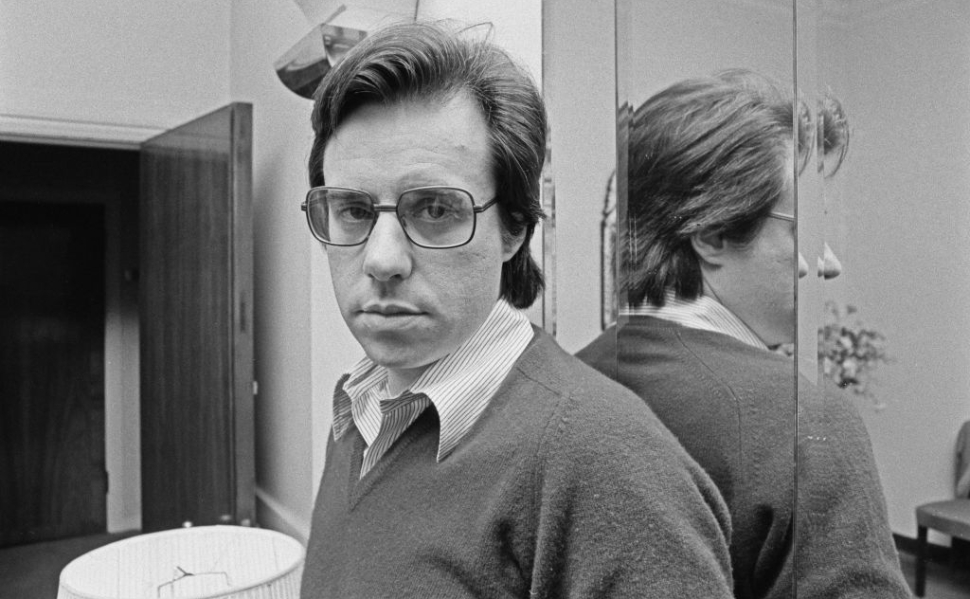
Before Peter Bogdanovich became one of Hollywood’s most celebrated filmmakers, his family had already lived through a remarkable story of love, sacrifice, and survival.
His father was a Serbian painter who helped rescue his Jewish wife and her family from Nazi persecution in Europe. Years later, their American-born son would become one of the defining directors of 1970s Hollywood.
Best known for The Last Picture Show, Paper Moon, and What’s Up, Doc?, Bogdanovich built a career that connected the golden age of American cinema with a new generation of filmmakers.
Yet behind his success was a family history deeply rooted in the Balkans.
A Serbian Painter, a Jewish Refugee, and a Journey to America
Peter Bogdanovich was born on July 30, 1939, in Kingston, New York, just months before the outbreak of World War II.
His father, Borislav Bogdanovich, was a Serbian painter and accomplished pianist whose family came from Vojvodina, Serbia. His mother, Herma Robinson, belonged to an Austrian Jewish family that had left Vienna for Yugoslavia.
Borislav and Herma met in Yugoslavia and married in Novi Sad in 1937.
As antisemitism intensified across Europe, the couple faced an increasingly uncertain future.
According to the family’s historical archive, Borislav secured travel documents for Herma and members of her family, allowing them to leave Europe in 1939. They traveled to the United States separately, eventually beginning a new life in New York.
For Borislav, immigration meant leaving behind his homeland and an established artistic career. But it also meant protecting the people he loved.
In a 2019 interview with New York Magazine, Peter Bogdanovich recalled that his father had sacrificed his career to save his mother’s family because they were Jewish.
The family settled on Manhattan’s Upper West Side, where Peter grew up surrounded by art, music, and European cultural influences.
His father’s passion for painting and classical music shaped the atmosphere of their home, but it was another art form that would capture Peter’s imagination.
Cinema.
Borislav regularly took his son to screenings of silent films at New York’s Museum of Modern Art.
Those afternoons became an important connection between father and son and helped introduce Peter to the filmmakers whose work would influence his entire career.
As a young man, Bogdanovich became fascinated with the history of American cinema. He studied acting, directed theater productions, and began writing about films.
He was particularly interested in the work of directors such as John Ford, Howard Hawks, and Orson Welles.
His knowledge of classic Hollywood eventually opened doors to the film industry itself.
From an Immigrant Family to Hollywood History
Bogdanovich’s breakthrough came in 1971 with The Last Picture Show, a black-and-white drama set in a small Texas town.
The film earned widespread critical acclaim and eight Academy Award nominations, including Best Picture and Best Director.
For Bogdanovich, who had spent years studying the techniques of Hollywood’s greatest filmmakers, it marked an extraordinary achievement.
He followed that success with What’s Up, Doc? in 1972, starring Barbra Streisand and Ryan O’Neal, and Paper Moon in 1973, featuring Ryan O’Neal and his daughter Tatum O’Neal.
These films established him as one of the prominent directors of the New Hollywood era, a period when a younger generation of filmmakers transformed American cinema.
But Bogdanovich was more than a director.
He was also a film historian, critic, author, and actor who dedicated much of his life to preserving the legacy of earlier generations of filmmakers.
His interviews and books helped document the careers of Hollywood figures including Alfred Hitchcock, John Ford, and Orson Welles.
He later became familiar to television audiences through his recurring role as Dr. Elliot Kupferberg in HBO’s The Sopranos.
Despite his success in the American entertainment industry, his family’s European roots remained an important part of his personal history.
In one of his books about cinema, Bogdanovich dedicated the work to his father, acknowledging that Borislav, too, had come to America.
The dedication reflected a connection between two generations whose lives had taken very different paths.
One had crossed the Atlantic to escape the dangers of Europe. The other had grown up in America and helped shape its cultural history.
The Family Story Behind the Hollywood Legacy
Borislav Bogdanovich died in 1970, just before his son’s greatest Hollywood successes.
His artistic legacy, however, continued through the family.
Peter’s sister, Anna Thea Bogdanovich, has worked to preserve their father’s paintings, photographs, and personal history through the Bogdanovich Collection.
According to the family’s archive, Peter and Anna had also been developing a documentary about their father’s life and his role in helping their mother and her relatives escape Europe.
The project reflected the family’s determination to preserve a history that extended far beyond Hollywood.
Peter Bogdanovich died on January 6, 2022, at the age of 82.
Today, his work remains part of American film history. The Last Picture Show was selected for preservation in the National Film Registry by the Library of Congress in 1998.
His story is also part of the broader history of Balkan immigration to the United States.
The son of a Serbian artist who left Europe during one of its darkest periods grew up to become a filmmaker whose work influenced generations of American audiences.
Behind the celebrated Hollywood director was an immigrant family’s extraordinary journey, a reminder that some of America’s most enduring cultural achievements have roots far beyond its borders.