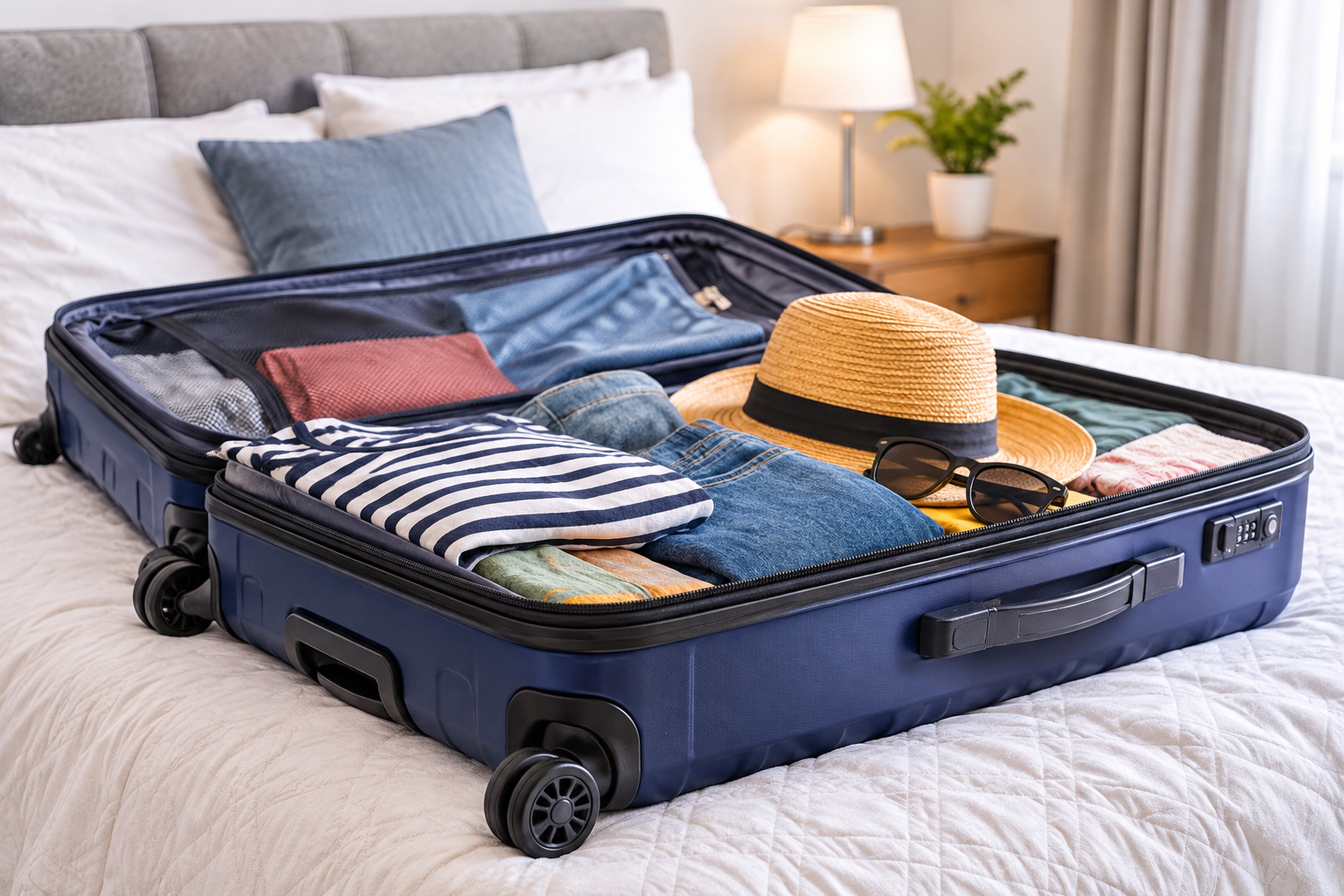
A growing social media trend is raising an important hygiene warning for travelers: whatever you do, avoid placing your suitcase on your bed when you return home from vacation.
The concern is that luggage can collect bacteria, viruses, fungi and even bed bugs while traveling. Placing it on your bed could transfer unwanted germs to the very place where you sleep.
While some people have dismissed the warning as unnecessary fear, experts say there are legitimate reasons to be cautious.
“Between riding to the airport, cycling through the luggage carousel, and rolling through the cobblestone streets of Rome (or the asphalt of Chicago), your suitcase has touched a lot of unfamiliar hands and rubbed against a lot of new surfaces,” said Ayesha Bryant, an associate professor at the University of Alabama at Birmingham.
A 2025 study by British travel insurance broker InsureandGo found that some suitcases carried nearly 58 times more bacteria than a public toilet seat.
According to the research, luggage wheels can harbor potentially harmful microorganisms, including Staphylococcus bacteria, E. coli, yeasts and mold.
E. coli can cause serious foodborne illnesses, while certain fungal infections, including Candida infections, can become life-threatening, particularly in vulnerable patients.
Experts also point to differences between suitcase materials. Soft-sided luggage may be more susceptible to fungal growth because its porous fabric can trap moisture and dirt more easily than hard-shell cases.
Another concern is bed bugs. These small, reddish-brown insects feed on human blood and can travel unnoticed in luggage and clothing. Although they are not known to transmit diseases, their bites can cause itching, allergic reactions and sleep disturbances.
“They are excellent hitchhikers,” said Greg Baumann, a founding partner of Pest Control Warrior.
Viruses are another potential concern. Cold and flu viruses, as well as norovirus, can survive on certain surfaces and potentially spread through contaminated objects, Wesley Long, medical director of diagnostic microbiology at Houston Methodist Hospital, told The Washington Post.
Suitcases are not the only items travelers should be concerned about. Shoes can also carry bacteria and other contaminants into the home.
“The tread and cracks in shoes are ideal places for bacteria to linger,” said Dr. Kyle Hoedebecke, clinical advisor at Care Point Boston.
Despite these concerns, experts emphasize that brief contact with contaminated objects does not automatically lead to infection. Most healthy adults face a relatively low risk, although the risk is greater for people with weakened immune systems.
How to protect your home after traveling
Experts recommend several simple precautions:
- Keep luggage off the bed: Unpack your suitcase on a hard floor or designated luggage area.
- Clean the wheels: Use a damp microfiber cloth and an appropriate cleaning product, rotating each wheel to clean all sides.
- Separate indoor and outdoor shoes: Change into slippers or indoor footwear as soon as you arrive home.
- Check clothing for bed bugs: Pay particular attention to seams, folds and pockets.
- Wash and dry clothes properly: If bed bugs are suspected, wash clothing at an appropriate hot-water setting and dry it on high heat, following fabric-care instructions. Heat from a suitable dryer cycle is particularly important for killing bed bugs.
- Inspect non-clothing items: Check belongings carefully before bringing them into your home.
“The most important and simplest rule is to just be vigilant. Do not panic,” Baumann said.
The message from experts is straightforward: a few simple precautions when unpacking can help keep unwanted travel companions out of your bedroom.