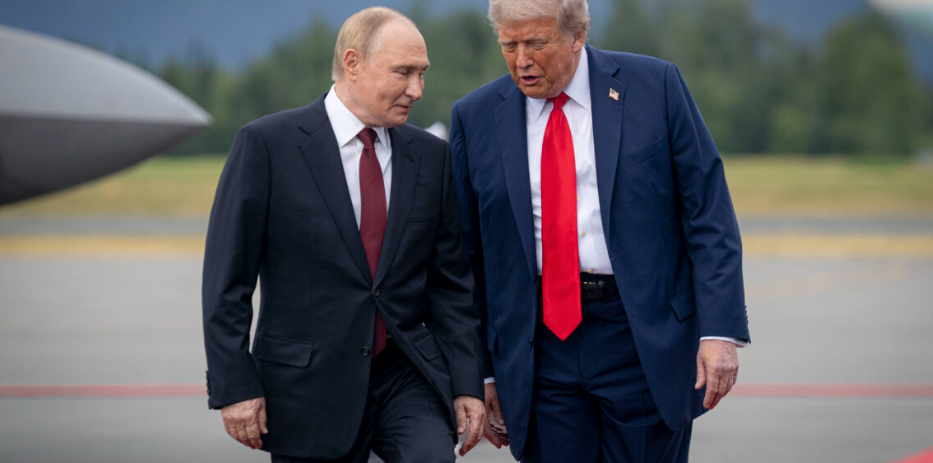
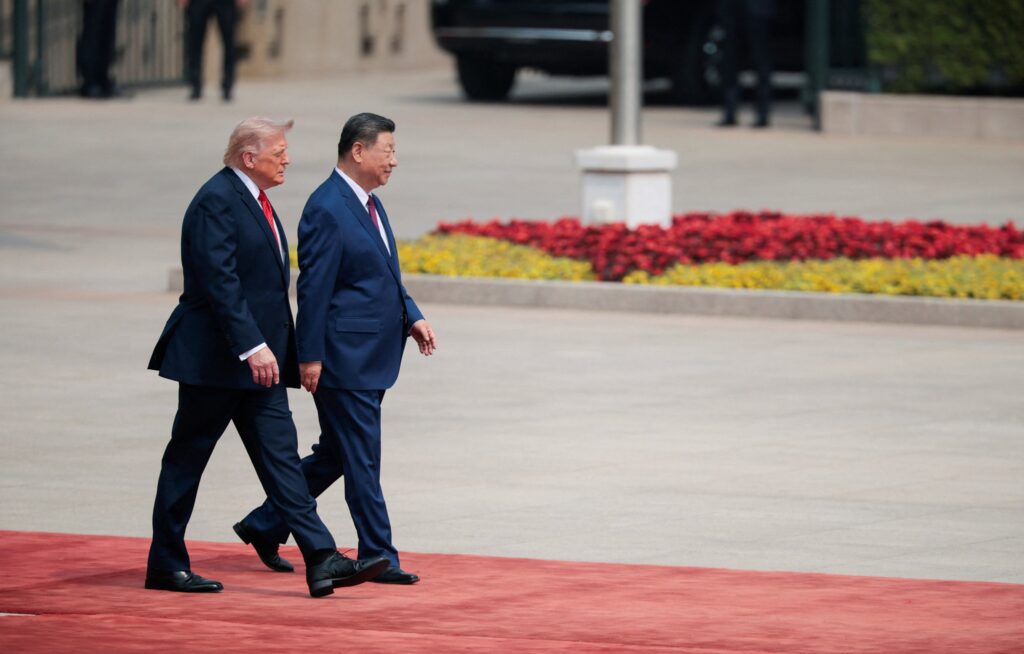
U.S. President Donald Trump is meeting with his two smiling rivals, Russian President Vladimir Putin and Chinese President Xi Jinping, in Shenzhen, China. The summit raises major questions about the global order Trump hopes to shape during the final years of his presidency.
In an editorial, The Wall Street Journal argues that the fact that the meeting is causing greater concern among America’s allies than among its adversaries is a reflection of Trump’s unpredictable foreign policy.
Trump has said that nuclear weapons will be the main topic of the trilateral meeting, although Ukraine, Iran and trade could also feature on the agenda.
“We will talk about nuclear disarmament. That’s a tough subject, because it’s very difficult for any of us to say that we are going to give up our nuclear weapons, right?” Trump told reporters.
The American president has long expressed deep opposition to nuclear weapons and has maintained a consistent position on the issue. However, his administration allowed the New START treaty to expire, an agreement that placed limits on the nuclear arsenals of the United States and Russia. Meanwhile, Moscow violated its commitments, while China, which was not a party to the agreement, was free to expand its nuclear arsenal. Earlier this year, the administration also disclosed alleged secret Chinese nuclear tests.
Nevertheless, the trust necessary for credible arms control is largely absent, given the close cooperation between China, Russia, Iran and North Korea. Furthermore, Trump has failed to strengthen his negotiating position through American rearmament and the deployment of strategic missiles, a step taken by President Ronald Reagan in the 1980s.
Xi Jinping is unlikely to discuss nuclear weapons until China is in a position to negotiate from a position of nuclear parity or superiority. Beijing’s submarine-launched ballistic missile test this summer serves as a reminder that China is building more than a purely defensive deterrent. It is seeking the capability to launch a nuclear offensive against the United States in a crisis, potentially involving the Taiwan Strait.
The real danger, according to the editorial, is that Xi and Putin could use nuclear discussions as a smokescreen, presenting themselves as responsible leaders willing to cooperate while pursuing their actual objectives.
Their broader ambition could be to create the impression that the three leaders control the planet’s destiny, in what would resemble a second Yalta Conference.
The editorial describes such a scenario as absurd, pointing out that Russia’s economy is smaller than Britain’s and that Putin is struggling in a ground war that has lasted almost five years against a country with only a fraction of Russia’s population.

Ukraine and Taiwan: The stakes for America’s allies
This brings the discussion to Ukraine. Trump has said he is willing to discuss the war, raising concerns about the possibility of negotiations involving Russia and China without Ukraine’s European allies.
Any trilateral plan concerning Ukraine would be a mistake, the Wall Street Journal argues, with immediate consequences for American alliances in both Europe and Asia.
The central question is whether the Trump administration intends to negotiate over Ukraine behind Europe’s back while simultaneously insisting that European countries assume primary responsibility for defending the continent against Russia.
American allies, already facing serious security challenges in their own regions, are concerned about the concessions Trump might be willing to make.
Xi Jinping is likely following developments in Ukraine more closely than almost anyone else. China has long maintained its claim over Taiwan, and Beijing will draw conclusions from whether the free world ultimately abandons Ukraine.
Xi would not even need an explicit concession on Taiwan to conclude that the island could eventually come under Chinese control.
Ukraine primarily needs weapons and financial support, while defending Taiwan could require direct intervention by U.S. armed forces. At the very least, Trump must convince Xi that Washington could intervene in the event of a blockade or military attack on the island.
The idea that America could remain outside a Taiwan crisis is an illusion, the editorial argues, given the U.S. economy’s dependence on advanced artificial intelligence chips manufactured there.
Iran and China’s relationship with Russia
Trump could also use the summit to pressure Xi and Putin to end their support for their ally Iran.
He could ask why Beijing and Moscow are helping Tehran target American military personnel, including through the provision of commercial satellite intelligence and components for drones.
So far, however, Trump has played down the significance of this assistance to Iran.
Washington’s defense budget and Trump’s negotiating position
The editorial concludes that the irony is that if Trump genuinely wanted to strengthen his position against Xi and Putin, he would be spending this week in Washington rather than Shenzhen.
The president has only a few weeks to push a $1.5 trillion defense budget through Congress, at a time when the Republican Party is still recovering from its electoral defeat.
The best possible outcome of the trilateral summit, according to the newspaper, would be for nothing particularly significant to happen: a few handshakes and perhaps discussions about extending the trade truce with Beijing beyond January.
Nevertheless, such meetings are becoming increasingly politically costly, particularly as Trump repeatedly unsettles America’s allies without delivering tangible results.
Even more concerning is that the American president has not abandoned his fixation on a “grand Eurasian deal,” an arrangement he believes could guarantee greater security for the United States.
If Trump wants to be a peacemaker, he must recognize that he is president at a time when a coordinated and hostile challenge to American interests is emerging.
At the center of that challenge, the Wall Street Journal concludes, are Xi Jinping and Vladimir Putin.