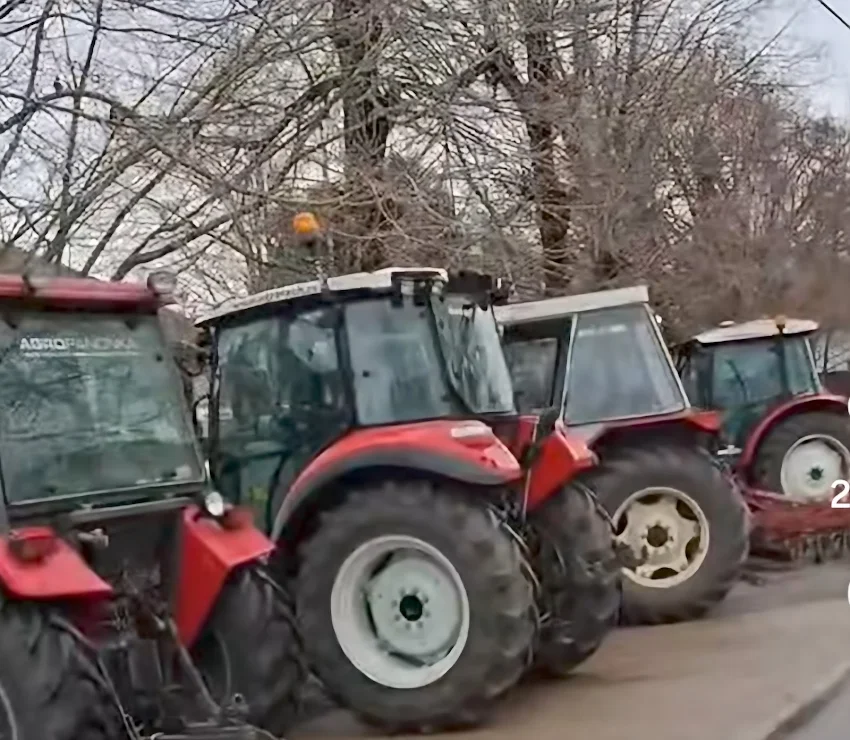
Farmers across Serbia have continued and expanded road blockades using tractors, bringing traffic to a standstill on more than 80 road sections, with some closures lasting for hours and others announced as 24-hour disruptions. Protest organizers describe the movement as the largest farmers’ protest in the country in recent years, demanding clearer government positions and accountability regarding agricultural policy. Access to Belgrade has been significantly affected, and participants have signaled a possible radicalization of the protests if their demands are not addressed. Tensions have also escalated amid reports of threats, political confrontation and deepening mistrust between farmers and state institutions.
Widespread Road Closures Across the Country
The protests have resulted in extensive blockades throughout Serbia, with farmers parking tractors across major and regional roads. On the previous day, around 60 road sections were reportedly blocked, while the following day saw the number rise to over 80 affected routes. Some road closures were organized for several hours, while others were announced as full-day blockades, severely disrupting traffic flow and forcing drivers to seek alternative routes.
In several regions, including Šumadija and areas surrounding Belgrade, access to key routes was slowed or obstructed. Protesters stated that the scope of the blockades reflects growing dissatisfaction within the agricultural sector and the willingness of farmers to escalate actions if necessary. The coordination of simultaneous blockades in multiple municipalities demonstrates a structured and organized protest effort rather than isolated local actions.
Farmers Describe Protest as the Largest in Recent Years
One of the protest representatives described the demonstration as the largest farmers’ protest held in Serbia, emphasizing the scale of participation and coordination. According to organizers, the turnout and number of blocked roads signal widespread frustration among producers across different regions and agricultural branches.
Farmers argue that their presence on the roads is a response to unresolved structural issues affecting agricultural producers, including communication breakdowns with authorities and dissatisfaction with current measures. Some protesters publicly stated that if Serbia functioned as a “normal country,” they would not need to block roads in order to be heard, underlining their perception that institutional channels have failed to address their concerns effectively.
Demand for Government Clarification and Ministerial Accountability
Protest leaders are calling on the government to clearly state its position on the behavior and actions of the Minister of Agriculture. Organizers have requested an official stance from the government regarding the minister’s conduct, indicating dissatisfaction with leadership and decision-making within the agricultural sector.
At the same time, some farmers have reportedly rejected meetings with the sectoral minister under existing conditions, suggesting that authorities must first demonstrate seriousness and readiness to respond concretely to their demands. Protest representatives have warned that if dialogue does not produce tangible results, farmers may organize a march toward Belgrade, further intensifying pressure on central institutions. The possibility of moving the protest to the capital has been presented as a next step should negotiations remain stalled.
Reports of Threats and Rising Tensions
Tensions surrounding the protests intensified following claims by a farmer in Novo Selo that he had received death threats from a local official. The allegation further escalated the situation, contributing to a charged and polarized atmosphere around the demonstrations. Protesters have pointed to such incidents as evidence of what they describe as intimidation attempts.
Organizers have warned of possible radicalization if demands are ignored, signaling that further protest measures could follow. The movement has thus evolved from localized dissatisfaction into a coordinated nationwide action aimed at compelling authorities to respond formally and publicly.
Ongoing Protests and Uncertain Resolution
As blockades continue, farmers remain mobilized across multiple regions, insisting that their demands require urgent attention and a clear institutional response. The protests have significantly disrupted traffic, affected daily commuting and drawn national attention to agricultural grievances.
With no immediate resolution announced and with protest actions expanding rather than diminishing, the situation remains fluid. Farmers have reiterated that their actions will persist until they receive concrete answers from the government, while authorities face mounting pressure to engage in dialogue capable of de-escalating one of the most extensive agricultural protest movements in recent years.