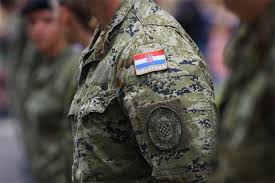
Croatia has reintroduced mandatory military service, and, after nearly 20 years, recruits have once again returned to army barracks. The move reflects growing concerns over Europe’s security environment, which authorities increasingly view not as a temporary crisis but as a long-term strategic reality.
The first group of about 800 recruits has already arrived at military bases in Knin, Slunj, and Pozega, where they will undergo two months of basic training.
This marks the most significant change to Croatia’s defense system since 2007, when compulsory military service was abolished, and the barracks were largely emptied. Zagreb has now reversed that decision, arguing that changing geopolitical conditions require rebuilding a reserve pool of trained personnel. Under the plan, around 4,000 recruits will be called up each year, divided into five training groups.
The first recruits were welcomed on March 9 at the “Eugen Kvaternik” military training ground near Slunj, in the presence of Deputy Prime Minister and Defense Minister Ivan Anušić and Chief of the General Staff Tihomir Kundid. Anusic described the program as a major project prepared for more than a year, with the aim that some recruits will remain in the armed forces as professional soldiers after completing training.
Under the system, young men who turn 18 each year will be registered for potential service. For 2026, the call applies primarily to those born in 2007. In addition, some men between the ages of 19 and 30 may also be summoned. Women are not subject to mandatory service but can volunteer.
From the first intake, 446 recruits joined voluntarily, including 82 women, while 354 were called up under the mandatory system. Only 10 individuals declared conscientious objections.
The training program will last two months and include handling personal weapons, operating modern military equipment such as drones, first-aid training, and basic self-defense. Recruits will also learn about key operations from Croatia’s 1991–1995 war, reflecting the program’s broader symbolic and historical component alongside its practical military training. During the training period, recruits will receive a monthly net allowance of about €1,100, with transportation and leave costs covered.
The financial cost of the reform is also significant. Annual spending for basic military training is estimated at around €23.7 million. Those who object to military service on conscientious grounds will instead perform civilian service lasting three or four months.
Croatia’s decision is part of a broader European trend in which governments are revisiting military preparedness, reserve forces, and training for younger generations. Following Russia’s invasion of Ukraine and the renewed militarization of the continent, several countries that once believed mass mobilization was a relic of the past are rebuilding systems to strengthen national defense.
By refilling its barracks after nearly two decades, Croatia is sending a clear message: peace in Europe can no longer be taken for granted.