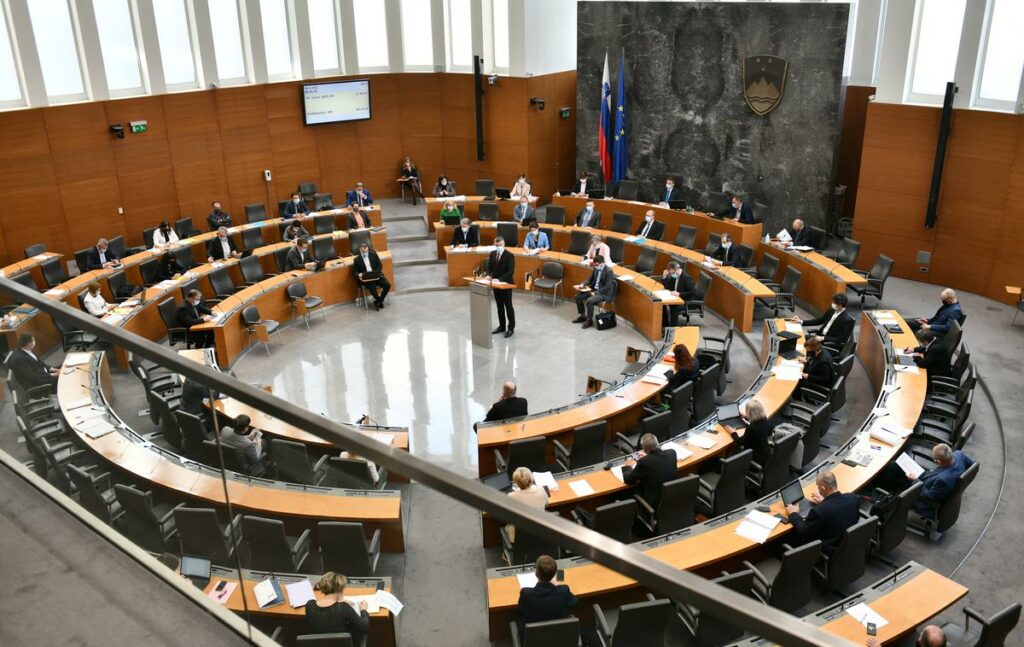
The scandal involving secret recordings and suspicious flights in Slovenia has taken a significant turn after opposition leader Janez Janša admitted he met with a representative of Black Cube. The acknowledgment comes after Slovenia’s intelligence agency confirmed that operatives from the Israeli private intelligence firm were present in the country.
The political controversy has escalated rapidly in recent days. Slovenia’s intelligence service, SOVA, confirmed that Black Cube representatives were in Slovenia in December, fueling concerns within the government and the public about potential foreign interference in the electoral process. What began as a story about leaked recordings and unexplained flights is now evolving into one of the most serious political scandals of the current campaign.
From Denial to Admission
In his initial response, Janša denied any contact with Black Cube. However, he has now acknowledged meeting with a company representative, though he claims he cannot recall the exact timing. This shift marks a critical turning point, undermining his earlier statements and intensifying scrutiny over the firm’s possible role in Slovenia’s political landscape.
What Is Confirmed—and What Remains Unclear
Authorities have confirmed that Black Cube operatives were in Slovenia in December. However, SOVA has not verified whether a meeting with Janša took place at that time. Meanwhile, investigators, activists, and journalists allege that the firm’s operatives made multiple visits to Ljubljana and that the secretly recorded materials released ahead of the الانتخابات were part of a coordinated influence operation. These claims are serious but remain unproven in court.
From Election Affair to Institutional Test
Prime Minister Robert Golob has described the case as an unprecedented scandal involving potential interference by foreign actors in the elections of an EU member state. President Nataša Pirc Musar also warned that such activities could undermine the country’s democratic foundations.
With Janša’s admission now on record, the case is no longer seen as a marginal campaign controversy but as a broader issue of institutional security and democratic integrity.
Key Questions Still Open
Several crucial questions remain unanswered: Who commissioned the alleged operation? Were the recordings part of a wider strategy to influence the elections? And how extensive was the network behind it?
Now that Black Cube’s presence has been confirmed and Janša has admitted to a meeting, pressure is mounting on Slovenian institutions to provide clear answers. The scandal has moved beyond a media sensation—it is becoming a defining test of Slovenia’s ability to investigate and respond to potential covert interference swiftly and transparently.