The Plenum of the “Logistics of Bosnia and Herzegovina” Consortium has issued what it described as a third and final call announcing operational protests that are set to begin on March 23, saying transport activity has been pushed into a state of near-complete unworkability and that carriers from Bosnia and Herzegovina have effectively been prevented from exercising their basic right to work. The statement was addressed to the entity and cantonal interior ministries, the Border Police of Bosnia and Herzegovina, regional centers of the Indirect Taxation Authority, other state institutions, and the broader public.
The carriers said the protests would continue until their demands are fully met, presenting the action not as a protest against the state itself but as a fight for the right to work, dignity, and the survival of a sector they say carries a large part of the country’s economy. They also warned that ignoring the problem further would mean direct responsibility for the collapse of the transport sector and disruption of supply chains in Bosnia and Herzegovina.
Core complaint: the EU’s 90-in-180-day rule
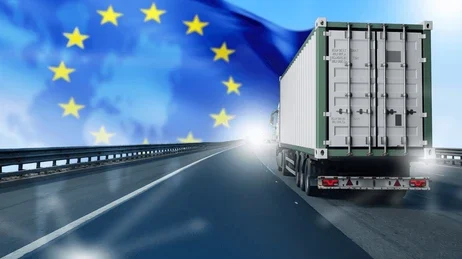
The main international grievance identified by the consortium concerns the 90/180 rule applied in the European Union, under which drivers from Bosnia and Herzegovina can stay in the EU for only 90 days within a six-month period. The carriers questioned why professional drivers are not seen as a security issue up to the 90th day but become one from the 91st day onward, despite holding all the necessary documents, permits, and licenses. They are demanding the right to conduct international transport without obstruction, a clearly defined status for professional drivers, and amnesty for all entry bans already imposed on drivers from Bosnia and Herzegovina in the Schengen area.
Internal demands: fuel excise refunds, VAT, and implementation of agreed points
Alongside the Schengen-related issue, the carriers set out domestic demands for what they call systemic resolution of the freight transport sector. These include a refund of part of the fuel excise duty, a VAT refund for international transport, and implementation by the Indirect Taxation Authority of conclusions defined through 18 points, which they say are aimed at ensuring equal treatment at the state level, speeding up procedures, and reducing border waiting times. They also say the Ministry of Communications and Transport of Bosnia and Herzegovina should fulfill 17 agreed points already aligned with sector representatives, along with broader fiscal relief for the industry.
Border returns and warnings of price increases
Additional reporting tied the protest call to worsening conditions at the border. According to statements cited from the consortium, 875 drivers from Bosnia and Herzegovina had been turned back from the border with Croatia by Tuesday, while uncertainty over whether trucks will be allowed through remains high. The situation was described as a kind of “lottery,” with goods left waiting, contracts under strain, and no certainty for drivers as to whether they will be able to cross.
The same report warned that if the issue is not resolved in the next two weeks, foreign transport companies could take over the business, and citizens in Bosnia and Herzegovina could face price increases of up to 30 percent for goods. The article presented rising transport costs as a direct risk not only to carriers but also to consumers, because disruptions in freight movement would affect supply and pricing more broadly.
Claims of selective enforcement at the border
One of the arguments advanced by the carriers is that the rule is being applied inconsistently. A representative cited in the reporting said some drivers in Herzegovina cross the border without major problems, while Serbian hauliers move through Croatia and Hungary without the same level of disruption, leaving Bosnian drivers uncertain from one crossing point to another. This, they argued, raises questions about whether the rule is being enforced selectively rather than uniformly.
Protest format and message to the public
The consortium said the protests would be democratic, lawful, organized, and professional, without incidents or adventurism. It stated that all activities would be conducted in accordance with regulations governing movement and public order, with field coordinators maintaining constant communication with relevant institutions and full cooperation with citizens in order to preserve order, safety, and the dignity of all participants. The movement of transport units, they added, would be coordinated on the ground and aligned with applicable regulations, but with a clear message that transport processes can no longer continue under what they describe as a systemically blocked sector.
A last appeal before escalation
Taken together, the reports frame the March 23 action as both a last warning and a major escalation by a sector that says it has exhausted its appeals. The carriers’ message is that the issue is no longer only about cross-border logistics, but about the viability of the freight industry in Bosnia and Herzegovina, the continuity of supply chains, and the broader economic consequences if the current impasse remains unresolved.