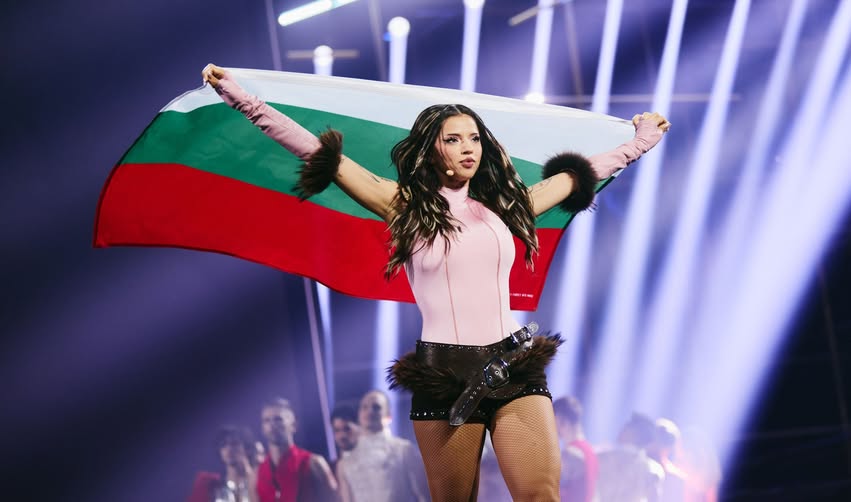
Dara has won the Eurovision Song Contest 2026 with the song “Bangaranga”, a performance that drew attention for its strong symbolism, cultural references and distinctive stage identity. The song became widely recognized during the competition, with its title and central motif quickly spreading across audiences and social media, where many viewers began repeating and interpreting the term itself.
According to the reports, “Bangaranga” is linked to traditional Bulgarian folklore, specifically referencing the rituals of the Kukeri, whose role is to drive away evil spirits and bring health, happiness and prosperity. This cultural element became a defining part of the performance, giving the song a deeper meaning beyond its musical structure and positioning it as a blend of modern pop and traditional symbolism.
Dara’s victory also carries a strong personal dimension. Before achieving success on the Eurovision stage, she had faced public skepticism and criticism, including ridicule directed at her career and public image. Despite this, she continued her artistic path, with reports highlighting the support she received from her close environment, particularly her husband, who remained a consistent source of encouragement throughout her journey.
Following her victory, Dara was welcomed back to Bulgaria as a national heroine. Public reception was marked by strong emotional reactions, with crowds gathering to celebrate her success and recognize her achievement on an international stage. The shift from earlier criticism to widespread admiration was emphasized as a key element of her story, reflecting a broader narrative of perseverance and recognition.
The winning entry also stood out for its conceptual clarity. The integration of folklore into a contemporary Eurovision performance was presented as a deliberate artistic choice, aiming to present national identity in a modern format. The use of symbolic language, visual elements and thematic storytelling contributed to the song’s distinctiveness in a competitive field.