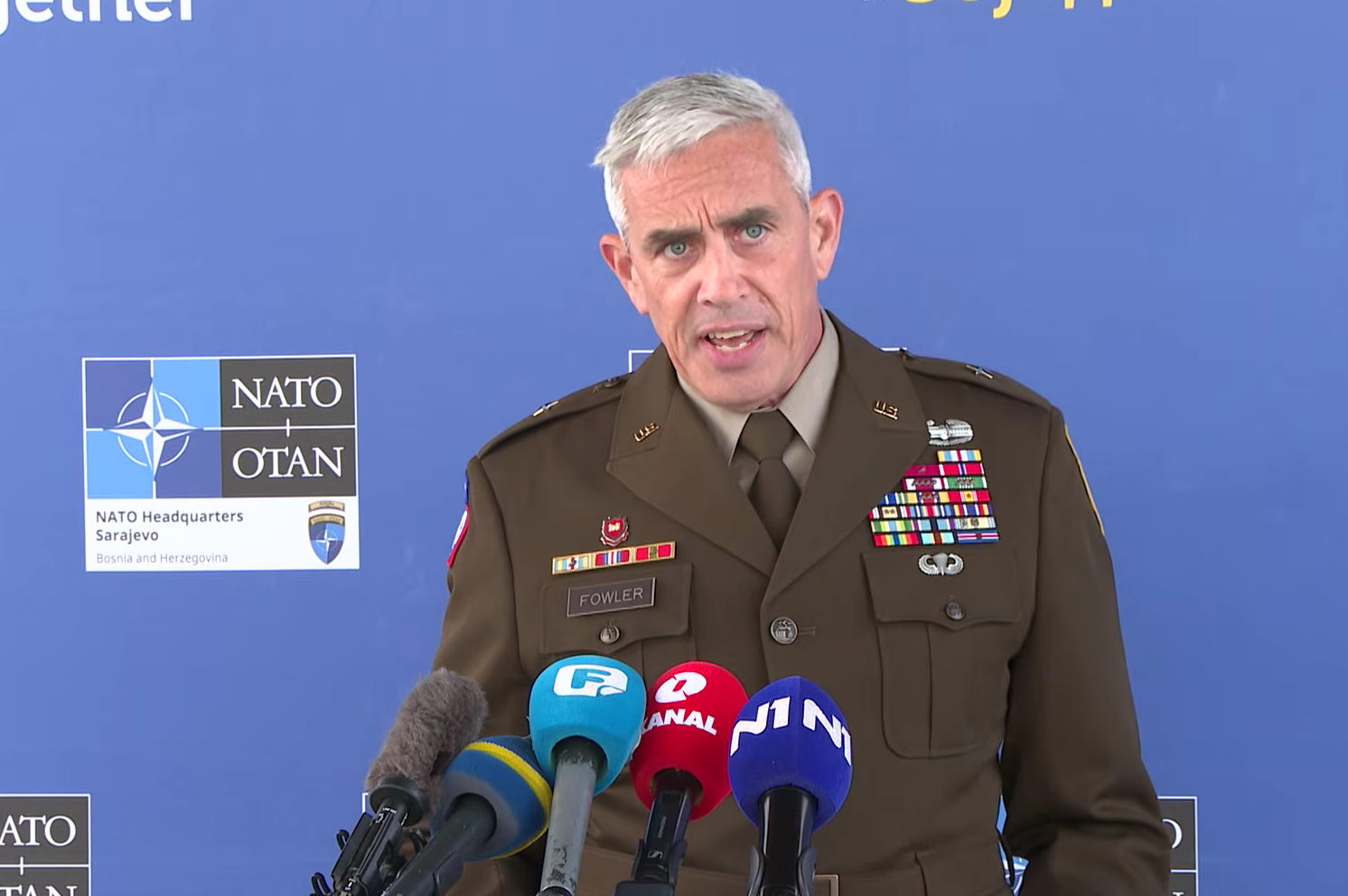
Bosnia and Herzegovina’s path toward NATO membership will be determined by the country’s progress in meeting the Alliance’s standards rather than by a fixed timeline, according to Brigadier General James C. Fowler, Commander of NATO Headquarters Sarajevo. In a recent interview, Fowler reaffirmed NATO’s long term commitment to supporting Bosnia and Herzegovina through defense reforms, institutional development, and security cooperation, while emphasizing that continued political commitment remains essential for further progress.
Fowler explained that NATO’s primary mission in Bosnia and Herzegovina is to advise and assist the country’s institutions, strengthen defense capabilities, and support the modernization of the Armed Forces. He identified several key priorities, including increasing defense funding, improving recruitment and retention of military personnel, modernizing equipment, and completing the country’s ongoing Defense Review. He also highlighted the growing cooperation between NATO and Bosnia and Herzegovina through initiatives such as the Individually Tailored Partnership Program (ITPP), the Planning and Review Process (PARP), and the Defense Capacity Building Initiative, describing them as important steps toward strengthening the country’s security institutions.
One of the most significant milestones expected later this year is the NEL-2 operational readiness evaluation, scheduled for the autumn. The assessment will measure whether units of the Armed Forces of Bosnia and Herzegovina, including the Light Infantry Battalion Group, Military Police platoon, and Explosive Ordnance Disposal (EOD) team, meet NATO standards for deployment in international peacekeeping and security missions. Fowler noted that successful evaluations would demonstrate the professionalism and operational capability of Bosnia and Herzegovina’s military while further strengthening its role as a reliable international security partner.
The NATO commander also addressed broader security challenges facing the country, warning that political disagreements and delays in approving state budgets continue to slow defense reforms. While welcoming a proposed increase in the 2026 defense budget, Fowler expressed concern that the majority of new funding would be allocated to personnel costs rather than modernization projects. He pointed out that Bosnia and Herzegovina currently spends approximately 0.7% of its GDP on defense, well below NATO’s recommended benchmark, limiting the pace of modernization and capability development.
Fowler also stressed the importance of close cooperation between NATO and EUFOR under the Berlin Plus framework, noting that both organizations work together daily to maintain stability and support Bosnia and Herzegovina’s institutions. He emphasized that NATO strongly supports the country’s sovereignty and territorial integrity, while continued reforms in defense, governance, and the rule of law also contribute to its broader European integration goals. Although membership ultimately remains a political decision for Bosnia and Herzegovina and NATO member states, Fowler concluded that steady reforms and constructive cooperation remain the most effective path toward deeper integration with the Alliance.