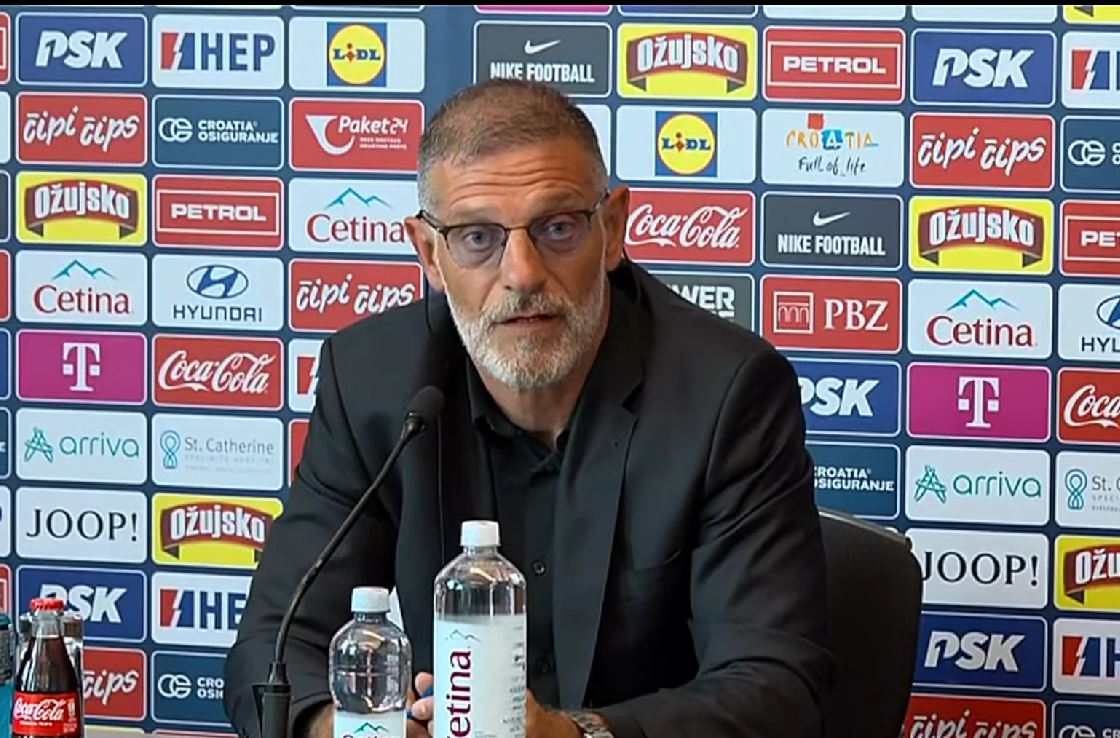
The Croatian Football Federation has appointed Slaven Bilić as the new head coach of the national team, bringing the 56 year old back to the bench he left in 2012 to succeed Zlatko Dalić, who stepped down after a remarkable nine year tenure that included a World Cup final and a bronze medal. The HNS Executive Committee unanimously approved the appointment on the proposal of president Marijan Kustić, with the federation’s Expert Commission also giving its full backing. Bilić, who previously managed Croatia from 2006 to 2012, faces the daunting task of following the most successful period in the nation’s football history while inheriting a squad still featuring veterans from Dalić’s golden generation.
Dalić’s departure marks the end of an era that transformed Croatia from a talented but underachieving side into one of international football’s most feared teams. Appointed in October 2017 after Ante Čačić’s dismissal, Dalić guided Croatia to the 2018 World Cup final in Russia, where they lost 4-2 to France, and followed that with a third-place finish at the 2022 World Cup in Qatar. He also led the team to the 2023 UEFA Nations League final and won the 2024 FIFA Series. Under his stewardship, Croatia became the second smallest country by population ever to reach a World Cup final, with Dalić himself earning the Franjo Bučar State Award for Sport. His record of 42 wins from 65 matches in his first spell, and the subsequent World Cup achievements, set a benchmark that Bilić must now attempt to match or exceed.
Bilić brings a wealth of experience from a peripatetic coaching career spanning four continents. After his first Croatia tenure, during which he famously knocked England out of Euro 2008 qualifying with a 3-2 win at Wembley and reached the tournament’s quarter finals, he managed Lokomotiv Moscow, Beşiktaş, West Ham United, Al-Ittihad, West Bromwich Albion, Beijing Guoan, Watford, and most recently Al-Fateh in Saudi Arabia. At West Ham, he guided the club to a seventh place Premier League finish and Europa League qualification in his first season, and his team’s all-action style made him a fan favorite before his dismissal in November 2017. As a player, Bilić was part of Croatia’s 1998 World Cup bronze medal winning squad alongside Davor Šuker and Igor Štimac, earning 44 caps and playing for clubs including Hajduk Split, Karlsruher SC, West Ham, and Everton. Known for his passion and rock and roll persona, he played guitar in a heavy metal band called “Rawbau” and authored a book titled “The Story of Football and Rock and Roll”, Bilić has promised to bring “exactly the same motivation and desire” he had in 2006, but now as “a more mature and experienced coach.”
The challenge ahead is formidable. Croatia’s squad still relies heavily on aging stars like Luka Modrić, who turns 41 during the next international cycle, and Bilić must navigate a generational transition while maintaining the team’s competitive edge. HNS president Kustić acknowledged that “it is not easy to follow in Zlatko’s footsteps,” but expressed confidence that Bilić has “the full support of the players, the fans, and the wider public.” For Bilić, the return to the national team represents both a homecoming and a redemption arc, an opportunity to prove that the coach who once introduced a generation of young Croatian talent to the senior side can now lead the next wave. Whether he can replicate Dalić’s magic on the biggest stage remains the question that will define Croatian football for years to come.