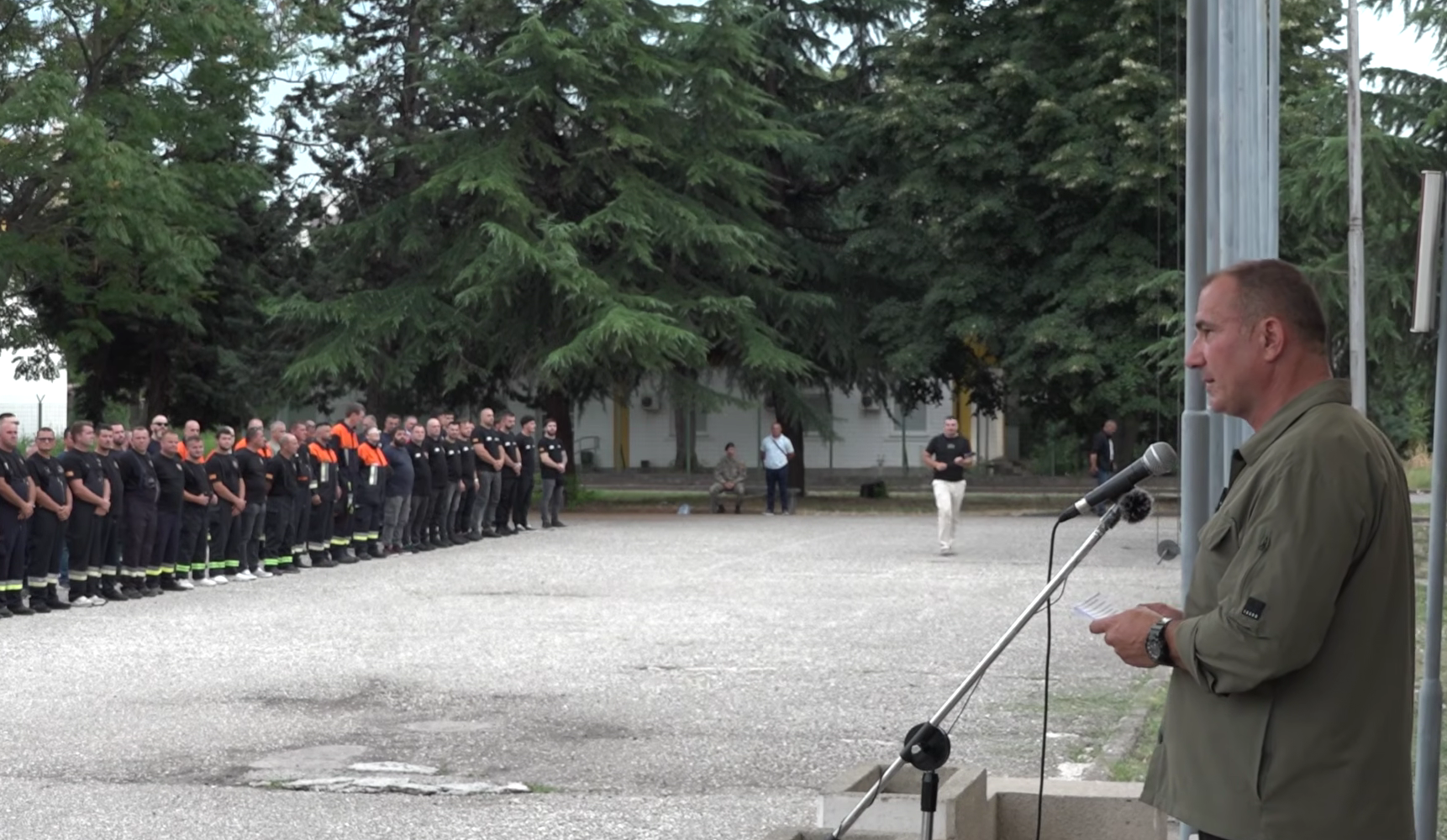
More than 250 volunteer firefighters from across Macedonia gathered at the Goce Delčev barracks in Skopje this week for a formal muster that marks their full integration into the country’s national crisis response system ahead of the summer fire season. Organized by the Directorate for Protection and Rescue (DZS), the event established the exact number of volunteers ready to join DZS rapid response teams battling wildfires on open terrain. DZS Director Stojanche Angelov told the assembled crews that this was the first time Macedonia’s volunteer fire associations had been unified under a single command structure, transforming them from scattered local units into a coordinated national asset. “We will show that you exist, how many of you there are, and that for the first time you are united under one common command,” Angelov said, emphasizing that membership in a registered volunteer fire association would now be a prerequisite for joining DZS firefighting teams.
The mobilization reflects a broader push to professionalize volunteer firefighting through legislative reform. Angelov announced initiatives to amend both the Law on Citizens’ Associations and the Law on Firefighting to improve the legal status and operational standing of volunteer fire associations (DPDs). He also issued a direct appeal to Macedonia’s business community and diaspora, urging them to support the volunteers with equipment and funding. “From today onward, the public will know even more clearly that you are a serious and respectable force,” he said, expressing confidence that patriotic responsibility would drive donations of firefighting gear. The volunteers bring distinct advantages over conscripted police or army personnel, most already possess firefighting uniforms, training, and hands on experience, and their participation is voluntary rather than ordered, which Angelov noted should translate into high motivation, provided it is matched by strict discipline.
The move comes as Macedonia faces an increasingly volatile fire season across the Balkans. The country is participating in the EU Civil Protection Mechanism’s 2026 wildfire response, contributing two light aircraft to the European rescEU fleet and hosting pre positioned multinational firefighting teams. A cross border project with Greece is also advancing early detection systems and firefighting vehicles in the JASEN nature reserve area, a high risk zone near the border. With climate pressures intensifying and regional wildfire seasons growing longer, Angelov stressed that rivalries and egos must be set aside to build an effective command hierarchy. The volunteers capped the event with an open air working session to exchange operational experiences and refine proposals for better civil protection throughout the summer.