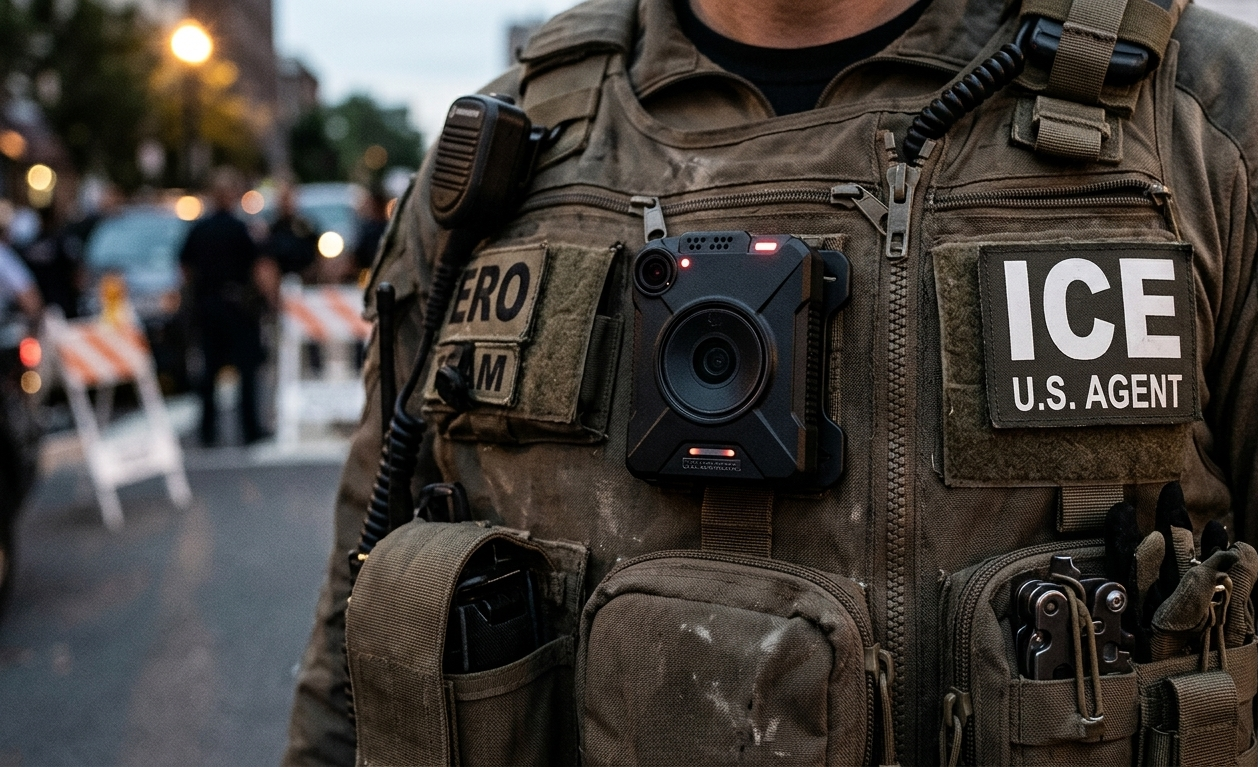
U.S. Immigration and Customs Enforcement (ICE) officers will soon be required to use body cameras during vehicle stops nationwide, according to Trump administration border czar Tom Homan. The policy announcement comes after a series of fatal shootings involving immigration enforcement officers raised questions about accountability, transparency, and the need for clearer documentation during encounters between agents and civilians. Officials say the cameras are intended to provide a more accurate record of incidents and help determine whether officers acted appropriately during high pressure situations.
Homan said body cameras can help protect both law enforcement officers and the public by providing an independent view of what happens during enforcement actions. He argued that video evidence often supports officers by showing the circumstances they face, while also improving public confidence in investigations. The agency has already purchased the equipment and begun training personnel who will help introduce the system across ICE operations nationwide.
The decision follows two fatal shootings involving ICE officers during vehicle stops earlier this month, one in Texas and another in Maine. The incidents occurred without body camera footage from the agents involved, increasing public criticism of ICE procedures and leading to protests in several cities. Officials temporarily reviewed vehicle stop practices following the shootings, but President Donald Trump later directed immigration agents to resume those operations.
The push for body cameras comes after years of debate over oversight within federal immigration enforcement. ICE began testing a body camera program in 2024, initially providing cameras to officers in several major cities, including Baltimore, Buffalo, Detroit, Philadelphia, and Washington, D.C. However, the expansion of the program faced delays over funding concerns, with previous reports indicating that some officials had considered reducing financial support for the initiative. The Department of Homeland Security later said the nationwide rollout would depend on available funding.
Supporters of the program argue that body cameras could improve accountability, strengthen investigations, and provide evidence in cases involving allegations of excessive force or misconduct. Law enforcement groups have also pointed out that recordings can help clear officers when actions are found to be justified. However, civil rights organizations have continued to call for stronger oversight measures, arguing that cameras alone are not enough without clear rules on when footage must be recorded, how it is reviewed, and how the public can access information from investigations.
The broader debate comes as immigration enforcement has expanded significantly since President Donald Trump returned to office and launched a major deportation campaign. The increase in enforcement operations has led to heightened public attention over the tactics used by federal agents and the level of transparency surrounding their actions. According to government and advocacy reports, several people have died during immigration enforcement operations since the start of 2025, adding pressure on officials to strengthen accountability measures.
The nationwide introduction of body cameras represents an effort by ICE to address concerns surrounding its operations and rebuild public trust following recent controversies. While supporters view the policy as an important step toward transparency, critics say its effectiveness will depend on how consistently the cameras are used and whether the footage leads to meaningful accountability. As immigration enforcement remains one of the most politically debated issues in the United States, the implementation of this program is expected to face continued public and legal scrutiny.