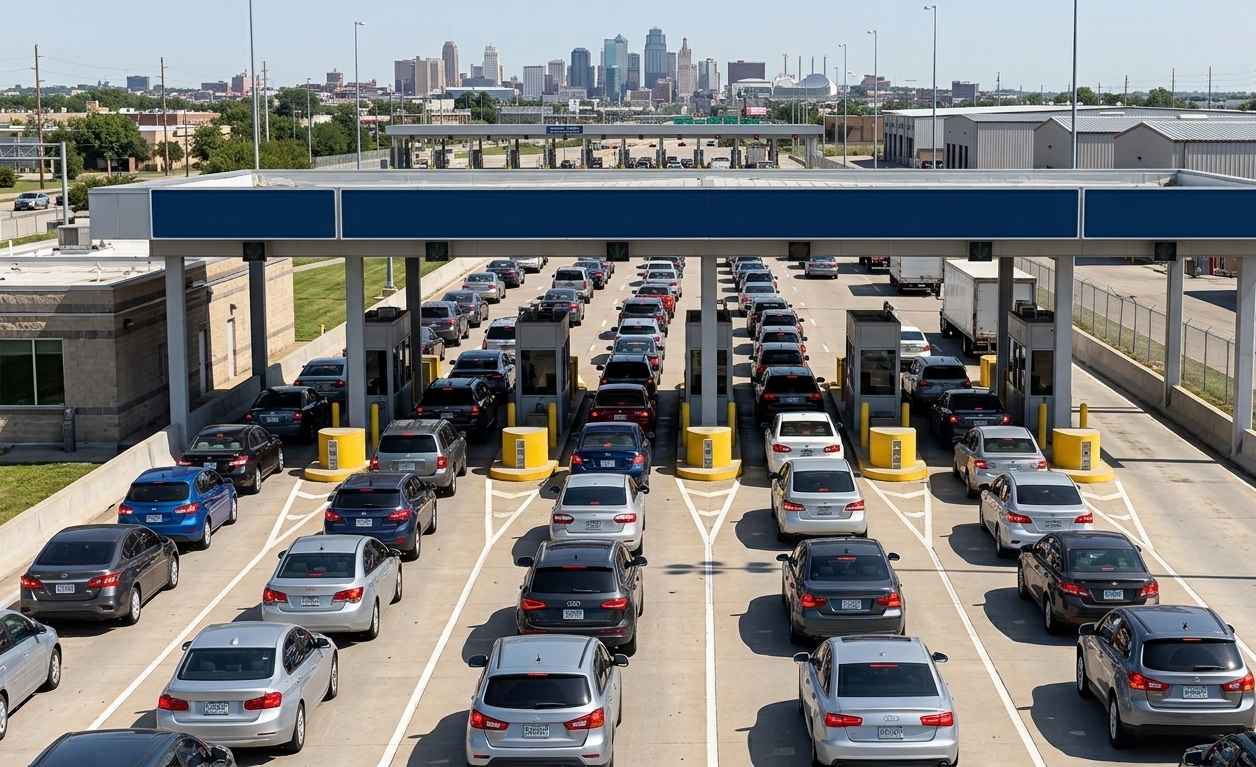
Croatia will relax its strict biometric border procedures for non EU travelers during the summer tourist season, allowing police to partially suspend the Entry/Exit System when wait times exceed 45 minutes. The move, confirmed by Interior Minister Davor Božinović, comes in response to massive queues and pressure at border crossings that have plagued the country since the EES went fully operational in April. Under the emergency protocol, officers can skip fingerprint and facial recognition requirements while maintaining mandatory passport checks, creating traveler files without capturing biometrics.
The EES, which replaced manual passport stamps on April 10, requires all non EU visitors to register fingerprints and facial images at Schengen external borders. While the system is designed to enhance security and detect overstayers, its rollout has been rocky. Processing times increased by up to 70% at some locations, and technical failures caused repeated disruptions at airports from Gran Canaria to Lisbon. The European Commission built flexibility into the framework, allowing member states to suspend checks for up to 90 days after launch, with a possible 60 day extension through early September. Croatia had initially insisted it would not suspend the system, but the reality of peak season tourism, with crossings like Karasovići to Montenegro regularly hitting 2-3 hour waits, has forced a pragmatic reversal.
Border Police Chief Jošo Vujić explained the partial suspension mechanism: “In emergency situations when we expect waiting time to exceed 45 minutes, we have the right to partially suspend the EES, which means creating a file, but the person does not need to provide biometrics, meaning facial recognition and fingerprints.” Božinović defended the approach as a targeted safety valve, noting that the system has already prevented 5,000 people from entering the EU improperly. “There are certain possibilities for short term temporary flexibilization, and we use them if the need arises,” he said. “However, this is a system primarily intended for the security of EU citizens, and as such it will be further improved.” The episode illustrates the tension between security imperatives and the economic reality of tourism dependent economies, where border friction can directly impact visitor satisfaction and revenue.