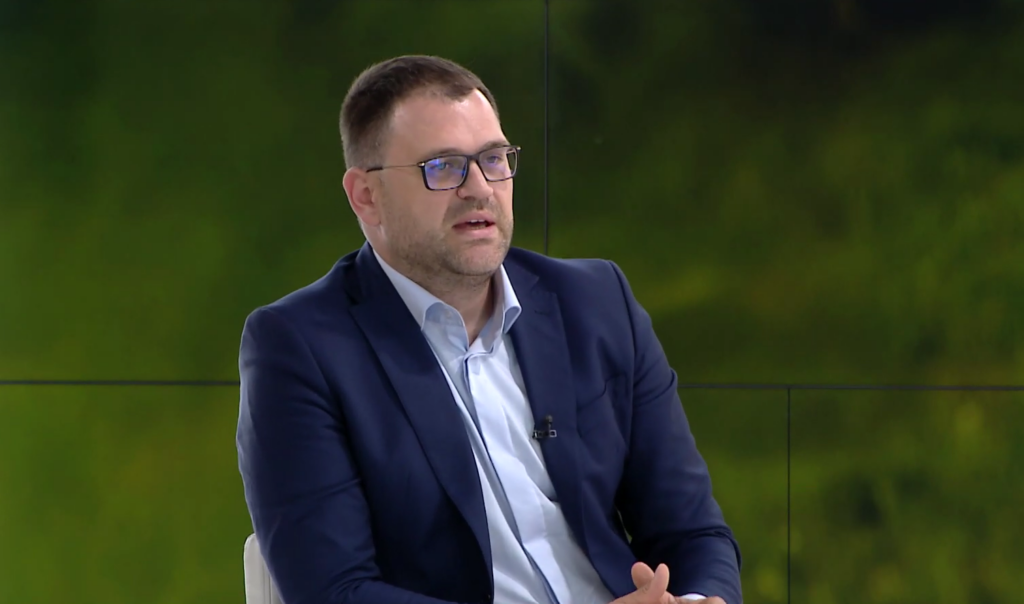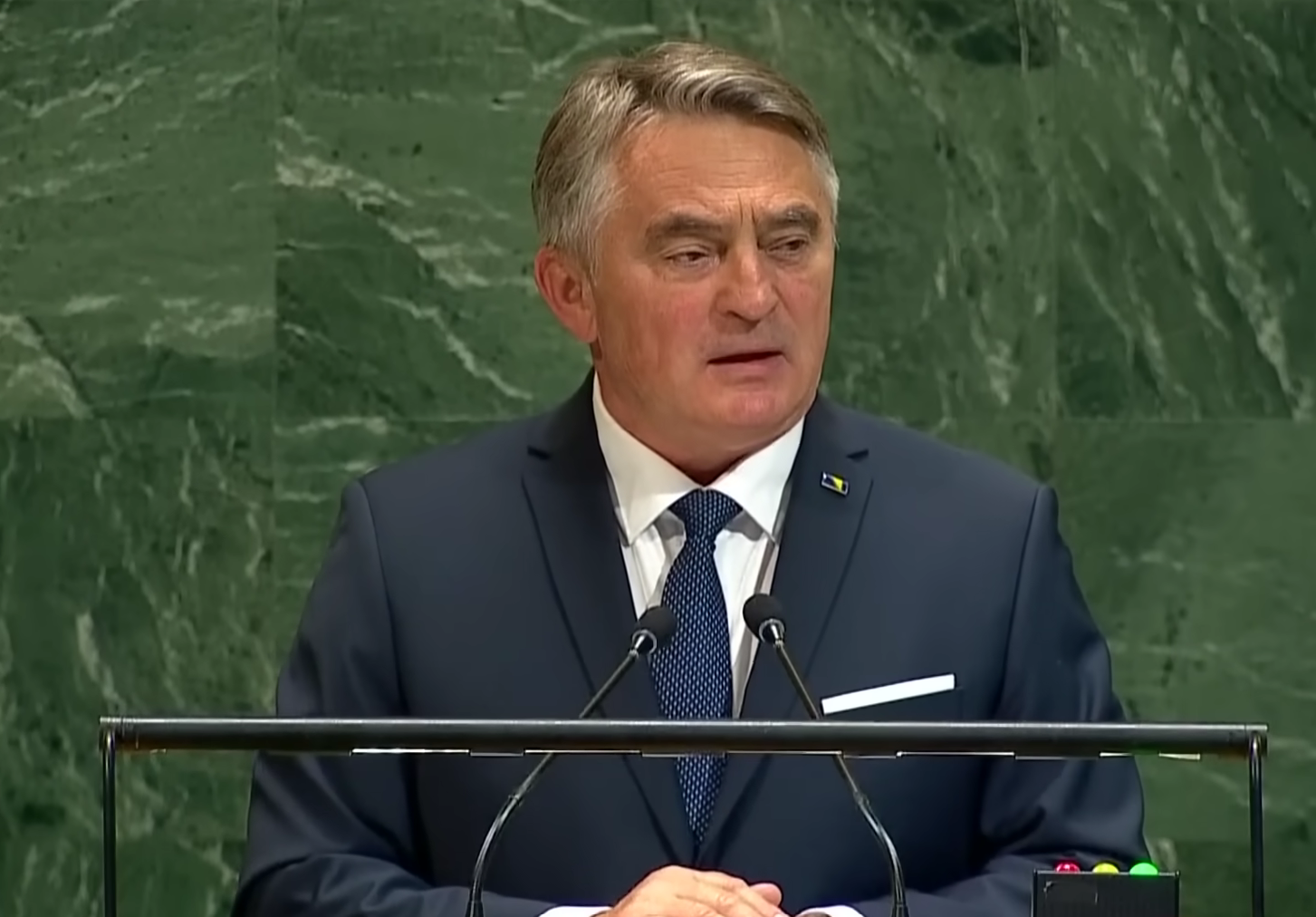
BiH Presidency Member Željko Komšić joined thousands of participants in the Peace March in Stuttgart, organized by the Stuttgart Srebrenica, Gedenkinitiative e.V. association, to commemorate the 31st anniversary of the Srebrenica genocide. Addressing the crowd, he described the genocide as “one of the greatest wounds to the soul of Bosnia and Herzegovina, to the soul of Bosniaks, to the soul of Bosnians and Herzegovinians and all normal people in our country.” His remarks came at a time when genocide denial remains deeply entrenched in parts of the region, with the Srebrenica Potočari Memorial Center documenting 99 cases of denial in public spaces between June 2024 and May 2025 alone, including active denial, relativization, and glorification of convicted war criminals.
Komšić emphasized that even three decades after the atrocity, the trauma remains profound, and the issue of how society confronts genocide is one of the most important social questions in Bosnia and Herzegovina today. He drew a sharp distinction between the political machinery that orchestrated the genocide and the individual moral failure of those who continue to deny it. “The truth about the genocide has been legally established. This fact does not require any recognition from anyone. It exists and will exist regardless of whether someone recognizes it or not,” he stated, adding that those who turn a blind eye to this truth ultimately harm only themselves, as their denial cannot touch the victims anymore. His words carry particular weight given the persistent climate of denial in the Republika Srpska entity, where BiH Presidency member Milorad Dodik and other officials have repeatedly rejected the genocide label, with Dodik alone accounting for 31 documented instances of denial in a single reporting period according to the Srebrenica Memorial Center’s research.
What distinguished Komšić’s address, however, was his focus not on the perpetrators or deniers, but on the resilience of those who survived. He highlighted how many survivors have risen to positions of excellence in their lives and careers, refusing to remain defined by victimhood. He pointed to the descendants of survivors who recently “spread the glory of Bosnia and Herzegovina” at the last world championship, a reference that underscored his broader message: “It was not only touching, it was not only a matter of pride and hope, it was a message to all those who counted on the disappearance and extermination of that nation. The message that such villains heard and received was, you failed.” This narrative of survival as defiance stands in stark contrast to the culture of denial that persists in parts of the region, where convicted war criminals like Ratko Mladić are still glorified on souvenirs and murals, and where the Republika Srpska government has actively worked to remove references to the genocide from school textbooks and even enacted laws criminalizing the use of the term “genocide” to describe Srebrenica within its territory.
Komšić concluded with a forward looking vision that tied memory to national renewal. For the first time in three decades, he said, “the outlines of victory can be seen on the horizon of the future of our country,” not through hatred or revenge, but through a new generation raised on love for the homeland rather than bitterness. He paid special tribute to those who survived the genocidal operation by making their way to free territory, describing each survivor’s story as “more complex and grandiose than all the movies and novels written on the topic of genocide.” His final message was one of defiant hope, that the survivors still have much to teach the nation about what it means to never surrender in the fight for a country that remains, in his words, “the only guarantee of survival for all of us who love Bosnia and Herzegovina, no matter where we are and wherever we are.”