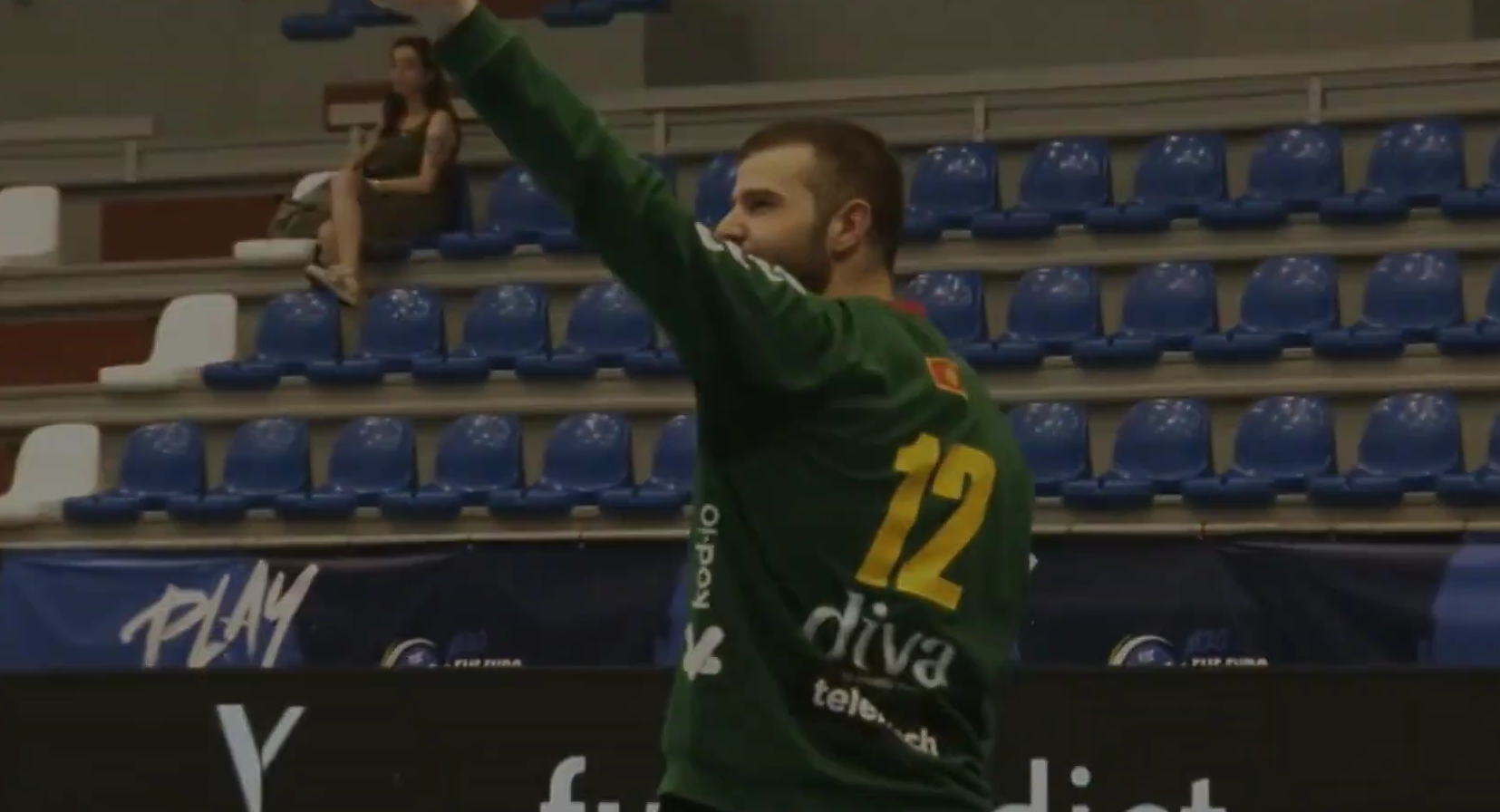
One of Montenegro’s most promising young goalkeepers, 22 year old Vasilije Vujović, has officially signed for RK Radovljica in Slovenia, marking the latest chapter in a career that has already drawn attention from scouts across the region. The Cetinje native leaves RK Lovćen, the club where he developed his craft and represented the Montenegrin youth national teams, for a Slovenian side that recognized his reflexes, work ethic, and composure under pressure as qualities worth investing in.
Vujović’s departure follows a well worn path from Cetinje, a city that has functioned as a handball breeding ground for decades. RK Lovćen, founded in 1949, is the most successful men’s handball club in Montenegro with 10 national championships and 14 national cups, and one of the most important talent factories in the region. Its alumni include Veselin Vujović, the 1988 IHF World Player of the Year and Olympic gold medalist, alongside numerous other stars who went on to compete in Europe’s top leagues. The club’s own history notes that it became “the most important base of Montenegro men’s national handball team players.” The Cetinje ecosystem extends beyond Lovćen itself, RK Cepelin, founded in 1995 under the legendary Miodrag “Miško” Popović, has served as another critical pipeline, training over 1,000 young athletes in its first 15 years. Žarko Marković, another Cepelin product who went on to play for elite clubs like MKB Veszprém, is just one example of how the city’s academies consistently produce international caliber players.
Slovenia has become an increasingly attractive destination for young Montenegrin players seeking to bridge the gap between domestic promise and senior elite performance. The Slovenian league offers a faster pace, higher tactical sophistication, and greater professionalism than the Montenegrin domestic competition, making it an ideal testing ground before potentially moving to even bigger markets in Germany, France, or Spain.
Vujović himself acknowledged the weight of the moment in his farewell statement, expressing gratitude to Lovćen while framing the move as “the achievement of one of my sporting goals.” He made clear that he sees this not as an escape from his roots but as a necessary evolution: “Lovćen is my club, Cetinje is my home and that’s where I learned everything about handball and life… Now is the time to take a step forward, to a league that is perfect for the development of young players.” His ambition to “represent Montenegrin handball in the right way” speaks to the broader responsibility that Cetinje trained players often feel.
For Montenegrin handball, the transfer confirms that the country’s youth development systems are functioning at a high enough level to attract foreign clubs, while also underscoring the persistent challenge of retaining top young talent in a small domestic market. The Montenegrin national team, nicknamed the “Lions”, relies heavily on players who have cut their teeth abroad, and Vujović’s move is seen as another step toward the big stage. Whether he returns to Lovćen as a battle tested veteran or charts a new path through Europe’s elite clubs, his journey from Cetinje to Radovljica is the latest proof that Montenegro’s handball heartland continues to beat strong.