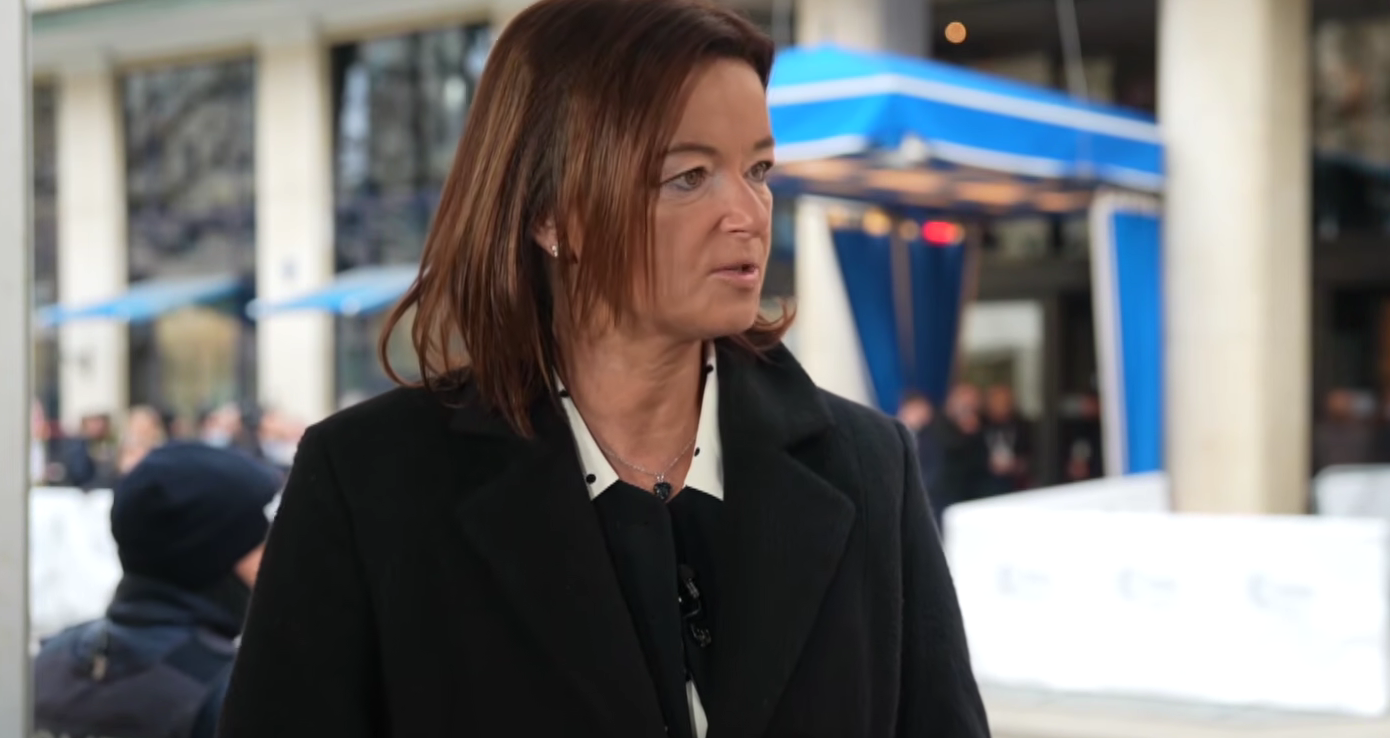
Slovenia has blocked the appointment of its own former foreign minister, Tanja Fajon, as the EU’s special representative for the African Sahel region, in a move that has drawn sharp criticism from the country’s president and opposition parties as a self inflicted wound to its international standing. Fajon, who served as foreign minister from June 2022 until the right of center government led by veteran Janez Janša took power in early June 2026, had been put forward by EU High Representative Kaja Kallas and was expected to be appointed by member states in early July. Instead, her nomination was removed from the agenda, and on July 20, Fajon confirmed that Kallas had withdrawn it under pressure from the Slovenian government and the European People’s Party (EPP), the largest political group in the European Parliament, which includes Janša’s Slovenian Democratic Party (SDS).
The official justification came from Fajon’s successor, Foreign Minister Tone Kajzer, who alleged “serious violations” in the nomination procedure. He claimed the process lacked a legal basis, was not signed off by the outgoing government but rather by the Foreign Ministry’s secretary general as Fajon’s subordinate, and could “create an impression that the entire situation was usurped for personal gain.” Kajzer also denied Fajon’s claim that she had informed him of her bid when he took over the ministry, calling it a lie. Fajon fired back, insisting the process had been transparent and lawful, carried out in the same manner as previous applications for similar posts. She described Kajzer’s claim as a lie in turn, stating that when she told him about the bid in early June, he had promised to actively support her and even congratulated her when Kallas notified member states of her pick.
The political dimension is impossible to ignore. Fajon and Janša have a long history of animosity. In March 2021, during Janša’s previous premiership, he clashed with Fajon, then an MEP, over a video he sought to present to the European Parliament alleging media bias, Fajon denounced the incident as a “disgrace for Slovenia.” In 2024, Janša’s SDS initiated a no confidence motion against her as foreign minister after she recalled Ambassador Tone Kajzer for sharing an internal ministry cable with Janša. The two represent opposite poles of Slovenia’s polarized political landscape: Fajon leads the center left Social Democrats and serves as vice president of the Party of European Socialists, while Janša has dominated the Slovenian right for over three decades. Janša himself declared on X that the Fajon appointment “saga” was over, and SDS MEP Romana Tomc noted it was “important to have the support and allies in the EPP.”
President Nataša Pirc Musar did not mince words in her assessment. “The withdrawal of the appointment might be a small win for a certain political faction but at the same time a big loss for the country,” she said, adding that “political affiliation matters more than experience and knowledge when it comes to support for Slovenian candidates for positions in international institutions.” Fajon echoed the sentiment, warning that “Slovenia’s reputation has been severely tarnished” and that the country would not get another opportunity to hold a high level EU position for some time. The center left opposition was equally scathing, The Left described the move as a reason “why Slovenia’s influence in the world is so negligible, why Croatia has a disproportionately greater presence and influence in the EU, despite joining it later.” The Freedom Movement, the largest opposition party, stated simply: “If we want to have influence out there in the world, we need to support all candidates.”
The practical consequence is that Slovenia has lost a chance to place one of its most experienced diplomats, Fajon served three terms in the European Parliament, chaired the EU-Serbia Stabilization and Association Parliamentary Committee, and led Slovenia’s UN Security Council presidency in September 2024, in a strategically significant post. The EU has instead turned to Danish diplomat Birgitte Nygaard Markussen, currently Denmark’s Special Representative for the Great Lakes and the Sahel and a former EU Ambassador to the African Union, to fill the position. For Janša and the SDS, the blocking of Fajon is a political victory. For Slovenia, it may be a costly one. The Sahel region is a critical frontier for European security, migration, and counter terrorism policy, and having a Slovenian voice at that table would have amplified the country’s relevance well beyond its size. Instead, Ljubljana has demonstrated to Brussels that domestic score settling takes precedence over national interest, a message that is unlikely to be forgotten.