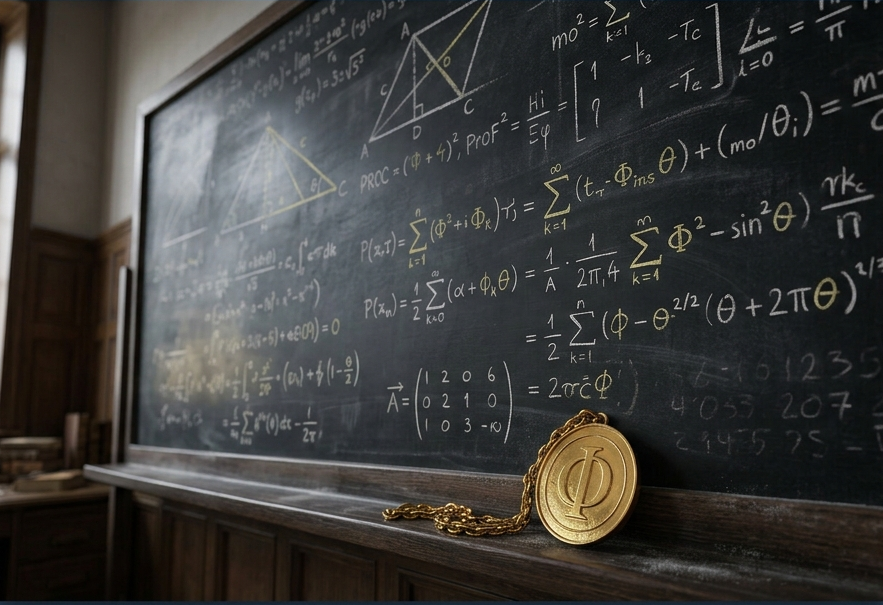
Serbian high school students have delivered an outstanding performance at the Olympiad USA international mathematics competition held from July 10 to 14, 2026, in Houston, Texas, bringing home three gold medals and one bronze. The gold medalists represent three of Serbia’s most prestigious schools, Belgrade’s Mathematical Grammar School, the Jovan Jovanović Zmaj Grammar School in Novi Sad, and the Zrenjanin Grammar School. A second student from Zrenjanin Grammar School also secured bronze, giving Serbia a four medal haul in a competition that draws participants from elementary through high school levels.
The results underscore the depth of Serbia’s mathematical talent pipeline, which stretches across the country’s major educational institutions. The Mathematical Grammar School in Belgrade has long been recognized as one of Europe’s elite math focused secondary schools, while the Jovan Jovanović Zmaj Gymnasium in Novi Sad, founded in 1810 and one of the oldest Serbian educational institutions, has maintained a dedicated stream for mathematically gifted students since the post communist era. The school’s specialist mathematics department, which includes classes for gifted elementary students in grades 7 and 8, is staffed partly by professors and assistants from the University of Novi Sad, creating a direct bridge between secondary and tertiary education.
The Olympiad USA competition, while less globally prominent than the International Mathematical Olympiad, serves as an important proving ground for young mathematical talent and a stepping stone to higher level international competitions. For Serbian students, success in Houston continues a tradition of excellence that has seen the country produce numerous IMO medalists and world class mathematicians. The geographic spread of the medalists, Belgrade, Novi Sad, and Zrenjanin, also demonstrates that mathematical talent in Serbia is not concentrated in the capital alone, but is nurtured across regional centers with strong educational traditions.
The achievement comes at a time when Serbia, like much of the Balkans, faces the persistent challenge of brain drain, with many of its brightest young minds seeking opportunities abroad. The Houston results offer a counter narrative: that Serbia’s schools still possess the capacity to develop world class talent at home. Whether these students remain in Serbia’s academic and professional ecosystem or follow predecessors to universities and careers in Western Europe and North America will be a test of the country’s ability to retain its human capital. For now, the three golds and one bronze are a reminder that Serbian mathematics, with roots dating back to the 19th century intellectual flowering of institutions like the Zmaj Gymnasium, remains a force to be reckoned with on the international stage.