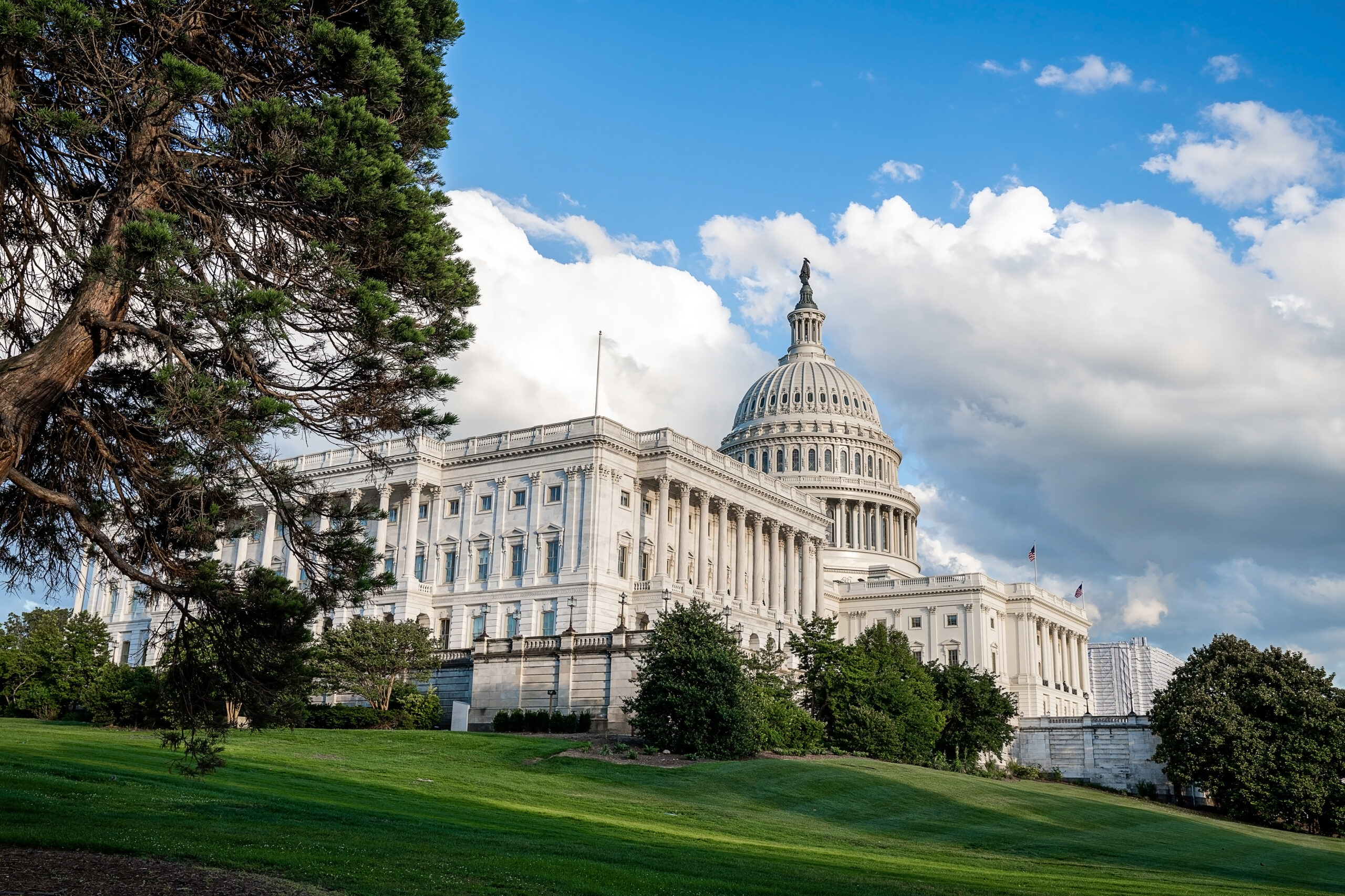
The U.S. House of Representatives narrowly passed its version of the fiscal 2027 National Defense Authorization Act on Wednesday by a 216-212 vote, authorizing an unprecedented $1.15 trillion in military spending despite deep Democratic objections over the Iran war, Israel cooperation, and the bill’s attachment to voting restrictions. The vote fell largely along party lines, with all but seven Republicans supporting the measure and all but six Democrats opposing it. The NDAA, historically treated as “must pass” legislation and enacted for 65 consecutive years, now faces an uncertain path through the Senate after Democrats blocked that chamber’s version last week.
Democrats raised multiple objections. The $1.15 trillion price tag comes as President Trump and Republicans slash social programs, creating a stark contrast between military largesse and domestic austerity. The ongoing war with Iran, which the Pentagon says has cost $37.5 billion so far, remains deeply unpopular. But the most contentious provision is Section 219 (formerly 224), the “United States-Israel Defense Technology Cooperation Initiative,” which would designate an executive agent to expand U.S.-Israel military integration across AI, quantum computing, cyber warfare, biotechnology, and missile defense. Critics, including Representatives Ro Khanna and Thomas Massie, warn this would effectively “fuse” the two militaries beyond even NATO ally status, making the relationship harder to unwind or oversee. Supporters, including AIPAC, argue it merely streamlines existing cooperation and includes $750 million for joint programs, a $65 million increase over FY2026.
Republicans defended the bill as essential for supporting troops during the Iran war, funding defense systems development, and providing benefits including pay raises of up to 7% and construction for barracks and family housing. But they complicated the NDAA’s path by attaching it to the “SAVE America Act,” Trump backed legislation tightening voting restrictions. The maneuver means the defense bill cannot reach the president’s desk without the voting measure also passing, a provision Senate Democrats are almost certain to block, given they lack the votes to advance the SAVE Act. Senate Republican leaders have pledged to try again before the August recess, but the procedural knot may prove impossible to untie.
The NDAA process is still in its early stages. Each chamber passes its own version before Armed Services committee negotiators hammer out a compromise that must then pass both houses again. If a compromise emerges, it would go to Trump for signature or veto. But the partisan divisions this year are deeper than in recent memory, spanning not just the Israel provision and Iran war but also “culture war” issues like the treatment of transgender troops. For a bill that has historically united both parties, the 216-212 margin signals that even the Pentagon’s budget has become a battlefield in America’s polarized politics. Whether the 65 year streak of NDAA enactments survives will depend on whether negotiators can find common ground, or whether the defense bill becomes the latest casualty of a Congress that can barely agree on what day it is.