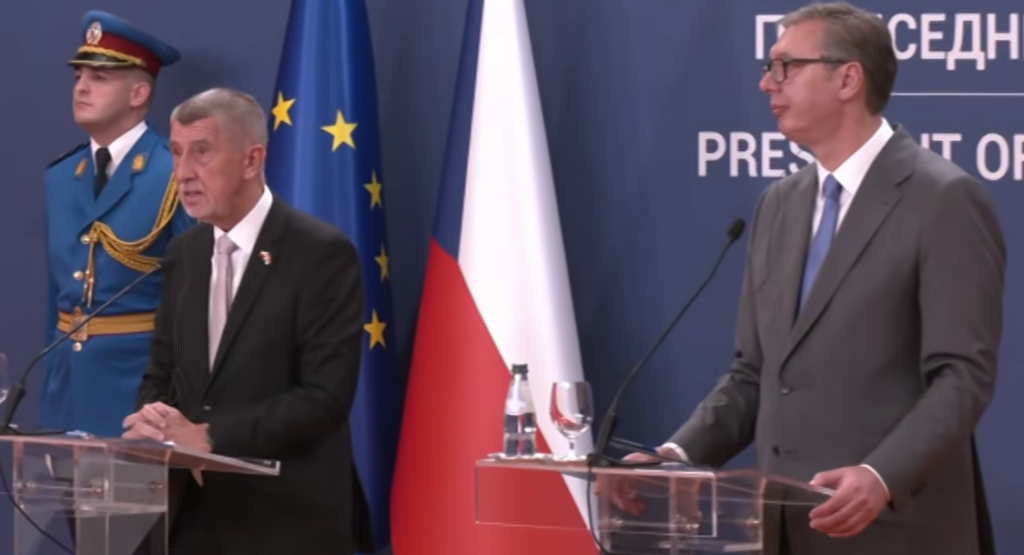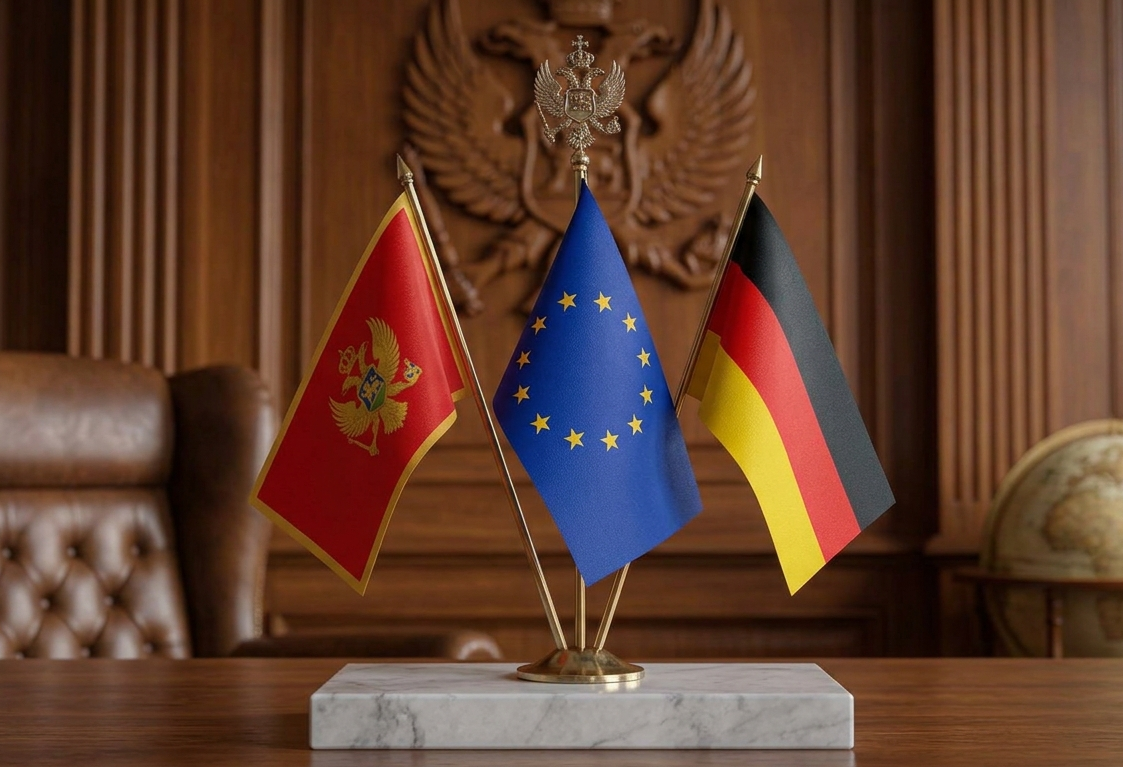
Montenegrin President Jakov Milatović has met with outgoing German Ambassador Peter Felten to underscore what both sides describe as a historic moment in Montenegro’s European integration, with Germany positioned as the country’s most critical partner in the final sprint toward EU membership. Milatović thanked Felten for his dedicated engagement and personal contribution to strengthening bilateral relations, which he said were “further strengthened during his mandate through open political dialogue, friendship and cooperation in numerous areas.” The meeting highlighted Germany’s continued support for Montenegro’s European path and the significance of the recent EU-Western Balkans Summit in Tivat, attended by German Chancellor Friedrich Merz.
Felten, who has served as Germany’s ambassador to Montenegro since August 2022, assessed that the country is “on the right path towards full membership in the EU” and enjoys “strong international credibility and reputation.” He particularly praised the successful organization of the Tivat summit, emphasizing that Montenegro “thereby confirmed its membership in the European family and its readiness to take its rightful place in the EU.” The summit, held in June 2026, brought together EU leaders and Western Balkan representatives under the Franco-German proposal to simplify and accelerate accession negotiations. Merz declared that the EU’s message was clear: “We want you,” and expressed hope that a good solution for gradual integration would be found “very soon.” French President Emmanuel Macron was equally explicit: “We are all here to support Montenegro’s efforts to join the EU.”
The diplomatic choreography reflects concrete progress. Montenegro has provisionally closed 16 of 33 negotiating chapters, with all chapters opened. In April 2026, EU ambassadors approved the creation of an ad hoc working group to draft Montenegro’s accession treaty, a step that signals the bloc is preparing for the final legal phase of membership. Germany has been the driving force behind this momentum. It is Montenegro’s third largest trade partner and the EU member state with the highest direct investment in the country. German development cooperation, channeled through KfW and GIZ, focuses on public infrastructure, energy efficiency, water supply, and SME development. Since Montenegro’s independence in 2006, Germany has been its largest bilateral donor.
Felten’s own tenure has been marked by unusually direct engagement. In a 2023 interview, he stated that EU accession “is not rocket science” and that the EU is “more willing than ever to welcome Montenegro to our club as soon as the country has completed its homework.” He has consistently linked economic investment to reform progress, noting that German companies like Lidl and wind farm developers are waiting for legislative certainty, particularly in spatial planning and rule of law, before committing major capital. The ambassador has also championed people to people ties, highlighting the success of Montenegrin students in securing German scholarships and the growing Montenegrin diaspora in Germany as “an invaluable bridge between our countries.”
For Milatović, the meeting with Felten serves a dual purpose, celebrating a diplomatic partnership and rallying domestic support for the reforms still needed. Montenegro’s Parliament is set to vote on constitutional amendments required to close Chapters 23 and 24, and seventeen chapters remain open. Prime Minister Milojko Spajić has set an ambitious target of completing negotiations by the end of 2026 and securing membership by 2028, a timeline that would make Montenegro the EU’s 28th member state. Whether that timeline holds depends on maintaining reform momentum, resolving bilateral disputes with Croatia, and sustaining the political consensus that has eluded Montenegro in the past. Felten’s parting message was clear, the path is open, the support is there, but the walking remains Podgorica’s responsibility. As he told Montenegrin media in his farewell reflections, Germany wants to “invite Montenegro into the European club.” The invitation is on the table. The question is whether Montenegro can arrive on time.