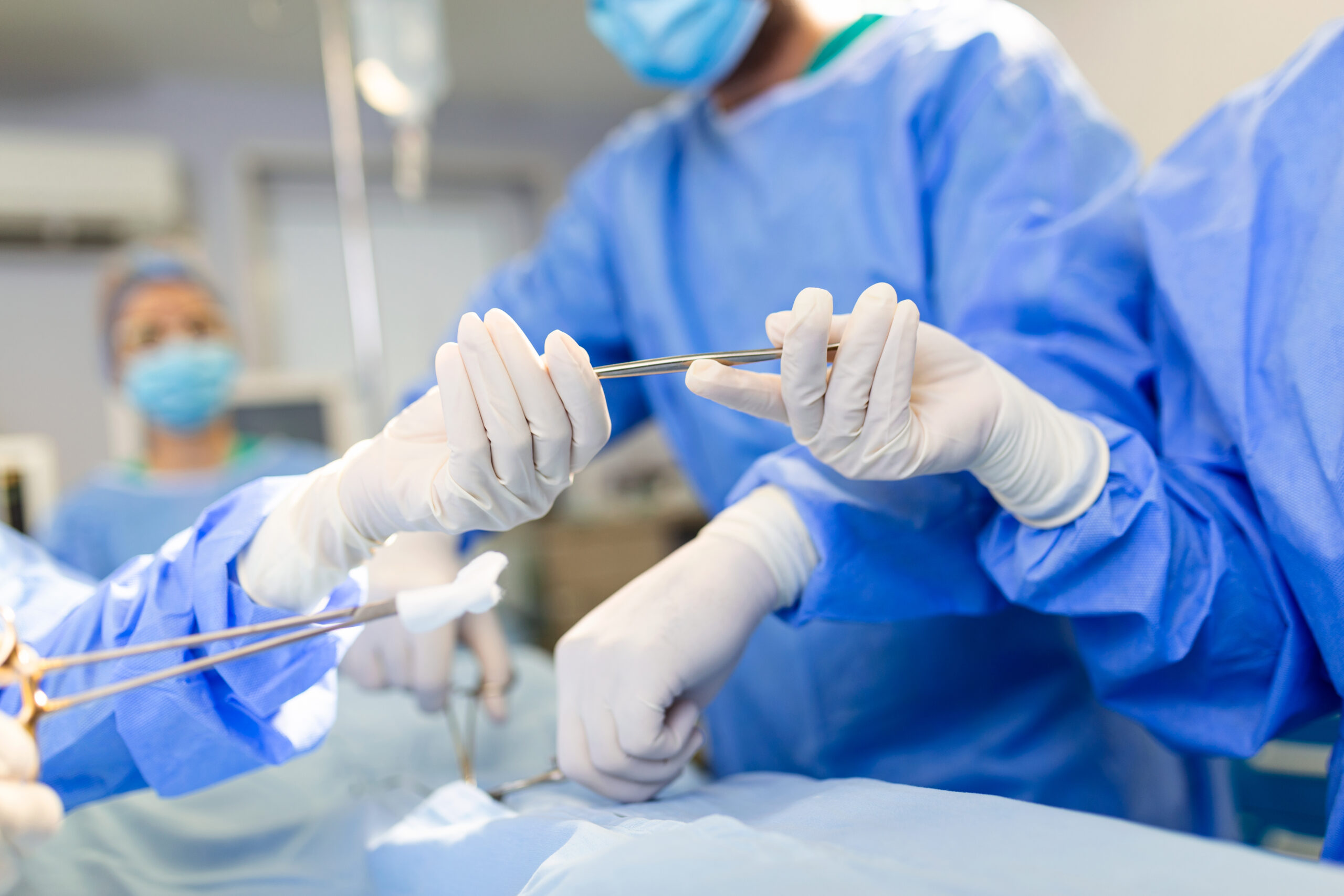
Croatia has recorded a major advance in spinal surgery after Dubrava Clinical Hospital in Zagreb performed the country’s first laparoscopic anterior lumbar interbody fusion (ALIF) on July 16, 2026. The procedure, a hybrid collaboration between the hospital’s Clinic of Surgery led by Associate Professor Mislav Rakić and the Clinic of Orthopaedics and Traumatology led by Associate Professor Vida Bilić, places Croatia among a limited number of highly specialized centers worldwide offering this minimally invasive technique. Unlike conventional approaches that access the spine from the back, laparoscopic ALIF reaches the damaged disc through small incisions in the abdominal wall using a camera, allowing direct access while limiting damage to surrounding tissue and potentially enabling faster recovery with less postoperative pain.
ALIF itself is a well established procedure used to treat degenerative disc disease, spinal instability, spondylolisthesis, and spinal deformities. The surgeon removes the damaged disc from the front of the body and replaces it with an implant designed to restore stability and enable vertebrae to fuse. What makes the laparoscopic version distinctive is its minimally invasive nature: surgeons operate through small abdominal incisions rather than the 2 to 3 inch incision typical of open ALIF, reducing muscle disruption and hospital stays from 3-4 days to potentially 1-2 days. The technique requires a vascular surgeon to navigate major blood vessels and a spine surgeon to perform the fusion, making it a true interdisciplinary effort.
The breakthrough at Dubrava did not emerge in isolation. The hospital has spent years building expertise in minimally invasive and robot assisted neurosurgery, including the pioneering RONNA G4 robotic neuronavigation system. Developed in partnership with the University of Zagreb’s Faculty of Mechanical Engineering and Naval Architecture, RONNA has been used for over 50 stereotactic brain biopsies since its first clinical application in 2016, achieving a diagnostic yield of 95.6% with an average target point error of just 2.15 mm. The EU funded project, which received €342,729 through the European Regional Development Fund, represents Croatia’s most significant indigenous medical technology innovation. This foundation in precision surgery and interdisciplinary collaboration positioned Dubrava to adopt laparoscopic ALIF at a level matching leading international centers.
For Croatian patients, the development expands access to advanced spinal care that until recently was available only at a small number of specialized centers internationally. Croatia’s medical tourism industry has already capitalized on its reputation for high quality, lower-cost spine surgery, lumbar spinal fusion costs €8,500-13,000 in Zagreb private clinics, roughly 60-80% less than UK private rates and a fraction of US prices. The addition of laparoscopic ALIF to Dubrava’s public hospital offerings means domestic patients can now access cutting edge techniques without traveling abroad. The hospital emphasized that such hybrid procedures require a highly specialized clinical environment and represent an advanced form of spinal surgery still at an early stage of global development.
Whether Dubrava’s achievement signals a broader shift in Croatian surgical capabilities or remains a specialized outlier depends on training, investment, and the diffusion of expertise beyond Zagreb. For now, the July 16 procedure stands as proof that a Croatian public hospital can compete with the world’s elite in one of surgery’s most demanding disciplines. In a healthcare landscape where innovation often flows from wealthy Western centers eastward, Dubrava has shown that with the right combination of interdisciplinary teamwork, technological investment, and surgical skill, the direction can reverse.