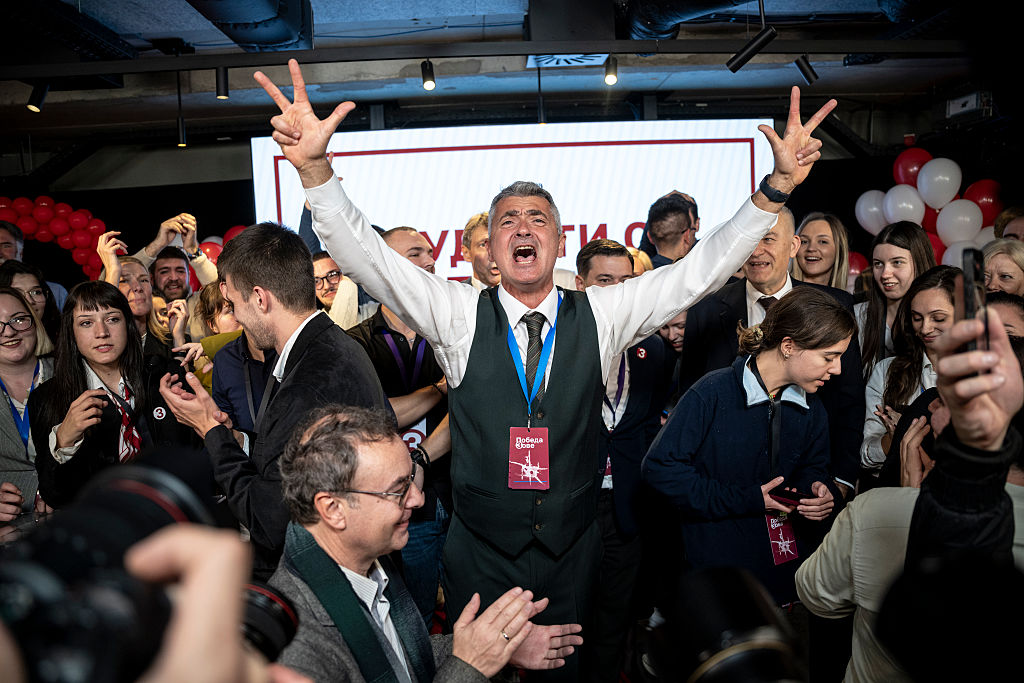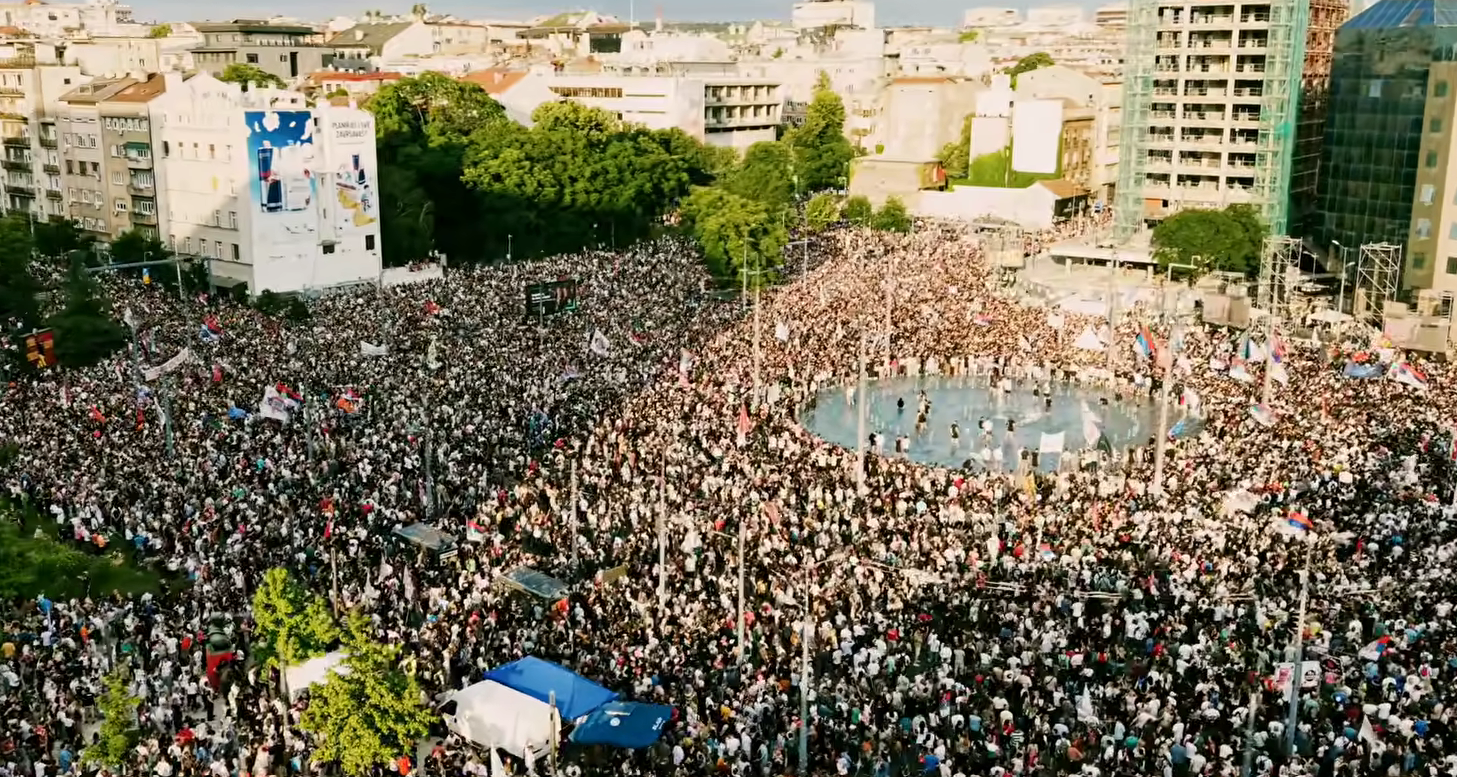
Recent polling suggests that Serbia’s student movement is becoming an increasingly influential political force, with support for its proposed electoral list approaching 40% among decided voters. According to research conducted by the New Serbian Political Thought (NSPM), the student backed list, although not yet officially presented, has significantly strengthened its position in recent months. While President Aleksandar Vučić and the ruling coalition remain in the lead, analysts say the political gap is narrowing and the race is becoming far more competitive.
NSPM editor Đorđe Vukadinović explained that part of the increase is linked to changes in the survey methodology, but also reflects growing political polarization in Serbia. Voters who previously identified as anti government without choosing a specific opposition option are now increasingly backing the student movement. At the same time, support for the ruling Serbian Progressive Party (SNS) has remained relatively stable, showing neither major gains nor significant losses.
Political analysts believe the outcome of any upcoming election could depend on the opposition’s ability to cooperate and present a united front. Parliamentary opposition parties, together with the student movement, could become a serious challenge to the current government if they manage to reduce internal divisions and coordinate their campaigns. Observers have also drawn comparisons with recent elections in other European countries, where strong campaign organization in the final weeks played a decisive role in the outcome.
Meanwhile, the student movement is expanding its grassroots campaign by reaching out directly to hundreds of thousands of citizens who previously expressed support for their initiatives. Organizers are also recruiting volunteers and training election observers to monitor the voting process. At the same time, the ruling SNS has intensified its own campaign efforts, organizing public events across Serbia and increasing its presence in smaller communities, signaling that preparations for a potential election are already well underway.
Although Serbia has yet to announce a date for parliamentary elections, the country’s political climate is becoming increasingly dynamic. The growing popularity of the student movement has introduced a new level of uncertainty into the political landscape, and many analysts believe the final result will depend on voter turnout, campaign strategy, and whether the opposition can maintain unity. The coming months are expected to be crucial in determining whether the student led movement can translate rising public support into electoral success.