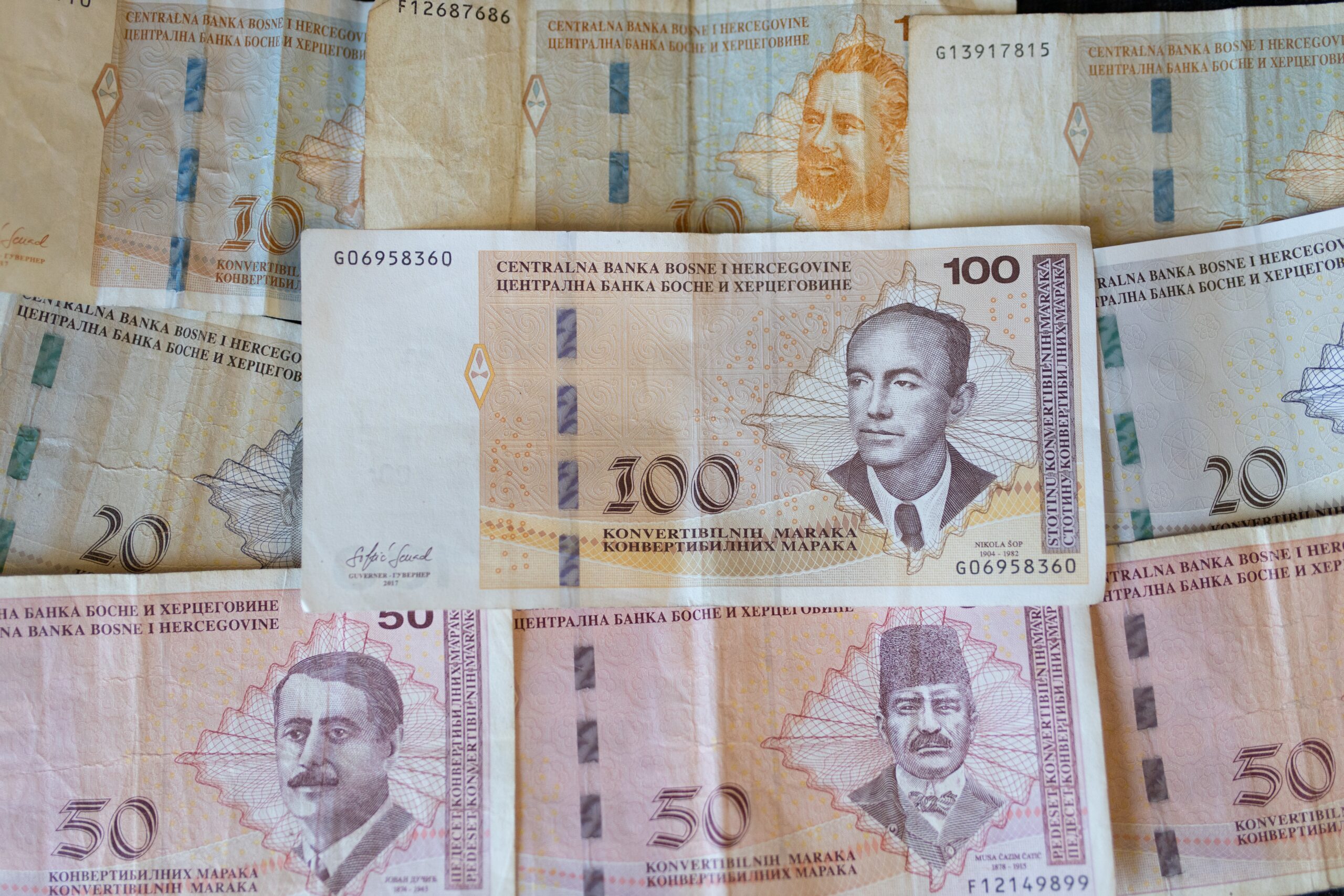
The Bosnian diaspora continues to play a major role in Bosnia and Herzegovina’s economy, with nearly 1 billion KM arriving through personal transfers from abroad during the first three months of 2026. According to data from the Central Bank of Bosnia and Herzegovina, 956.6 million KM was transferred to the country between January and March, underlining the continuing financial connection between people living abroad and their families at home.
The latest figure represents an increase of 25.21 million KM compared with the same period in 2025. While the year on year rise was relatively modest, it shows that money sent by the diaspora remains a stable source of income for households across the country. The figure was also significantly lower than the 1.195 billion KM recorded during the final three months of 2025, a difference of around 238.6 million KM.
The quarterly decline should be viewed in the context of seasonal patterns rather than as evidence of a sudden collapse in remittances. Transfers can fluctuate throughout the year depending on holidays, family expenses and other factors. Full year figures provide a clearer picture of the importance of these financial flows, and 2025 was particularly strong.
According to the Central Bank of Bosnia and Herzegovina, personal transfers reached a record 4.46 billion KM during 2025. Total current transfers, which include personal remittances as well as other forms of transfers from abroad, reached 5.92 billion KM. The central bank said the increase demonstrates the growing importance of funds coming from abroad to the domestic economy.
The scale becomes even more significant when compared with the size of Bosnia and Herzegovina’s economy. World Bank data shows that personal remittances received by the country amounted to around 10.5% of GDP in 2024. That makes money sent from abroad an important part of the country’s economic picture, rather than simply a source of additional household income.
For many families, these transfers can help cover everyday expenses, education, housing, healthcare and other household needs. The Central Bank has highlighted remittances as an important source of income that supports consumption and household living standards. At a broader level, the institution also points to their contribution to financial stability and the country’s balance of payments.
Pension payments from abroad add another significant layer to the picture. During the first three months of 2026, an additional 339.54 million KM entered Bosnia and Herzegovina through foreign pension payments. Combined with personal transfers, this means that well over 1.2 billion KM entered the country through these two channels during the first quarter alone.
Remittances Highlight the Diaspora’s Economic Role
The figures also highlight the continuing economic importance of Bosnia and Herzegovina’s large diaspora. Millions of people from the country live and work abroad, particularly across European countries and in North America. Their financial links with relatives and communities at home remain strong even as migration has changed the country’s demographic and economic structure.
However, the importance of remittances also points to a wider challenge. Money sent from abroad can provide crucial support to families, but it does not replace the need for stronger domestic job creation, investment and economic opportunities. The World Bank has emphasized that Western Balkan economies need more quality employment and stronger productivity to support long term convergence with the European Union.
There is also a potential opportunity to turn diaspora connections into a source of investment rather than relying primarily on household transfers. Easier and cheaper international payments could encourage more formal financial connections between people abroad and businesses or families in Bosnia and Herzegovina. Across the Western Balkans, the expansion of the Single Euro Payments Area has been identified as one development that can reduce the cost and improve the speed of cross border euro transfers, although Bosnia and Herzegovina was not among the Western Balkan countries that joined SEPA in 2025.
The latest numbers therefore tell a story that goes beyond a single quarterly statistic. Almost 1 billion KM reached Bosnia and Herzegovina from personal transfers in just three months, while hundreds of millions more arrived through foreign pension payments. Although the first quarter total was lower than the previous quarter, the broader trend remains significant, with record annual remittances recorded in 2025.
For Bosnia and Herzegovina, the diaspora remains an important economic partner. The challenge for policymakers will be to maintain the financial ties that already support households while creating conditions that encourage more investment, entrepreneurship and sustainable employment at home. If those two trends can develop together, the Bosnian diaspora could contribute not only through money sent to families, but also through long-term economic development.