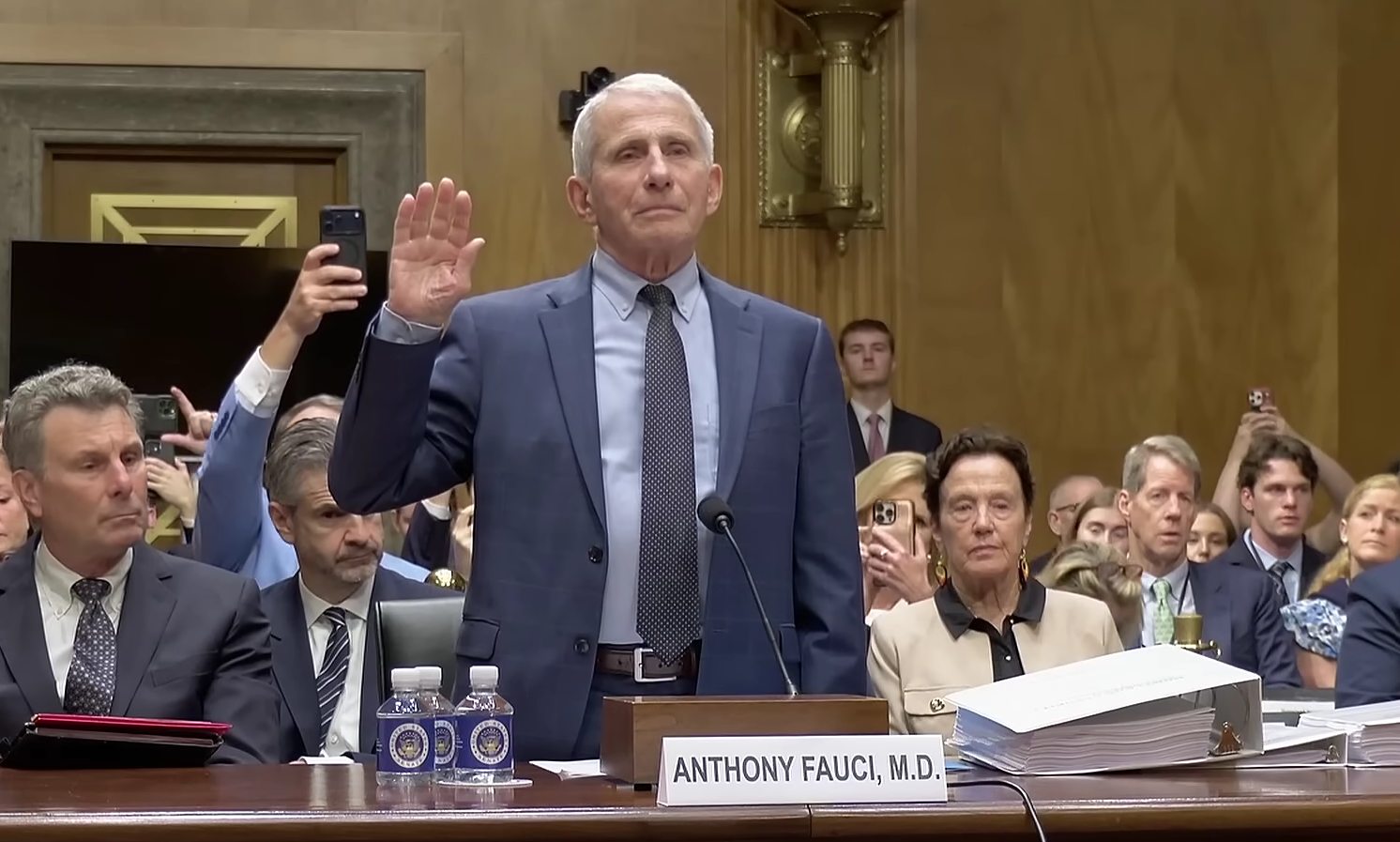
Dr. Anthony Fauci invoked his Fifth Amendment rights more than 100 times during a contentious Senate hearing, declining to answer questions about his handling of the COVID-19 pandemic. The hearing ended with Senator Rand Paul announcing plans to seek a contempt of Congress vote against Fauci, potentially escalating the long running political dispute over the former federal health official’s pandemic record.
The nearly three hour hearing produced no major new information about the origins of COVID-19 or the government’s response to the pandemic. Instead, the session became a confrontation over Fauci’s decision not to answer questions and Paul’s efforts to compel testimony. Fauci argued that the proceeding was politically motivated and designed to create an opportunity to accuse him of wrongdoing.
Fauci previously served for decades as director of the National Institute of Allergy and Infectious Diseases and became one of the most recognizable U.S. officials during the pandemic. His handling of COVID-19 policies has remained a major source of political disagreement, particularly among Republicans who have criticized government decisions on issues including public health restrictions and pandemic research.
Fauci Hearing Escalates Into Contempt Dispute
The confrontation became more heated when Paul’s committee ordered Fauci’s attorney, David Schertler, removed from the hearing room after the lawyer attempted to intervene without being recognized. Paul argued that the attorney was disrupting the proceedings and instructed Capitol Police to escort him from the room.
Fauci’s decision to repeatedly invoke the Fifth Amendment followed an opening statement in which he accused Paul of conducting what he described as a vindictive proceeding. Fauci said he believed the senator’s repeated calls for his prosecution created a serious risk that anything he said could be used against him.
The Fifth Amendment protects individuals from being compelled to provide testimony that could potentially incriminate them. Fauci’s repeated invocation of the protection therefore became the central issue of the hearing, preventing senators from obtaining direct answers to many of their questions.
Paul, who chairs the Senate Homeland Security and Governmental Affairs Committee, said he intends to bring a contempt resolution before the committee next week. A successful contempt process could eventually refer the matter to the Justice Department, although several legal and procedural hurdles would have to be overcome before any criminal prosecution could take place.
The process would require approval by the committee and then the full Senate. Because of the Senate’s voting requirements, Democratic support could potentially be necessary for the resolution to advance. Prosecutors would also have to establish that Fauci willfully refused to answer questions that were relevant to a legitimate congressional inquiry.
Another complicated issue involves a preemptive pardon issued to Fauci by former President Joe Biden covering potential federal offenses during a specified period of his government service. Legal questions remain over how such a pardon could affect a witness’s ability to invoke the Fifth Amendment when answering congressional questions about conduct covered by the pardon.
The hearing also drew strong criticism from Democrats and supporters of Fauci, who argued that the confrontation could discourage scientists and public health professionals from entering government service. Some compared the proceedings to earlier politically charged congressional investigations, warning that aggressive treatment of scientific officials could have consequences beyond the dispute involving Fauci.
More than 150 infectious disease experts have publicly defended Fauci and criticized what they characterized as attacks on him. Republicans, meanwhile, have continued to argue that congressional scrutiny is necessary to examine the government’s pandemic response and determine whether officials properly handled their responsibilities.
The planned Fauci contempt vote could therefore become the next major chapter in a political and legal dispute that has continued long after the height of the COVID-19 pandemic. Whether the Senate ultimately moves forward with the referral will depend on the committee’s decision and the votes that follow, while the legal questions surrounding Fauci’s Fifth Amendment claims could make any subsequent proceedings particularly complex.