Montenegro’s decision to send an official representative to the commemoration of the 31st anniversary of Croatia’s military operation Storm in Knin has prompted criticism in Montenegro and Serbia. The Montenegrin government was represented at the ceremony by the acting head of the country’s diplomatic mission in Croatia. At the same time, Podgorica did not send a representative to Mrkonjić Grad, where Serbia and Republika Srpska commemorated Serbs who were killed or expelled during the operation.
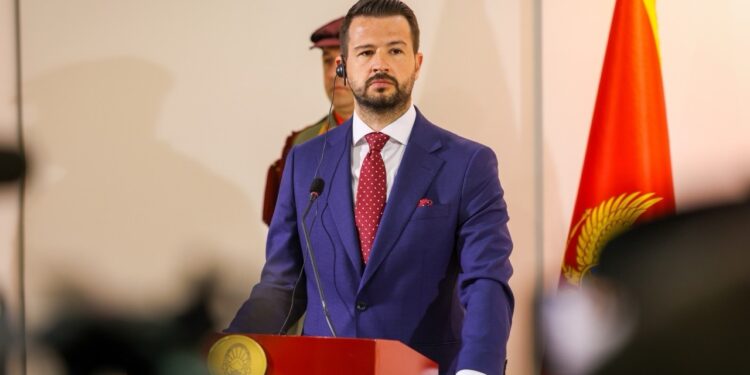
Montenegrin President Jakov Milatović responded by addressing Parliament Speaker Andrija Mandić and Prime Minister Milojko Spajić over the country’s presence at the commemoration. His office stated that Montenegro should build and maintain good relations with Croatia as a neighbouring country and a partner on the European path, but stressed that these relations should be based on mutual respect and cooperation.
Milatović’s office said that maintaining good-neighbourly relations with Croatia did not require Montenegro to attend events that evoked painful memories among many of its citizens. It noted that Operation Storm carried different meanings for different communities. While part of Croatian society viewed it as a symbol of military victory, many Serbs associated it with suffering, displacement and the loss of their homes.
According to the president’s office, a responsible state policy pursued by a civic and European Montenegro required moderation and respect for all victims of the wars fought in the former Yugoslavia, without a selective approach.
The government’s decision was strongly criticised by Vladislav Dajković, leader of Free Montenegro, who described it as a deeply wrong and shameful political act. He called on the government to explain on whose behalf its representative had attended the ceremony in Knin.
Dajković said that thousands of families were mourning their relatives and remembering the homes they had lost, while a representative of the Montenegrin government was attending an event at which Operation Storm was celebrated as a victory. Free Montenegro said it was especially disappointing that the decision had been made by an administration that included parties and politicians presenting themselves as defenders of the interests of the Serbian people.
The party stated that it was not asking Montenegro to damage its relations with Croatia, but to demonstrate basic respect for the victims and those who had been expelled.
Montenegro had also sent representatives to previous commemorations in Knin. In 2018, the country was represented by military attaché Ivan Mašulović, whose appearance in front of the Croatian flag caused strong reactions in Serbia.
In August 2025, Defence Minister Dragan Krapović decided that the Ministry of Defence and the Armed Forces of Montenegro would not participate in the military parade in Zagreb or the commemoration in Knin. Following that decision, Montenegro continued to send lower-ranking diplomatic representatives.
Career diplomat Zoran Milivojević said that the presence of any Montenegrin state representative in Knin sent a clear political message, regardless of the representative’s rank. According to him, official participation indicated that the attendance reflected a state position.
Milivojević argued that Montenegro’s simultaneous absence from the commemoration of Serbian victims in Mrkonjić Grad represented a change in Podgorica’s policy and a departure from what he described as the country’s national identity and interests. He said attitudes towards Operation Storm remained particularly sensitive because of the scale of the displacement of the Serbian population.
The combination of Montenegro’s representation in Knin and its absence from the ceremony in Mrkonjić Grad has therefore raised questions among critics about whether Podgorica is making a new political choice in its relations with Croatia and in its broader regional policy.