Tens of Thousands Reach the Spanish Enclave
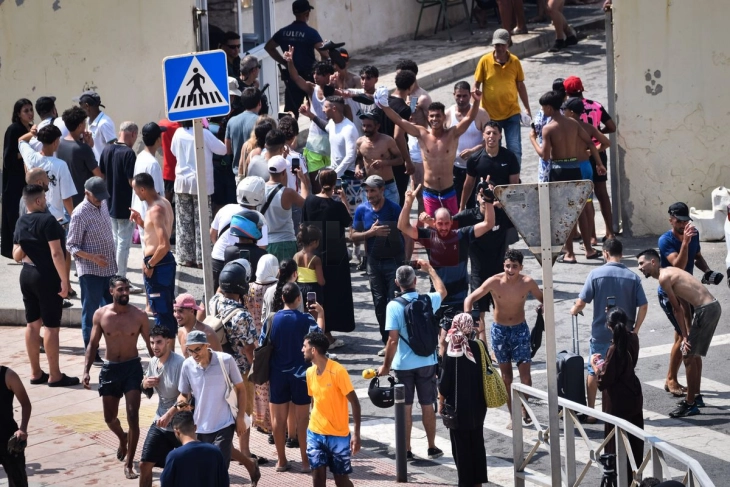
Between 50,000 and 70,000 people reportedly reached or attempted to enter the Spanish enclave of Ceuta from neighbouring Morocco within several days. Most were Moroccan nationals who crossed through the Tarajal border checkpoint, travelled on foot from the Moroccan city of Fnideq or swam around the border barriers. The unprecedented influx overwhelmed Ceuta’s reception capacities, although most of those who entered were subsequently returned to Morocco.
The crisis caused political turmoil in Spain, increased diplomatic tensions and exposed disagreements within the European Union over migration, border protection and Madrid’s responsibility for controlling the bloc’s external frontier. Italy, Finland and several other countries accused Spain of being too permissive towards migrants, while some European representatives viewed Madrid as the target of organised political pressure.
Disinformation, Smuggling Networks and Allegations of a Hybrid Operation
According to the official explanation offered by the Spanish and Moroccan authorities, the mass movement was encouraged by misinformation on social media and claims circulated by migrant-smuggling networks. Spanish Prime Minister Pedro Sánchez said the crisis was connected to rumours spread by human-trafficking networks following an incorrect interpretation of a Spanish court ruling.
Some analysts interviewed by Spanish public broadcaster RTVE questioned whether such a large number of people could have reached the border without the knowledge or at least the tacit approval of the Moroccan authorities. Natalia Sancha, a researcher at the Elcano Royal Institute, described the incident as a possible hybrid operation combining disinformation with the use of migrants as an instrument of political pressure.
According to Sancha, the objective could be to force Spain to make political concessions concerning Western Sahara, its relations with Algeria and the future status of Ceuta and Melilla. Ceuta’s leader, Juan Jesús Vivas, similarly said the incident was perceived not only as a migration crisis but also as an attack on Spain’s territorial integrity, which Morocco had either organised, encouraged or allowed.
Morocco Says It Warned Spain, Madrid Denies Receiving an Alert
A senior Moroccan official said Rabat had warned Madrid in advance about the migration risks created by a recent ruling of Spain’s Supreme Court. According to the official, the judgment established that immediate deportation would not apply to migrants arriving by sea.
The official said discussions with the Spanish authorities began around July 22 or 23, when migrant networks started discussing the court’s decision. Morocco reportedly warned that the ruling would create difficulties, which the official said subsequently occurred.
Spanish government spokesperson and Minister for Inclusion, Social Security and Migration Elma Saiz rejected the claim. She said there had been no evidence or reports warning Spain about the potential scale of the unprecedented event.
The Moroccan official denied that the country’s security services had failed to act. He argued that it was unrealistic to suggest Moroccan forces could simply use force against such a large number of people and said responsibility for managing the situation could not rest solely with Morocco. He added that the kingdom spends approximately €500 million annually on migration management.
Despite the disagreement over whether an advance warning was issued, the Moroccan representative said Rabat and Madrid continued to act as trusted partners and maintained close coordination on migration. Saiz also acknowledged that Spain could not have delivered such an exceptional response within a short period without Moroccan cooperation.
Sánchez Government Defends Its Border Response
Sánchez faced accusations from European right-wing politicians and some EU leaders that his migration policies had caused Spain to lose control of its external border. However, the reports state that his government deployed soldiers to Ceuta, restored control over the border and coordinated the return of almost all those who had entered within less than 48 hours.
The Spanish government had also retained legislation permitting the immediate return of migrants caught crossing illegally into Ceuta and Melilla. Madrid had spent years investing in border-surveillance systems and cooperating closely with Moroccan security services to prevent further migration waves.
Although Sánchez has a reputation as one of Europe’s more liberal leaders on migration, his approach towards illegal border crossings was described as considerably more restrictive than its public portrayal. Following the influx, he sought to demonstrate that Spain had not lost control of its border and that its rapid response had prevented prolonged destabilisation.
Nevertheless, images of tens of thousands of people entering Ceuta circulated internationally and were used by Sánchez’s political opponents. Some European countries also cited the incident when calling for stricter migration policies across the EU.
Analysts Examine Morocco’s Relations with the United States and Israel
The crisis also prompted scrutiny of the increasingly close relationship between Morocco, the United States and Israel. Morocco normalised relations with Israel under the Abraham Accords in 2020, while the United States recognised Morocco’s claims over Western Sahara.
According to Sancha, the relationship developed into a form of trilateral cooperation involving military equipment, advanced surveillance systems, intelligence cooperation and diplomatic support. She argued that Morocco had been encouraged by the support of two powerful allies and could seek to extract the greatest possible political benefit from the situation.
The analysts cited in the reports did not claim that the United States or Israel had organised the migrant crossings, and no evidence of their direct involvement was presented. They argued, however, that Washington and Tel Aviv could use the crisis to reinforce Morocco’s position and increase political pressure on Sánchez’s government.
Sánchez’s relations with the US administration and the Israeli government were described as strained over his positions concerning Gaza, NATO funding and migration policy. Sancha therefore suggested that the United States and Israel had joined a political narrative directed against the Spanish government.
Additional attention was drawn to a US congressional document that reportedly described Ceuta and Melilla as Moroccan territories under Spanish administration. In Madrid, this was interpreted as a possible sign that Washington could offer stronger political support for Morocco’s territorial claims in the future. Sancha warned that Rabat’s next step could be to seek explicit US support for incorporating Ceuta and Melilla into Moroccan territory.
The reports also noted that US President Donald Trump commented shortly after the arrival of the migrants and used the situation to criticise left-wing policies. Sancha said uncertain political signals in Washington had sometimes been followed by more radical statements from Trump.
Ceuta’s Growing Strategic Importance
Ceuta’s geopolitical value was described as having increased following disruptions to maritime routes caused by the crisis in the Strait of Hormuz. The entrance to the Mediterranean between Ceuta and Gibraltar consequently became more important for international trade, security and military presence.
International law professor Alejandro del Valle argued that Morocco understood this strategic importance more clearly than Spain. According to him, Rabat regarded Ceuta and Melilla not only as historical or territorial issues but also as key points for controlling one of the world’s most important maritime passages.
The migration crisis therefore developed into a broader dispute involving border management, judicial policy, Spanish-Moroccan cooperation, territorial claims and regional geopolitical interests. While Madrid and Rabat continued to cooperate on returning migrants and controlling the border, they publicly disagreed over whether Spain had received an adequate warning about the scale of the approaching influx.