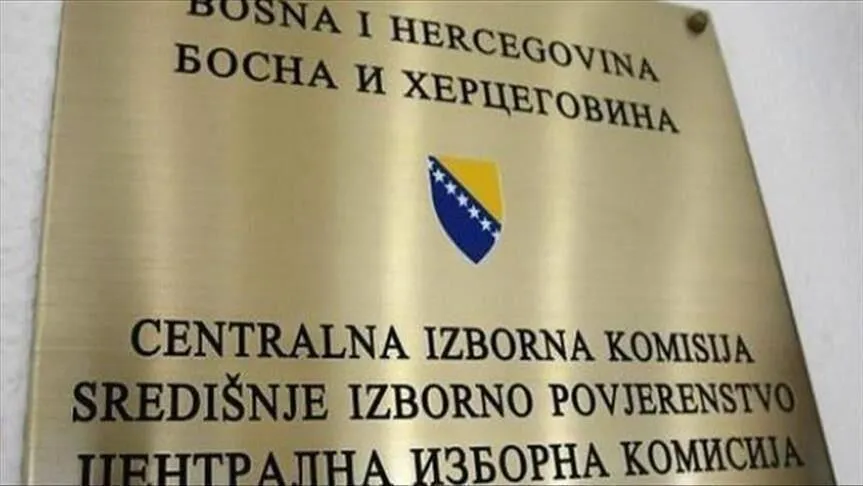
Bosnia and Herzegovina will introduce new voting technologies for the first time at the general elections scheduled for October 4, with voters to be identified electronically and ballots scanned and counted by machines. The new equipment is intended to improve the transparency, accuracy and integrity of the electoral process following years of allegations of electoral manipulation and result falsification.
The first shipment of equipment arrived at the beginning of August, and initial testing is scheduled for August 17 and 18. Deliveries will take place in four rounds for biometric voter-identification devices and another four rounds for ballot scanners. The first shipment contained 150 devices of each type, while a total of 2,450 devices is expected to be delivered. Equipment for the Central Election Commission’s data centre has already been installed, with configuration and establishment of the necessary software environment currently under way.
The project has been awarded to a consortium led by Netherlands-based Smartmatic International Holding, which has previously carried out similar work in 35 countries. Central Election Commission member Željko Bakalar said the new technologies were being introduced primarily to prevent abuses that had generated numerous complaints during previous elections, including allegations that votes had been cast in the names of deceased people and other individuals.
Under the new system, voters will be allowed to cast their ballots only after presenting a valid identity card, passport or driving licence. Once the document has been checked, voters will be recorded through biometric identification using their fingerprint. Following successful biometric authentication, each voter will receive a confirmation slip to sign. The slips will then be placed in separate boxes and later used to establish voter-turnout data.
The voting procedure itself will also change. Voters will be required to completely fill in the circle next to the name of their chosen party or candidate so that the ballot can be read by the machines, after which they may also indicate preferred individual candidates. Each ballot will then be inserted separately into a scanner, which will create a digital image of it immediately. The measure is intended to prevent ballots from being subsequently altered or supplemented in a way that could falsify election results.
Electronic counting will not completely replace the existing manual procedure. After polling stations close, election boards will still manually count all ballots, enter the results into the prescribed forms and forward the election material to the relevant municipal or city election commission before it is sent to the main counting centre. The paper ballots will therefore remain an additional control and security mechanism.
Apart from improving the accuracy of vote counting, the new system is expected to allow preliminary results to be established much more quickly after polling stations close. In previous elections, determining preliminary results sometimes took days or even weeks.
Previous elections in Bosnia and Herzegovina have repeatedly been accompanied by accusations of manipulation and result falsification. This prompted repeated demands for technological changes that would limit the ability of polling-station committees, which are largely composed of representatives of political parties, to manipulate the electoral process. The NGO coalition Pod Lupom described the introduction of new technology as necessary for ensuring transparency, efficiency and integrity and said such systems had become standard in modern electoral processes around the world.
The introduction of the system, however, faced months of difficulties and obstruction even after amendments to the Election Law made the use of the technology mandatory. Approval of the funding required for purchasing the equipment was blocked for months. Bosnia and Herzegovina Finance Minister Srđan Amidžić, a member of Milorad Dodik’s Alliance of Independent Social Democrats, refused to sign an order transferring €57.5 million to the Central Election Commission, prompting former High Representative Christian Schmidt to intervene.
The strongest objections to the new technologies came from Dodik’s party, whose representatives argued, among other things, that the system was too expensive and complicated and could allow outside actors to influence election results. Pod Lupom rejected those claims, arguing that allegations of foreign interference were being used by politicians seeking to prevent the introduction of technologies that would make electoral fraud more difficult.
The coalition also said the security level of the new system would make interference extremely difficult. Even in the event of an attempted cyberattack, the physical ballots would remain available as an additional safeguard, allowing results to be verified independently and providing another layer of protection against manipulation.
The October elections will therefore mark the first nationwide use of electronic voter identification and ballot scanning in Bosnia and Herzegovina, while retaining manual counting and physical ballots as parallel verification mechanisms. The authorities expect the combination of biometric identification, digital ballot records and traditional paper-based controls to provide a more transparent and verifiable electoral process.