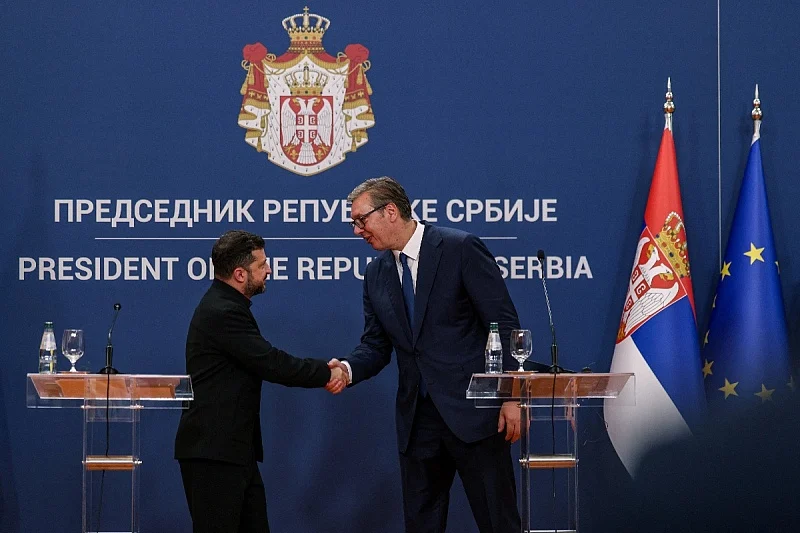
Volodymyr Zelensky’s visit to Belgrade has fueled speculation about a possible Serbian foreign-policy shift, but analysts argue that Zelensky’s visit to Serbia instead reflects Aleksandar Vučić’s long-established strategy of balancing relations between Ukraine, Russia and the European Union. Political analyst Adi Ćerimagić described the meeting as a continuation of relations between Belgrade and Kyiv carefully developed over the past four years rather than a decisive geopolitical turn.
According to Ćerimagić, those relations included indirect arms supplies that were important to Ukraine after Russia’s 2022 invasion, alongside carefully managed political contacts. These included meetings between Vučić and Zelensky at multilateral forums, staged public appearances and gradually developing economic and political cooperation.
He argued that this approach allowed Vučić to strengthen Serbia’s defense industry, develop useful ties with the former US administration of Joe Biden and occasionally ease pressure from Washington and European capitals over domestic political issues and Serbia’s relations with Kosovo and Bosnia and Herzegovina. The current phase, however, is seen as being focused more heavily on the European Union than on the United States.
Analyst Says Serbia Has Not Abandoned Its Balancing Policy
Ćerimagić said Serbia has consistently accompanied every move toward Ukraine with multilayered diplomacy toward other audiences. Arms deliveries were initially denied and were later presented to Moscow and Serbia’s pro-Russian public as a less damaging alternative to imposing sanctions on Russia, while Belgrade continued its political, economic and military-security relations with Moscow.
He said Belgrade had been seeking Zelensky’s visit since the middle of May as part of an effort to improve its position among EU member states. Serbia’s lack of alignment with the EU’s common foreign and security policy has remained one of the objections raised by member states skeptical about advancing its accession process.
The analyst also recalled Vučić’s visit to Kyiv the previous month for a multilateral meeting. Serbia was the only participating country that did not sign the joint declaration, while Vučić also did not take part in paying tribute to fallen Ukrainian soldiers, which Ćerimagić cited as another example of Belgrade maintaining a carefully balanced position toward Russia.
During Zelensky’s Belgrade visit, Vučić presented the meeting to European audiences as part of efforts by Serbia and Ukraine to coordinate their approaches toward the EU and improve economic cooperation. Serbian domestic media, meanwhile, emphasized Ukraine’s refusal to recognize Kosovo and portrayed the visit as an expression of gratitude for that position.
Ćerimagić said the same event could also be presented to a Russian-oriented audience as a result of pressure from Europe. With Serbian parliamentary and presidential elections expected at the end of 2026 or the beginning of 2027, he also identified an element of accumulating political credit within the EU.
For those reasons, he rejected the idea that Zelensky’s visit to Serbia represents a major and final foreign-policy realignment. In his assessment, it fits the same trajectory Serbia has followed for several years: avoiding full commitment to one side while maintaining channels with competing centers of power.
Ćerimagić said this strategy has so far worked from the perspective of Vučić’s governing model because it allows him to obtain benefits from different sides without fully aligning with any of them. However, he argued that Serbia’s trajectory looks less successful when compared with neighboring countries such as Montenegro and Romania in terms of European and Euro-Atlantic integration.
Vučić Warns Ukraine War Could Continue Beyond Next Spring
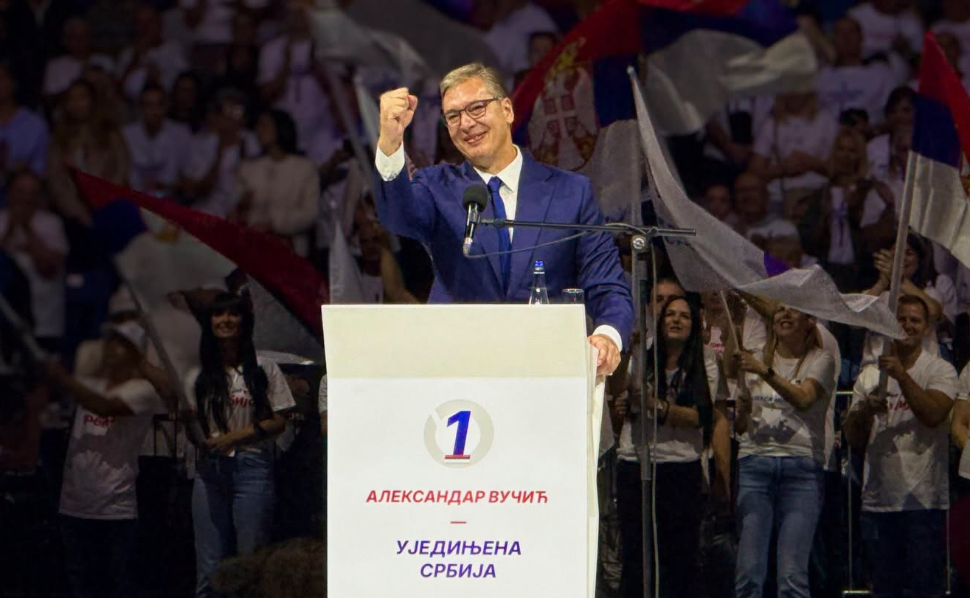
In a separate interview, Vučić offered a pessimistic assessment of the broader international situation, saying he believes the world is at the beginning of a larger war and that peace is unlikely to be achieved quickly. He said the international community had so far failed to find a solution capable of ending current conflicts.
Regarding Ukraine specifically, Vučić said he did not expect the war to end during 2026 and suggested that it could continue beyond next spring. He argued that the sides were currently seeking victory rather than compromise and called instead for a ceasefire, negotiations and a compromise that would not require the total defeat of either side.
Vučić also pointed to Russia’s status as a nuclear power when explaining why he considered the prospect of its complete defeat unrealistic. At the same time, he predicted that the United States and China would remain the world’s two principal centers of power, while the European Union could potentially emerge as a third major pillar.
On Serbia’s own position, Vučić insisted that Belgrade does not intend to become anyone’s puppet and would make decisions according to Serbian state interests. He reiterated that EU membership remains Serbia’s strategic goal while saying the country also wants to preserve its traditional relationship with Russia and develop ties with Ukraine and European partners.
Responding to criticism that Serbia has tried to sit on several geopolitical “chairs,” Vučić said Serbia had chosen one — “the Serbian chair.” His statement reinforced the position that Belgrade intends to continue pursuing its own balancing approach rather than fully align with one geopolitical bloc.
Ćerimagić said the Belgrade meeting also has significance for Ukraine. In his assessment, Kyiv increasingly sees itself not merely as a country seeking support but as an actor aiming to shape Europe’s future security, political and economic architecture.
From that perspective, Ukraine sees Serbia as a country with industrial capabilities and connections to other important international actors. Ćerimagić specifically highlighted drone production and the defense industry as areas of strategic importance to Ukraine.
He concluded that the visit demonstrates how international relationships are built around concrete interests and capabilities rather than political image or assumptions about which countries should naturally cooperate. Serbia, he argued, has shown that it can maintain relations with Russia while simultaneously developing a concrete and valuable relationship with Kyiv.