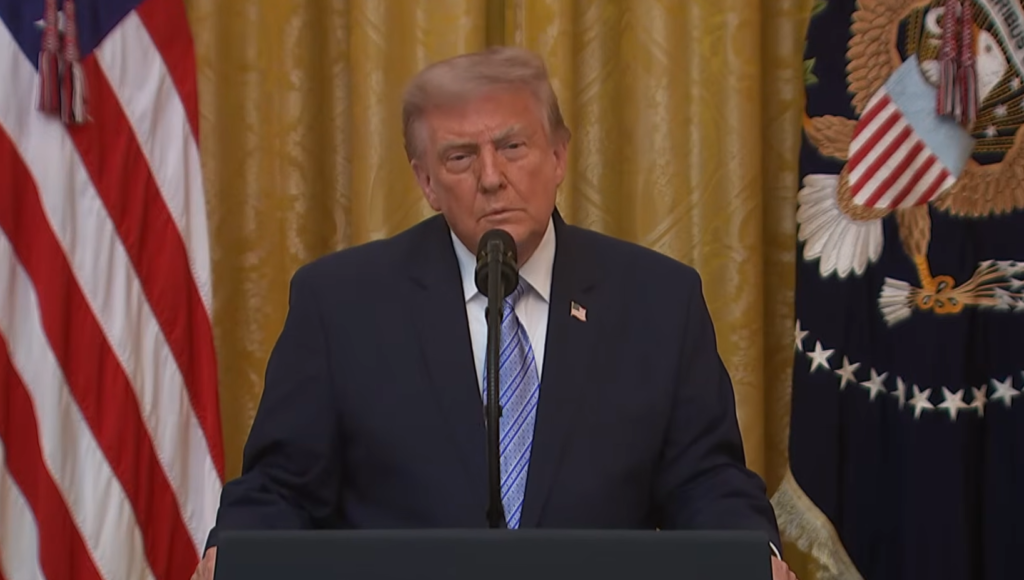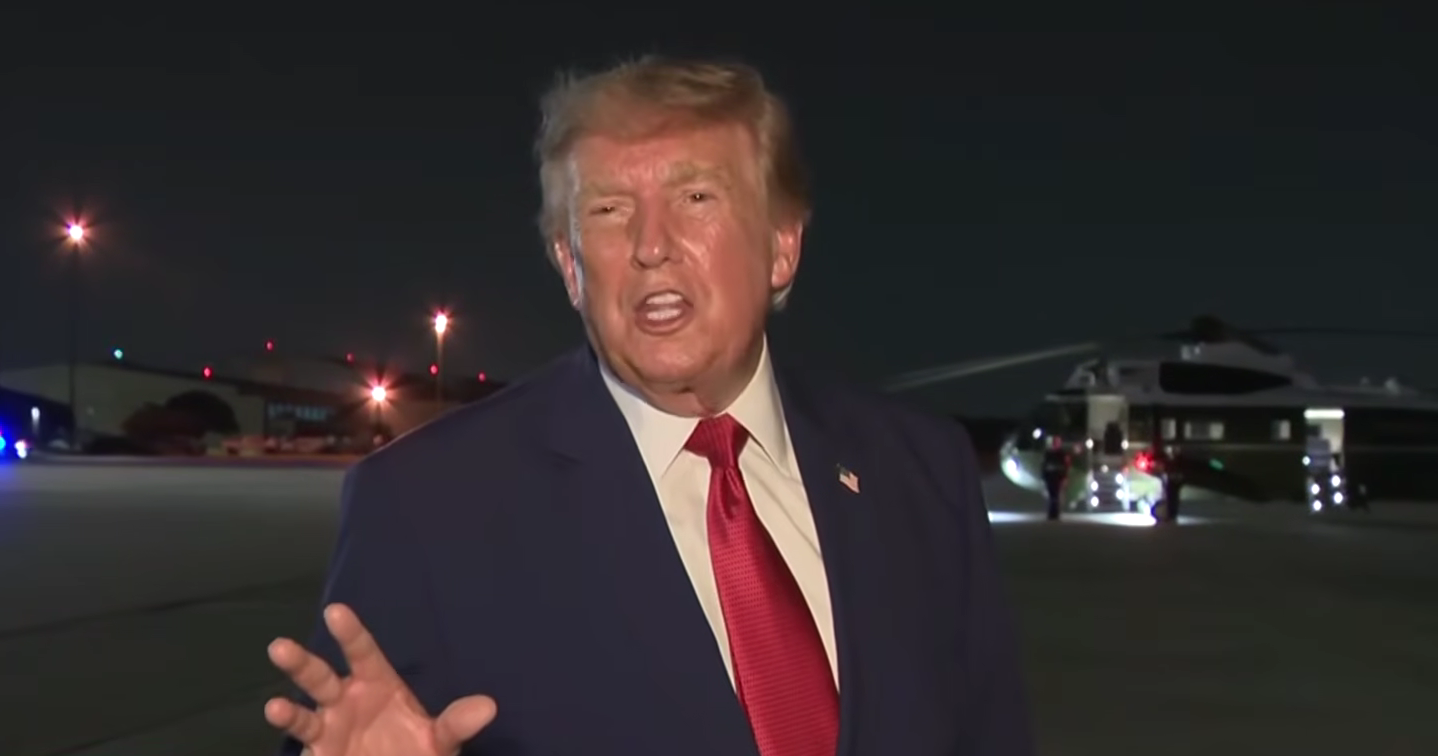
The Intercept and the Freedom of the Press Foundation have sued President Donald Trump in federal court, seeking to shut down Truth API, a new service from his media company that sells Wall Street firms paid early access to his Truth Social posts. The lawsuit, filed Wednesday in Manhattan federal court, challenges Trump Media & Technology Group’s subscription feed, which charges up to $100,000 per month for millisecond faster access to 10 high profile Truth Social accounts, including Trump’s own, Vice President JD Vance, Health Secretary Robert F. Kennedy Jr., FBI Director Kash Patel, and the White House.
The plaintiffs described the service as “profoundly corrupt” because Trump holds a 41.3% stake in Trump Media and could benefit financially from new subscribers. The controversy has also drawn congressional scrutiny, with Representative Jamie Raskin, the top Democrat on the House Judiciary Committee, launching a parallel investigation into the service. The Truth API lawsuit therefore raises questions not only about Trump’s business interests but also about how presidential communications are distributed and monetized.
The legal and ethical stakes extend beyond social media monetization. The lawsuit argues that Truth API violates the First Amendment because the public should have equal access to presidential announcements, while there is no legitimate government interest in allowing private subscribers to receive Trump’s posts ahead of everyone else. According to the complaint, thousands of Trump’s Truth Social posts and reposts during his second term were never followed by official White House statements, making the platform an increasingly important channel for government communication.
On an earnings call Monday, Trump Media interim CEO Kevin McGurn said Truth API allows subscribers to receive news “fractionally faster” than other users. That distinction could be significant for high frequency traders, who can potentially respond to market moving information within fractions of a second. Trump has frequently used Truth Social to announce or comment on major developments involving tariffs, military operations, and economic policy, sometimes before similar information appears through other official channels.
Truth API Lawsuit Raises Insider Trading and Market Fairness Questions
The service launched on August 1, just days after Democratic Senators Elizabeth Warren and Adam Schiff called on the Securities and Exchange Commission to examine whether the system could undermine market integrity while benefiting Wall Street firms and Trump himself. The Truth API lawsuit now places those concerns before a federal court while also adding pressure on regulators to consider whether preferential access to presidential statements creates legal or ethical problems.
Securities experts have questioned whether the arrangement could conflict with insider trading rules. Renée Jones, a Boston College professor and former SEC official, told NPR that monetizing early access to presidential communications could raise concerns about privileged information and duties of trust. The 2012 STOCK Act prohibits members of Congress and executive branch officials from using nonpublic information for personal financial gain in securities trading.
Trump Media has rejected the allegations. Spokesperson Shannon Devine said Truth API provides customers with the fastest way to receive publicly available Truth Social data and argued that critics were creating a new theory of insider trading based on information that ultimately becomes public. The company has also accused opponents of using the courts to censor Trump and harm its shareholders.
The SEC has not said whether it will investigate the service. The controversy comes as Trump Media faces broader financial challenges, including a sharp decline in its stock price since the company went public in 2024 and substantial operating losses. Truth API represents an effort to develop a new revenue stream, but the Truth API lawsuit, congressional scrutiny, and questions about market fairness could determine how far the company can pursue the strategy.
At the center of the dispute is a broader question about presidential communications: whether a president can use a privately controlled social media platform to distribute potentially market moving information to paying customers before the general public. The federal case could ultimately test the boundaries between presidential speech, private business interests, financial markets, and equal public access to government information.