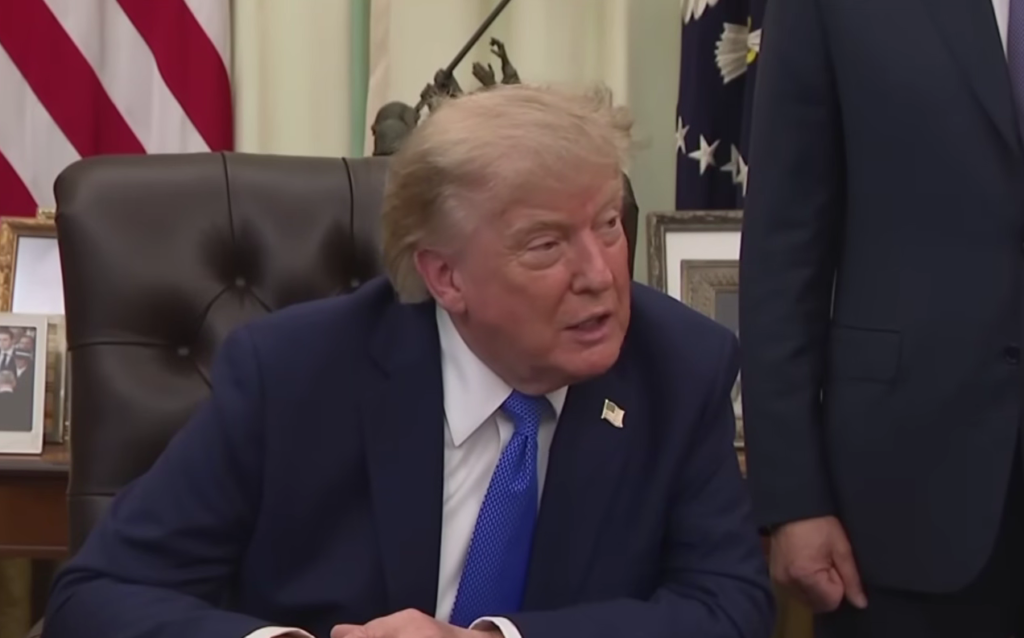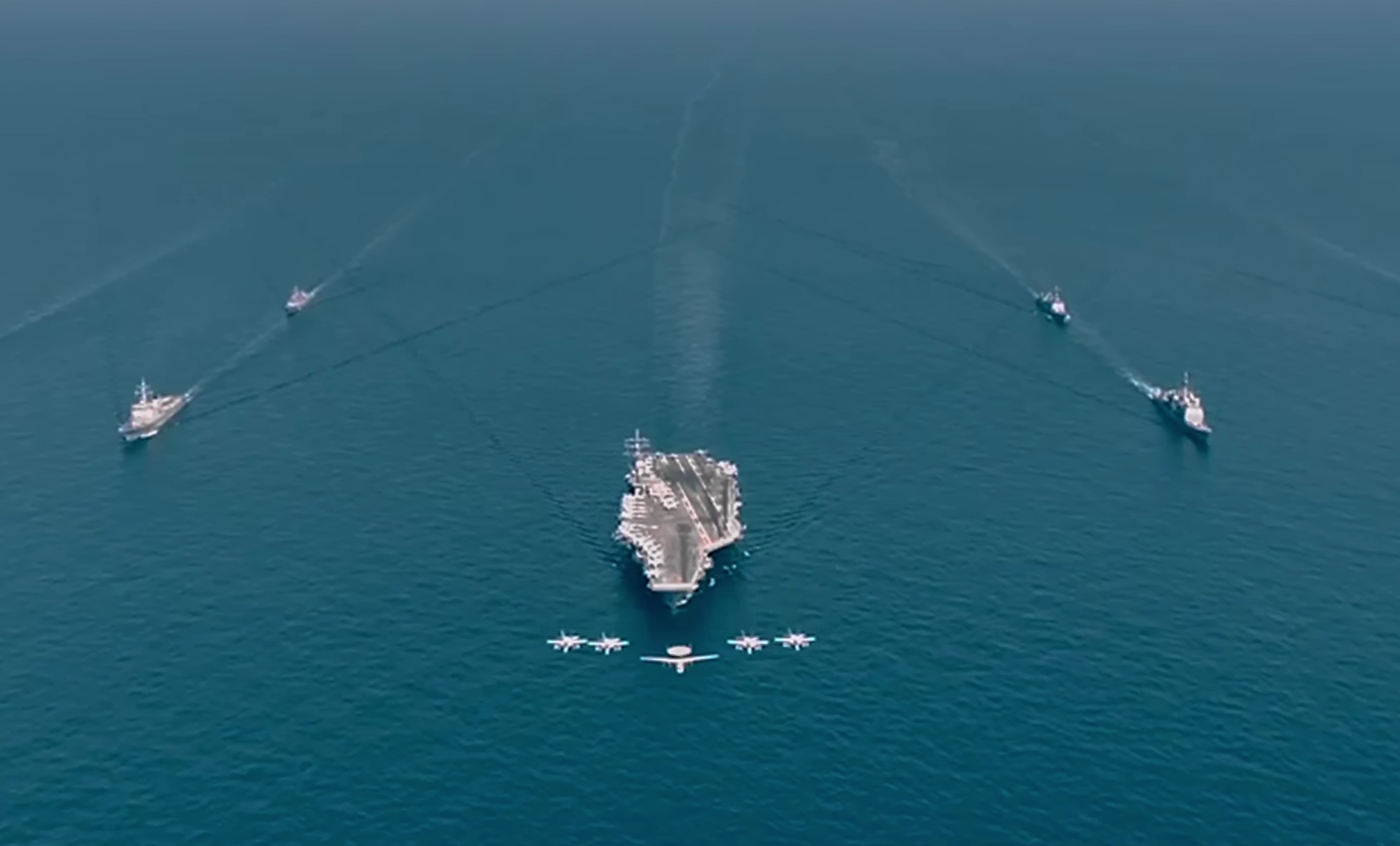
President Donald Trump has signed a sweeping national security memorandum that upends two decades of Navy shipbuilding policy, ordering a return to steam powered catapults on future aircraft carriers and allowing foreign shipbuilders to construct American warships for the first time in decades. The directive targets the Electromagnetic Aircraft Launch System used on the Gerald R. Ford class carriers, mandating that the fourth vessel in the class, the future USS Doris Miller, abandon EMALS in favor of older steam catapults and replace its electromagnetic weapons elevators with hydraulic systems. The White House said the changes are intended to reduce complexity and costs, though defense analysts and the system’s manufacturer warn that redesigning a ship already under construction could cost taxpayers hundreds of millions of dollars, if not more, while creating significant schedule and integration risks.
Trump’s criticism of EMALS is not new. Since his first term, he has repeatedly criticized the magnetically powered launch system, and at a defense summit in Pennsylvania last month he called it “too complex” and “not nearly as good” as steam. The Navy selected EMALS in 2009 because it was expected to lower lifecycle costs, reduce maintenance requirements and place less physical stress on aircraft than steam catapults. The system has also allowed the USS Gerald R. Ford to reduce catapult crew requirements from roughly a dozen sailors to two, while the lead ship has completed more than 36,000 successful launches. France selected the same technology for its next carrier, while China’s newest carriers also use electromagnetic launch systems. Despite those developments, Trump’s memo directs the Pentagon to present plans for removing EMALS within 60 days, beginning with the Doris Miller, whose keel is scheduled to be laid by the end of 2026 and whose delivery is expected in early 2034.
General Atomics, the California based company that builds EMALS, pushed back immediately. The company said nearly 50% of production for the Doris Miller’s catapults and arresting gear is already complete and warned that changing course at this stage would create “significant cost, schedule, and integration risks.” General Atomics also argued that the decision could have broader implications for carrier readiness and American technological superiority, potentially giving adversaries an opportunity to narrow the capability gap. Huntington Ingalls Industries, the primary contractor for the Ford class, saw its shares rise slightly in after hours trading following the announcement. However, defense observers note that the redesign would require extensive engineering because the Ford class uses electricity rather than steam for many shipboard functions, meaning steam systems would have to be restored to a hull that was not originally designed around them.
Foreign Shipyards and a Fifth Navy Yard
The memorandum goes beyond aircraft carrier catapults. For the first time in generations, foreign shipbuilders that have made “substantial and durable investments” in American shipyards will be permitted to build up to two vessels in their home yards for rapid delivery to help bridge production gaps. The move comes as South Korean conglomerate Hanwha Group has offered up to $1.2 billion to acquire the U.S. operations of Australian shipbuilder Austal, highlighting how international defense companies are positioning themselves to benefit from the administration’s new approach.
Trump also ordered the establishment of a fifth public Navy shipyard to address chronic submarine and aircraft carrier repair backlogs. The Defense Secretary has been given 120 days to submit a plan that includes drydock capacity for the growing fast attack submarine fleet and locations near the Pacific Fleet. The administration has already been pursuing a $1.5 trillion defense budget and a 450 ship Navy by 2031, while the memorandum criticizes the Navy’s history of repeated design changes as a major source of cost increases and delays.
Taken together, the orders represent one of the most consequential interventions in U.S. naval shipbuilding policy in years. Supporters argue that simplifying systems and tapping foreign production capacity could accelerate fleet expansion and reduce dependence on technology they consider unnecessarily complex. Critics counter that abandoning EMALS after billions of dollars of investment, and after the system has demonstrated operational capability, could amount to a technological step backward and potentially leave American carriers behind their Chinese and French counterparts. With the Doris Miller already under contract and production underway, the coming months will show whether the Navy can execute such a major redesign without derailing the broader effort to modernize the fleet.