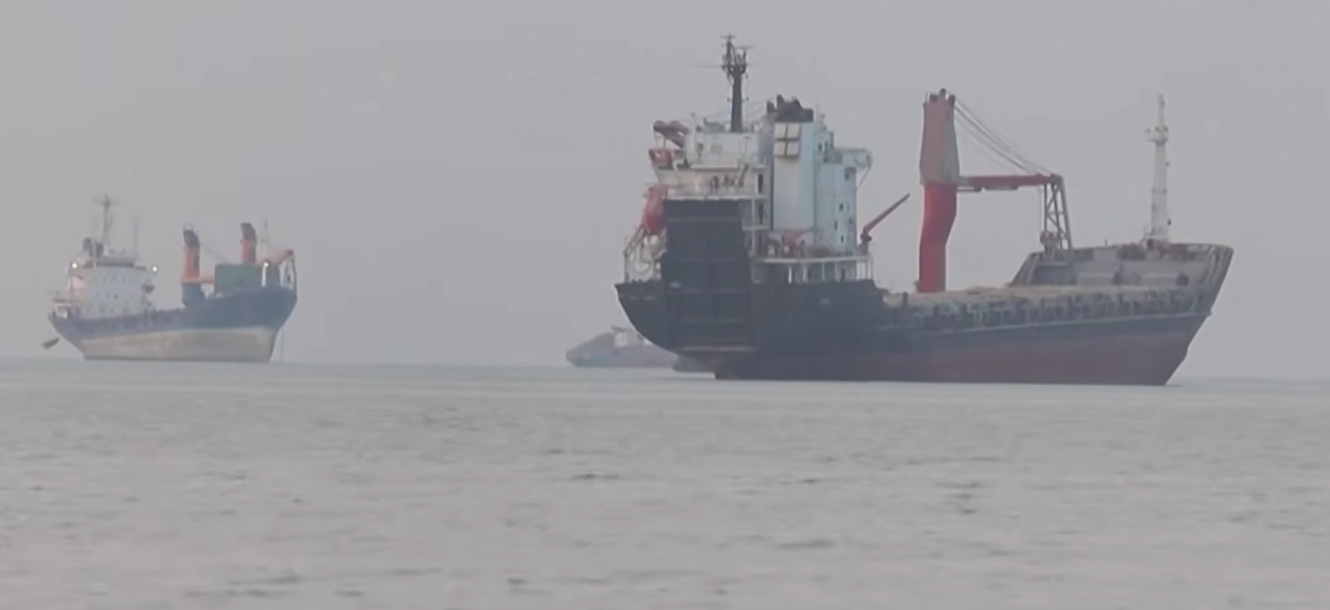
The United States has declared that it is prepared to maintain its naval blockade of Iranian ports indefinitely, increasing economic pressure on Tehran as ceasefire negotiations remain deadlocked, global oil supplies contract and attacks on commercial shipping in the Strait of Hormuz continue. Defense Secretary Pete Hegseth, speaking during a trip to Panama, said the Navy can sustain the operation by rotating vessels in and out of the region for as long as necessary. Treasury Secretary Scott Bessent also warned that Washington would impose economic measures on Iran on an unprecedented scale, signaling a further escalation of the pressure campaign as the human and economic costs of the conflict continue to grow.
The blockade, reimposed in mid July after a brief one month suspension, has further restricted Iran’s access to hard currency and compounded damage from earlier strikes on its energy infrastructure. Shipping through the Strait of Hormuz, a crucial route for global energy supplies, has fallen dramatically from pre war levels. On Tuesday, only eight vessels reportedly transited the waterway compared with a pre war average of 130 to 140 ships per day. The situation deteriorated further Thursday evening when two tankers belonging to the UAE’s state owned Abu Dhabi National Oil Company were attacked in the strait, prompting Abu Dhabi to condemn what it described as an Iranian strike.
Iran’s central military command has rejected U.S. claims of controlling the waterway, calling them baseless and maintaining that the strait will not reopen until sanctions are lifted and frozen Iranian assets are released. The competing claims have added another layer of uncertainty to a strategically vital maritime route, with commercial operators facing increased risks as the confrontation continues.
Oil Supply Disruption Deepens as Diplomatic Track Stalls
The economic repercussions are already significant. The International Energy Agency forecast that global oil supply will fall by 4.3 million barrels per day this year, revising its estimate downward by 600,000 barrels from the previous month and describing the crisis as the largest global oil supply disruption ever. Gulf production rose to 23.9 million barrels per day in July but remained 8.3 million barrels below pre war levels, while combined shipments through the Strait of Hormuz and alternative pipeline routes fell to about 15 million barrels per day.
Oil prices reached as high as $105 per barrel in late July before settling more than 2% lower on Thursday as investors weighed weaker global demand against the possibility of a broader regional conflict. Concerns have also grown following reports of a Houthi drone attack on a Saudi Aramco refinery in Yemen, adding to uncertainty across an already disrupted regional energy market.
President Donald Trump is facing growing domestic pressure to end a conflict that has pushed U.S. fuel prices above $4 per gallon and could affect Republican prospects in the November midterm elections. Trump has repeatedly claimed control over the Strait of Hormuz and threatened further action against Iran, while continuing to rule out some of the most consequential forms of escalation, including the deployment of ground troops and attacks on desalination facilities and strategic islands.
Vice President JD Vance added another dimension to the administration’s public messaging by saying that keeping oil and gas prices affordable for Americans is the top U.S. priority in the conflict, followed by preventing Iran from obtaining a nuclear weapon. That framing differs from Trump’s repeated description of eliminating Iran’s nuclear program as the central objective of the war. When asked whether the earlier ceasefire declaration had been a mistake, Hegseth declined to answer and instead said the United States was doing what was necessary to prevent Iran from obtaining a nuclear weapon.
The diplomatic track currently appears stalled. A Pakistan brokered ceasefire agreed in early April and a subsequent June agreement to halt strikes both collapsed over disagreements involving security guarantees and freedom of navigation. Talks in Islamabad failed to produce a lasting settlement, while Iranian officials have rejected further ceasefire extension discussions under the current conditions.
With Washington pledging to maintain pressure through its naval blockade and Tehran demanding sanctions relief before allowing commercial traffic to resume, the confrontation has increasingly become a war of attrition with no obvious path toward resolution. Economists are warning about recession risks, while the IEA has linked a sustained recovery in energy supplies to a diplomatic breakthrough. The coming weeks will therefore test how long both sides can maintain their positions without imposing even greater costs on their economies and the wider global energy market.