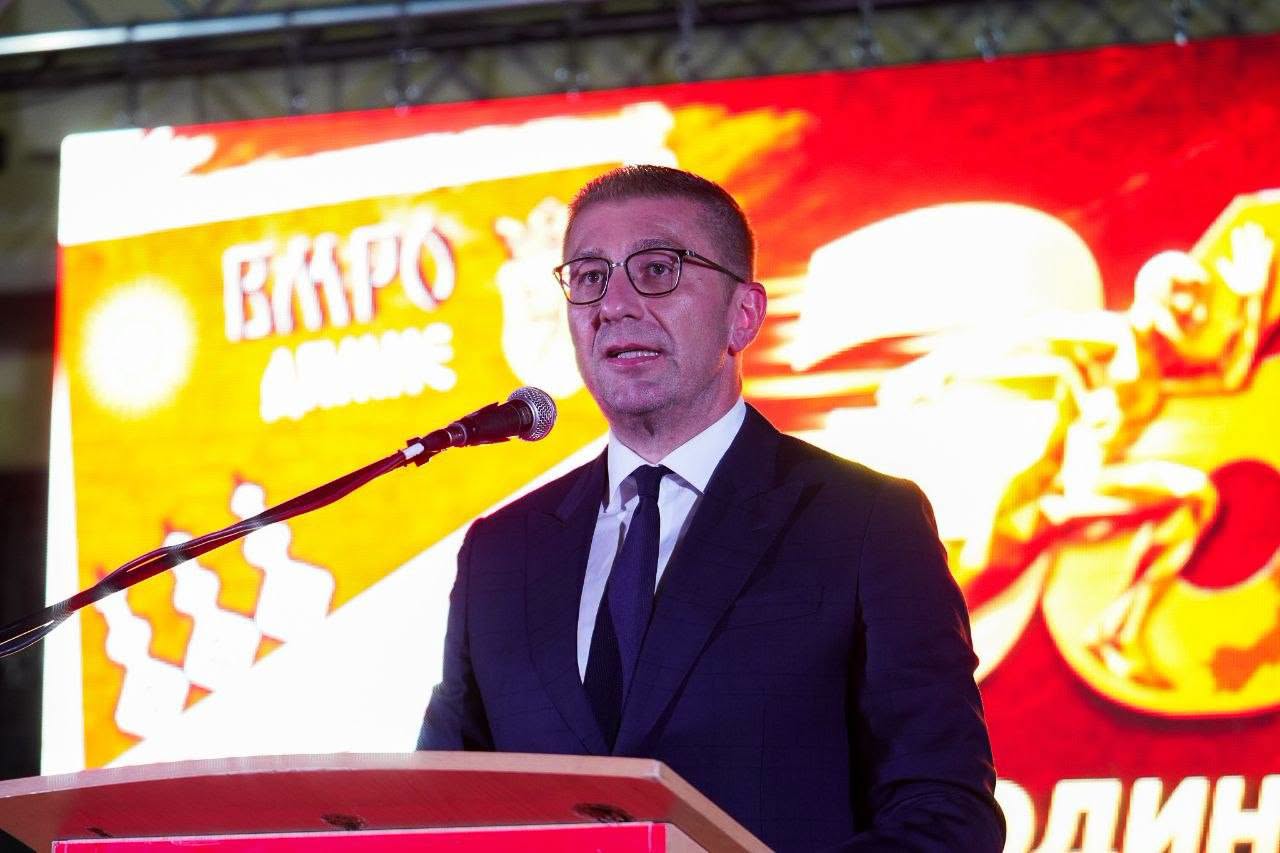
Macedonia is continuing talks aimed at finding a solution that could move its European Union accession process forward, Prime Minister Hristijan Mickoski says. He stressed that the government’s position remains clear while discussions continue with European partners over the country’s path toward EU membership. Mickoski’s comments come as Macedonia’s EU integration remains at a sensitive stage. The country has completed the screening process with the European Union, but formal progress toward opening accession negotiations remains linked to the implementation of agreed constitutional changes. European Council President António Costa reiterated in June that adopting those amendments remains the necessary next step for formally starting negotiations.
The government has repeatedly argued that Macedonia needs a predictable and principled European path. Mickoski has maintained that the country remains committed to EU membership while insisting that the accession process should not be dominated by bilateral disputes. That position has become a central part of the government’s approach to discussions with European partners. At the same time, the European Union continues to emphasize that Macedonia must deliver on reforms and meet the conditions established by the accession framework. European institutions have called for progress on constitutional changes as well as stronger efforts involving the rule of law, judicial independence, corruption, public administration and democratic oversight.
The issue remains politically sensitive inside Macedonia as well. The government says it is seeking a solution that protects the country’s interests while keeping its European perspective firmly in place. Opposition parties have questioned the government’s approach and called for greater clarity about discussions surrounding Macedonia’s EU future. For Macedonia, the issue extends beyond diplomatic negotiations. EU membership remains one of the country’s major strategic goals and is closely linked to expectations for economic development, institutional reforms and deeper integration with European structures. The European Union is also a major economic partner, meaning progress toward membership could have wider consequences for the country’s future.
Mickoski’s latest comments suggest that discussions will continue, but they do not indicate that a final agreement has been reached. The government appears determined to keep diplomatic channels open while maintaining its stated position on the conditions under which Macedonia should advance. Whether the talks can produce enough common ground remains one of the key questions surrounding the country’s long running EU accession process.