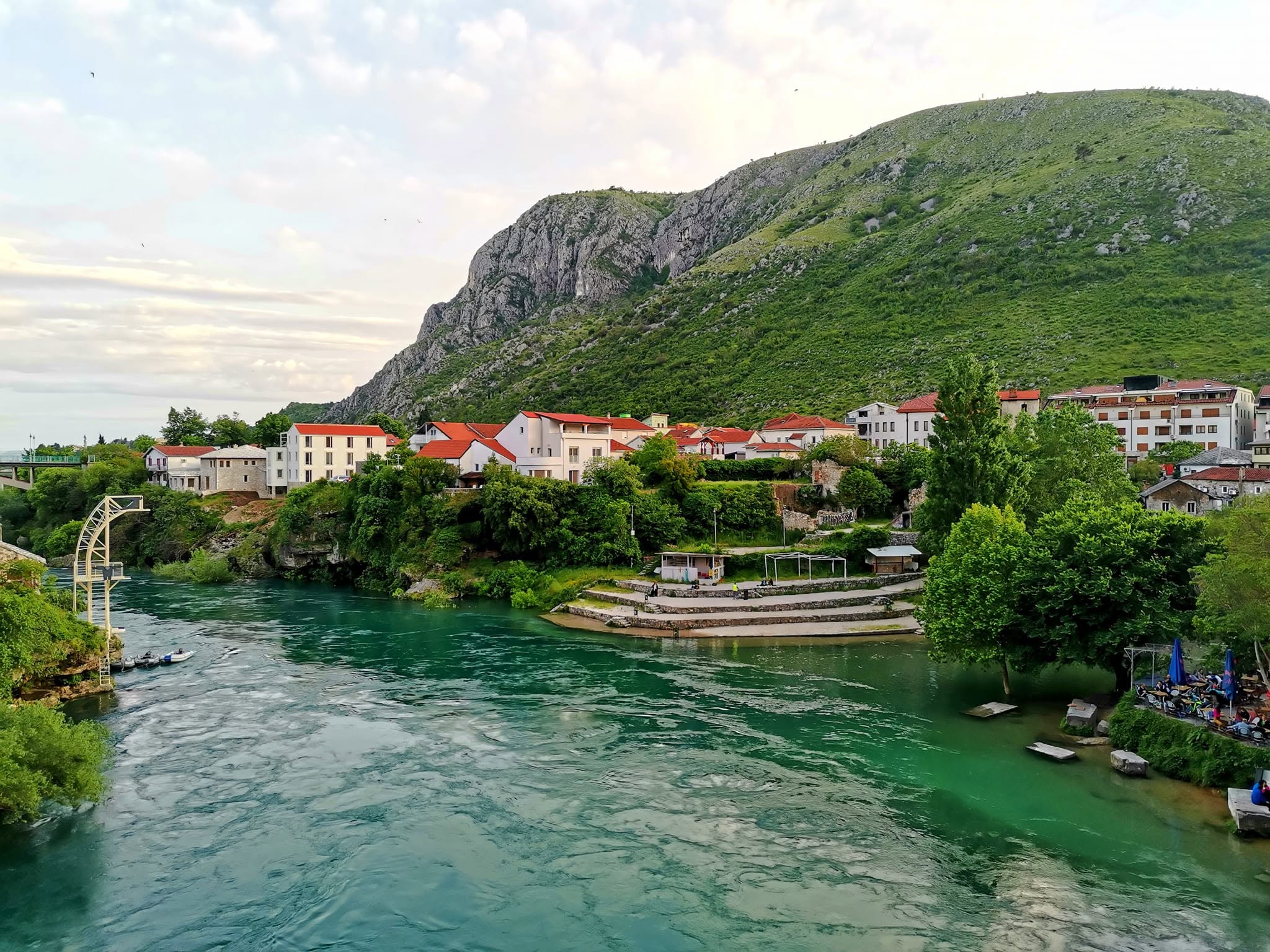
Rivers across Bosnia and Herzegovina are facing increasingly low water levels as prolonged high temperatures and a lack of rainfall put growing pressure on the country’s water resources. The situation comes during a summer marked by persistent heat and drought across the Balkans, with some areas already introducing restrictions on water use. Reports from Bosnia and Herzegovina indicate that the effects are being felt not only in rivers and natural water sources, but also in local water supply systems.
The prolonged dry period is creating problems in several parts of the country, where authorities have urged residents to use water more carefully. Restrictions have been introduced in places including Mostar, Lukavac, Banja Luka and Pale, while other municipalities have issued warnings against using drinking water for activities such as watering gardens or filling swimming pools. The situation is being made worse by high temperatures and limited rainfall, leaving rivers and underground water sources with less opportunity to recover.
The consequences extend beyond drinking water. Low river levels can affect agriculture, ecosystems, hydropower production and the availability of water for communities that depend on local sources. Water losses in Bosnia and Herzegovina’s infrastructure are also a major concern. Data cited by local reports show that more than 136 million cubic meters of water were lost in the Federation of Bosnia and Herzegovina last year, while losses in some water supply systems reached almost 59 percent. Earlier World Bank assessments have estimated urban water network losses in Bosnia and Herzegovina at between 40 and 70 percent.
The situation in Bosnia and Herzegovina is part of a wider drought affecting the Balkans and much of Europe, where months of below average rainfall combined with repeated heat waves have pushed water levels unusually low. Experts have warned that extreme heat and prolonged dry periods are becoming an increasingly serious environmental and economic challenge. With temperatures remaining high and rainfall insufficient to restore depleted water resources, the coming weeks will be important for rivers, agriculture and communities across Bosnia and Herzegovina.