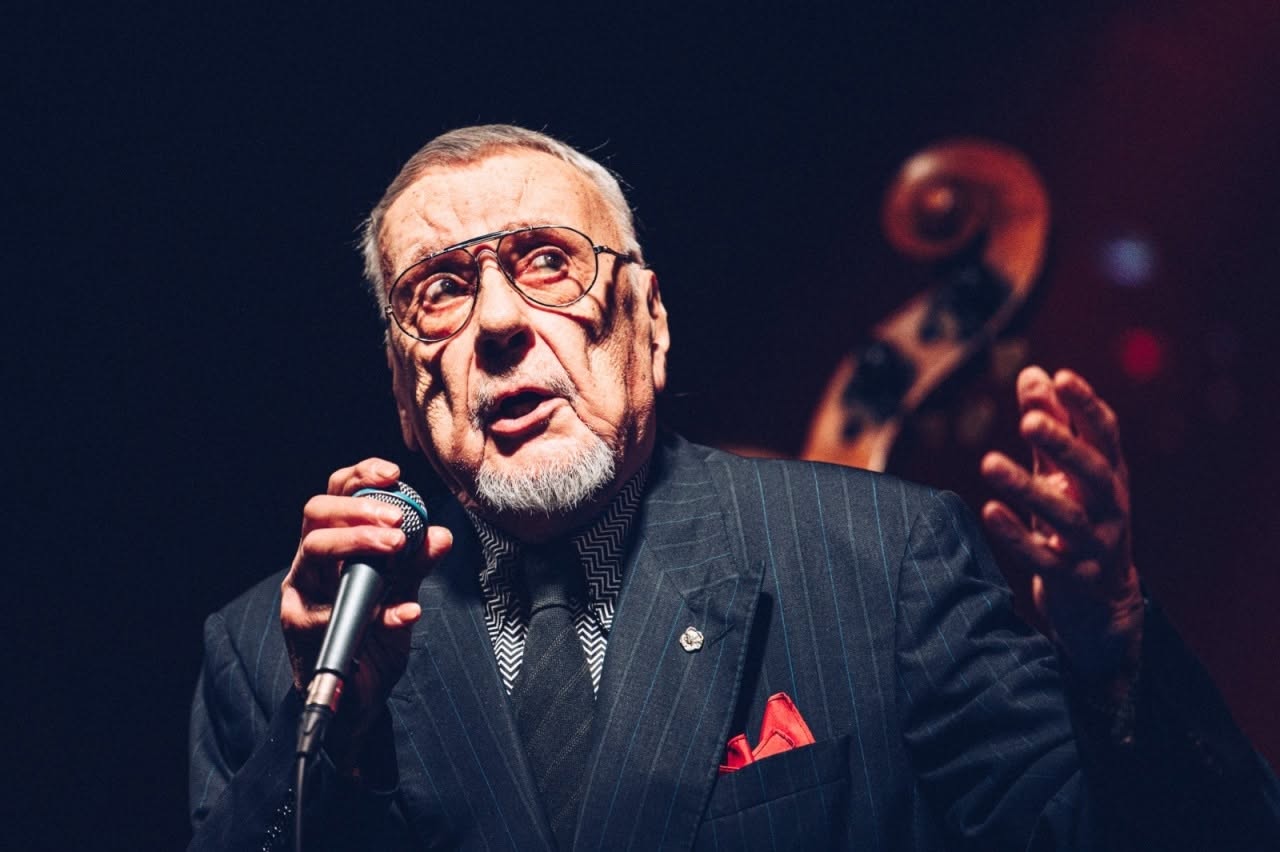
Croatian music has lost one of its most recognizable and beloved performers. Stjepan Jimmy Stanić has died at the age of 98, leaving behind a career that lasted more than seven decades and made him one of the defining figures of Croatia’s jazz, swing and entertainment scene. Known for his distinctive voice, humor, charisma and unmistakable stage presence, Stanić continued performing for audiences almost until the end of his life. His death was reported on August 30, with tributes quickly appearing across Croatia as musicians and fans remembered an artist who remained active across generations.
Born in Zagreb in 1929, Stanić became involved with music at a young age. He initially played the tamburica before moving to the double bass, while also considering a career in opera. His musical path eventually led him toward jazz and popular entertainment, where he developed a style that was impossible to confuse with anyone else. One of the most remarkable moments of his early career came in 1956, when he performed alongside legendary American jazz trumpeter Dizzy Gillespie in Zagreb after Gillespie’s regular double bassist was unable to arrive. The unexpected opportunity became one of the memorable stories of Stanić’s long career and demonstrated the musical talent that would keep him on stage for decades.
For generations of listeners, however, Jimmy Stanić became much more than a jazz musician. Songs such as “Kauboj Jimmy,” “Moja kobila Suzi,” “Kukavica,” “Prolazi sve” and “Dimnjačar” became closely associated with his name and helped establish him as one of the most recognizable entertainers in the region. His performances were known for combining music with humor and an easygoing personality that made him especially popular with audiences. In 2013, he received the Porin Lifetime Achievement Award in recognition of his enormous contribution to Croatian music. Even at an advanced age, Stanić continued to perform and demonstrate the extraordinary vitality that had become one of his trademarks.
Stanić’s death marks the end of one of the longest and most distinctive careers in Croatian music. Few performers managed to remain connected with audiences for so many decades while continuing to preserve their own musical identity and sense of humor. His songs, performances and stories will remain part of Croatia’s cultural memory, while his ability to connect jazz, popular music and entertainment helped him reach several generations of listeners. The Croatian music scene is now saying goodbye to an artist who spent more than 70 years doing what he loved, leaving behind a legacy that extends far beyond his recordings and performances.