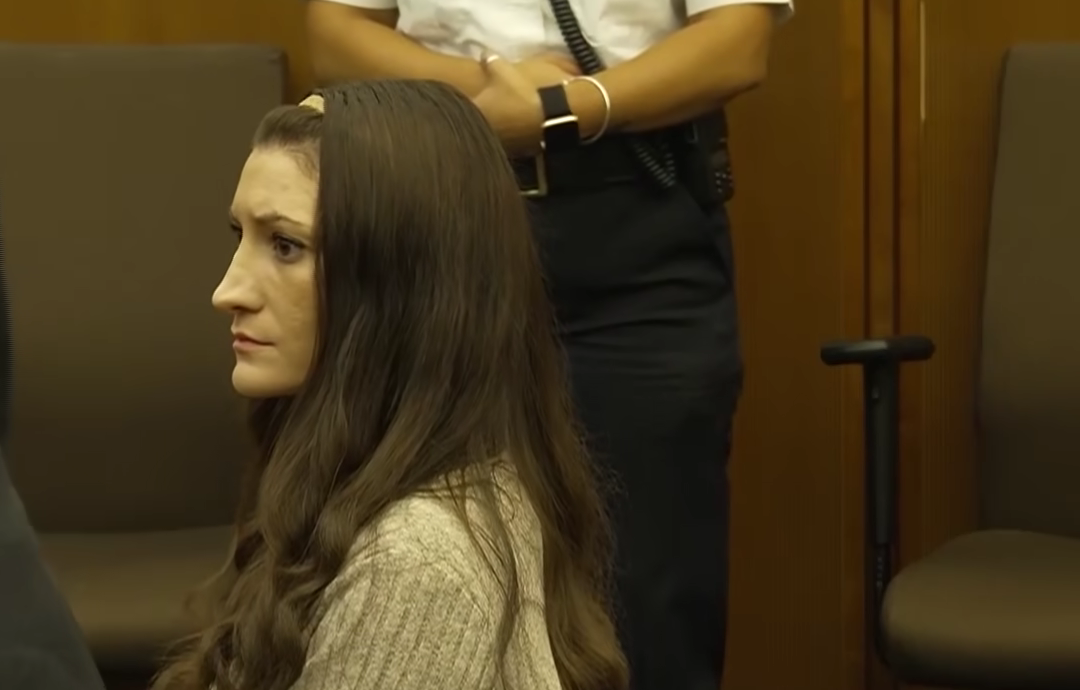
Lindsay Clancy’s defense attorney has asked a Massachusetts judge to find her not guilty after her trial over the deaths of her three children ended in a mistrial. Attorney Kevin Reddington filed a renewed motion seeking an acquittal, arguing that prosecutors failed to present enough evidence to establish that Clancy was criminally responsible for the deaths. If the judge accepts the request, it could prevent prosecutors from bringing the case before another jury.
Clancy, 36, was charged in connection with the deaths of her three children, Cora, Dawson and Callan, at the family’s home in Duxbury in January 2023. Her defense has argued throughout the case that she was experiencing postpartum psychosis and therefore lacked criminal responsibility at the time. Prosecutors, meanwhile, argued that the evidence supported criminal responsibility and that she understood the nature and consequences of her actions.
The trial ended on September 4 after the 12 member jury was unable to reach the unanimous verdict required in the case. Jurors had deliberated for seven days following weeks of testimony and repeatedly reported that they remained divided. According to a note sent to the judge, 11 jurors were prepared to find Clancy not guilty on the basis of lack of criminal responsibility, while one juror did not agree with that conclusion.
Lindsay Clancy Defense Challenges Evidence of Criminal Responsibility
Reddington has emphasized that his latest motion does not simply rely on the reported 11-1 division among jurors. Instead, he argues that the evidence presented by prosecutors was legally insufficient to establish criminal responsibility beyond a reasonable doubt. His filing points to testimony from psychiatric experts who agreed that Clancy was suffering from a serious mental illness, although the two sides differed over the legal significance of that condition.
The defense specifically disputes the argument that Clancy’s ability to perform ordinary tasks before the incident demonstrated that she understood the wrongfulness of her actions. Reddington argues that being able to carry out routine activities does not necessarily establish that a person experiencing a severe psychiatric crisis was legally responsible for what happened. The motion therefore asks Judge William Sullivan to evaluate whether the prosecution actually met the legal standard required for a conviction.
Massachusetts law provides a mechanism for defendants to seek a required finding of not guilty when the evidence is insufficient to support a conviction. Under Rule 25 of the Massachusetts Rules of Criminal Procedure, a judge can enter a finding of not guilty when the evidence is legally inadequate to sustain the charges. The rule also allows a defendant to renew the motion within five days after a jury has been discharged without reaching a verdict.
That procedure is now central to the defense strategy. Reddington previously made a similar request during the trial, but Judge Sullivan denied it and allowed the case to proceed to the jury. After the mistrial, the defense renewed the request, giving the judge another opportunity to determine whether the prosecution’s evidence was sufficient as a matter of law.
The judge’s decision could have major consequences for the future of the case. If Sullivan grants the defense motion and enters a finding of not guilty, prosecutors would not simply be able to restart the same murder prosecution with another jury. If the motion is rejected, however, the case could continue toward another trial, depending on the decision of Plymouth County District Attorney Timothy Cruz and the legal issues raised by the defense.
Mistrial Leaves Future of Clancy Case Uncertain
Prosecutors have not yet announced whether they intend to retry Clancy. A second trial would require the prosecution to present its case again after the first proceeding failed to produce a verdict. Prosecutors would have to consider the evidence presented during the first trial, the arguments raised by the defense and the implications of the jury’s inability to reach a unanimous decision.
The jury’s division has become an important part of the public discussion surrounding the case. One former juror has said that most members of the panel believed the evidence left them with reasonable doubt regarding Clancy’s criminal responsibility. However, the defense’s legal argument remains separate from the jurors’ opinions: the court must determine whether the prosecution’s evidence was legally sufficient under Massachusetts law rather than simply adopting the jury’s numerical split.
The case has also drawn national attention because of the questions it raises about postpartum mental illness and criminal responsibility. Medical and psychiatric evidence played a central role during the trial, with the defense seeking to show that Clancy’s mental state had severely deteriorated around the time of the deaths. The prosecution challenged the defense’s interpretation of that evidence and argued that mental illness did not eliminate criminal responsibility.
The September 29 hearing is now expected to be an important moment in determining what happens next. Judge Sullivan will consider the defense’s renewed request, while prosecutors will have to decide whether to continue pursuing the charges if the motion is rejected. Depending on the outcome, the case could move toward a second trial or take a different legal path.
Ultimately, Clancy’s case remains unresolved despite the conclusion of the first trial. The mistrial did not establish either guilt or innocence, and the defense is now asking the judge to end the prosecution by finding that the evidence cannot legally support a conviction. With the September 29 hearing approaching, the court will have to determine whether the evidence meets the required legal standard and whether the case should proceed further. The decision could bring an end to one of Massachusetts’ most closely watched criminal cases or open the way for another trial.