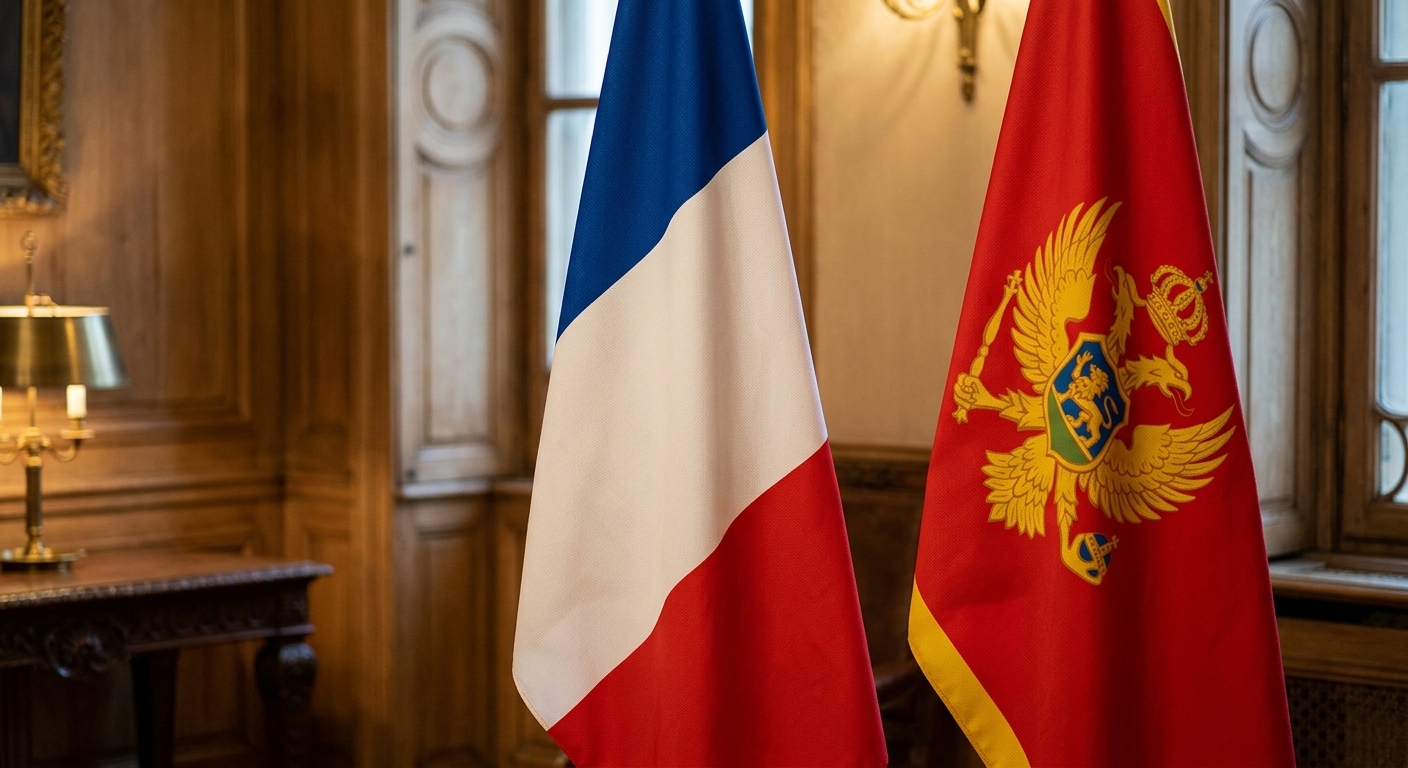
Montenegro is looking to strengthen its position on the international tourism market by expanding cooperation with European destinations and focusing on higher quality and more sustainable tourism, Tourism Minister Simonida Kordić said during a visit to Paris. Her meetings with French Tourism Minister Serge Papin and representatives of Normandy’s tourism sector focused on developing new forms of cooperation, exchanging experience and creating opportunities for closer links between tourism businesses and destinations.
Kordić’s visit took place during the IFTM Top Resa 2026 international tourism fair in Paris, one of the major events for the travel industry in France and the wider international market. According to the Montenegrin government, the fair is being used as an opportunity to present the country’s tourism offer, establish business contacts and promote Montenegro as a destination beyond its traditional markets.
During her meeting with Papin, the two ministers discussed the development of tourism that combines quality, sustainability and stronger international cooperation. The French minister also highlighted Montenegro’s growing visibility as a tourist destination and pointed to the country’s role as chair of the UN Tourism Commission for Europe as an opportunity to strengthen cooperation among European tourism authorities.
Montenegro has held the chairmanship of the UN Tourism Commission for Europe since 2025. In its role, the country has emphasized international cooperation and the importance of working together on the future development of tourism. The position gives Montenegro an additional platform for promoting cooperation with other European destinations while participating in discussions about issues affecting the sector across the region.
Montenegro Tourism Focuses on Diversification and Sustainability
Tourism remains one of the most important parts of Montenegro’s economy, and recent statistics show the scale of the country’s international visitor market. According to MONSTAT, Montenegro recorded more than 2.7 million tourist arrivals and over 15.3 million overnight stays during 2025. Foreign visitors accounted for 95.8% of all overnight stays, demonstrating how strongly the country’s tourism industry depends on international demand.
The structure of tourism also shows why Montenegro is seeking to diversify its offer. In 2025, seaside resorts accounted for 92.6% of all overnight stays, while mountain resorts represented 2.8% and the capital accounted for 2.7%. This concentration around the coast has long been one of the challenges facing the country’s tourism sector, particularly because it contributes to strong seasonal fluctuations during the year.
Montenegro’s tourism development plans have therefore placed increasing emphasis on diversification and sustainability. The country’s tourism strategy calls for improving the quality of the tourism product, expanding rural and northern tourism, developing greener accommodation and creating a more balanced offer that can attract visitors throughout the year rather than concentrating activity in the summer months.
The government has continued this approach through its 2026 tourism incentive program. The program aims to create a more diversified, year round tourism product, with particular attention to northern Montenegro, regional development, digitalization and greater participation of young people and women in tourism related businesses. It also includes measures designed to strengthen cooperation with tour operators and increase organized air arrivals through joint promotional campaigns.
Montenegro-France Tourism Partnerships Expand
Another important part of Kordić’s visit was her meeting with Michael Dodds, director general of the Normandy regional tourism agency Normandie Attractivité. The discussions focused on expanding cooperation between Montenegro and Normandy, building on contacts established through a business forum held in the French region last year.
The two sides identified several areas where cooperation could be expanded, including the exchange of tourism experience, connecting businesses and other tourism stakeholders, and developing joint initiatives. Both Montenegro and Normandy are seeking to strengthen their profiles as recognizable tourist regions, creating opportunities for cooperation in promotion, destination management and the development of new tourism products.
For Montenegro, partnerships such as these could also support efforts to move toward a tourism model that relies less heavily on traditional coastal summer tourism. Cooperation with established European destinations can provide opportunities to exchange knowledge about sustainable development, destination management and attracting visitors outside the busiest part of the year.
The country’s government has also been working on updating the regulatory framework for tourism. In June 2026, the government adopted a draft Law on Tourism and Hospitality that included principles such as protecting the quality of life of local communities, preserving cultural heritage, encouraging regional diversification and improving the resilience and safety of destinations. The draft also places emphasis on digital technologies and innovation in tourism.
Overall, Kordić’s meetings in Paris reflect Montenegro’s broader effort to increase the quality and international reach of its tourism sector while addressing challenges such as seasonality and regional concentration. The country’s strong dependence on foreign visitors makes international partnerships particularly important, while its cooperation with France and Normandy offers another avenue for exchanging experience and developing new connections. If these efforts are combined with continued investment in sustainable and year round tourism, Montenegro could further diversify the way it presents itself to international visitors and tourism businesses.