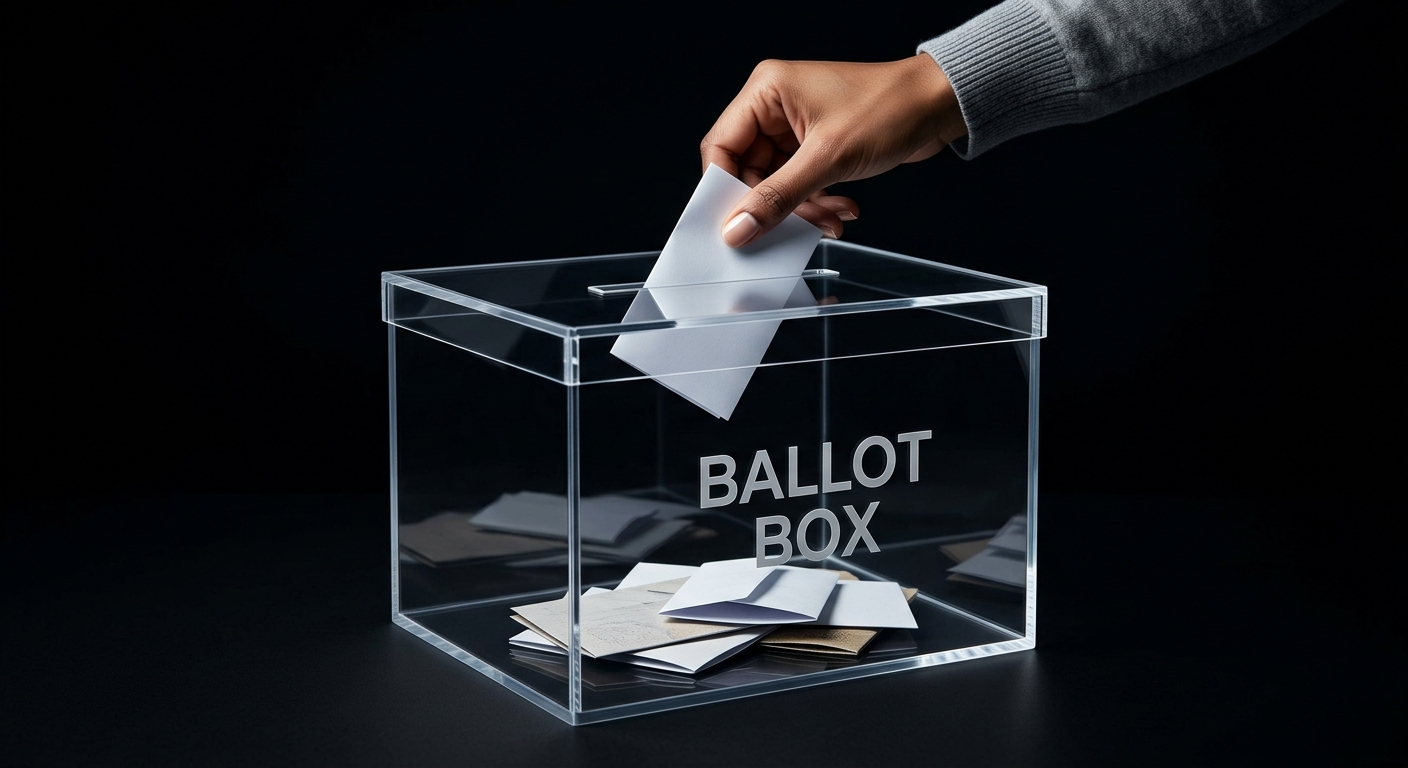
The Trump administration is significantly increasing federal investigations and criminal prosecutions involving noncitizens accused of voting in U.S. elections, putting election integrity and voter eligibility at the center of the political debate ahead of the November 3 midterm elections. The Justice Department has announced numerous recent cases involving alleged illegal voting, false claims of citizenship and related offenses, while Homeland Security Investigations has expanded its involvement across the country.
Federal prosecutors have brought an unusually large number of cases under the federal law that prohibits noncitizens from voting in federal elections. The Justice Department said it charged 16 people in a September 18 announcement, while additional cases have been filed since then. Reports claim that the department had brought charges against 32 people over a four week period for noncitizen voting and related election offenses. The cases span several states and include both undocumented immigrants and lawful permanent residents.
The administration has described the investigations as a major election integrity effort. Justice Department officials say the federal government has a responsibility to enforce laws restricting federal voting to U.S. citizens, and prosecutors have pointed to the new cases as evidence that violations do occur. In Texas, for example, federal prosecutors recently charged seven noncitizens with alleged unlawful voting or falsely claiming U.S. citizenship. Similar cases have been announced in Georgia, Michigan, New Jersey, Wisconsin, Kansas and Florida.
The Justice Department’s recent announcements also show that the cases can involve allegations dating back several years. Some defendants are accused of registering to vote or casting ballots in the 2022 or 2024 elections rather than participating in the current election cycle. Prosecutors say the investigations are intended to identify cases in which individuals knowingly violated federal election law. However, the charges are allegations, and defendants are presumed innocent unless proven guilty in court.
Federal Prosecutions Put Noncitizen Voting Under Scrutiny
The increased enforcement is being supported by Homeland Security Investigations, the investigative arm of the Department of Homeland Security. HSI has hundreds of agents working on investigations connected to the issue and that the agency has about 1,600 open investigations involving alleged noncitizen voting. The Justice Department has described the effort as a high level priority, indicating that additional cases could emerge before the midterm elections.
At the same time, the scale of the recent prosecutions has become part of a larger political dispute over how common noncitizen voting actually is. Trump and his allies have argued that voting by noncitizens represents a serious threat to election security and have supported stronger citizenship verification requirements. The administration’s position is that identifying and prosecuting individual violations can help protect confidence in elections and discourage people who might otherwise attempt to vote illegally.
Independent research has found that documented noncitizen voting is uncommon. A Brennan Center survey of election officials covering 23.5 million votes across 42 jurisdictions in the 2016 election identified about 30 suspected cases referred for further investigation or prosecution. The study noted that these were suspected cases rather than proven violations and represented a very small share of the votes examined.
Mistakes in voter registration databases do not necessarily mean that an ineligible person actually voted. A voter record can require additional verification before officials can determine whether someone was ineligible, registered improperly or actually cast a ballot. This distinction is important because the current federal investigations cover several different types of alleged conduct.
Some cases involve people accused of actually casting ballots, while others involve alleged false statements during voter registration or citizenship applications. In some instances, prosecutors have also uncovered other alleged offenses during investigations. Federal officials have emphasized the seriousness of these cases, while election researchers have cautioned that individual violations should not automatically be interpreted as evidence of widespread election fraud.
Election Enforcement Debate Intensifies Before Midterms
The timing of the prosecutions has also attracted attention because the United States is approaching the November 3 midterms, when voters will decide control of both chambers of Congress. The administration’s expanded focus on election enforcement comes as voting rules, citizenship verification and election administration have become increasingly contested political issues. Critics of the administration argue that repeated claims about widespread noncitizen voting could affect public confidence in elections, while administration officials say enforcement is necessary to protect that confidence.
Another issue concerns how investigations are handled within the Justice Department. Senior prosecutors were told they could no longer independently decline certain election fraud cases without department leadership having an opportunity to review disputes. The change has raised questions among some career prosecutors because charging decisions have traditionally involved professional judgment by federal prosecutors evaluating available evidence. A Justice Department official said the leadership review process would not automatically result in charges and would instead be used to resolve disagreements between investigators and prosecutors.
The debate therefore extends beyond the individual criminal cases. Supporters of the administration’s approach see the prosecutions as an enforcement mechanism designed to demonstrate that election laws have consequences. Critics argue that the focus on a relatively rare form of election misconduct could contribute to broader doubts about the reliability of elections, particularly if isolated cases are presented as evidence of a widespread problem.
The recent prosecutions are likely to remain part of the national election debate as the November 3 midterms approach. Federal authorities are continuing to investigate allegations, and more cases could be announced in the weeks ahead. At the same time, available research indicates that suspected noncitizen voting has historically represented a very small share of ballots cast in the jurisdictions studied.
The central issue going forward will be how federal officials balance enforcement of existing election laws with the need to distinguish individual violations from broader claims about the integrity of the American electoral system.