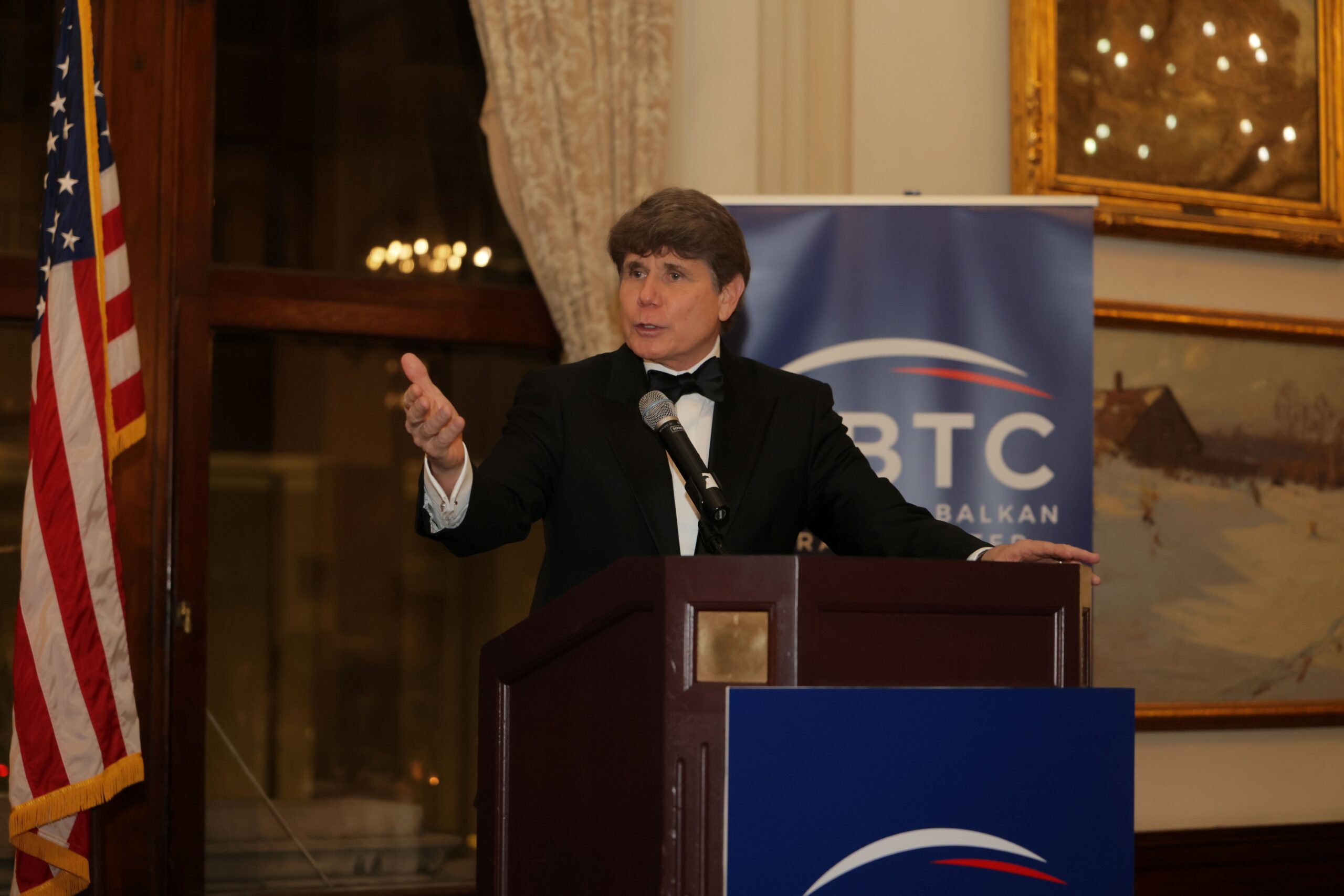
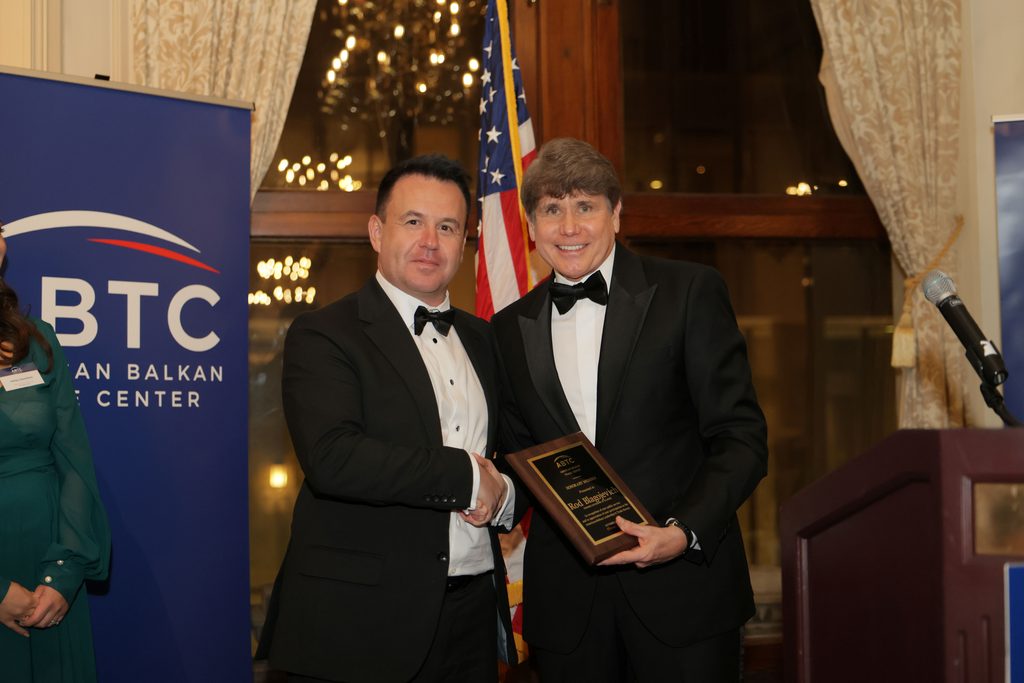
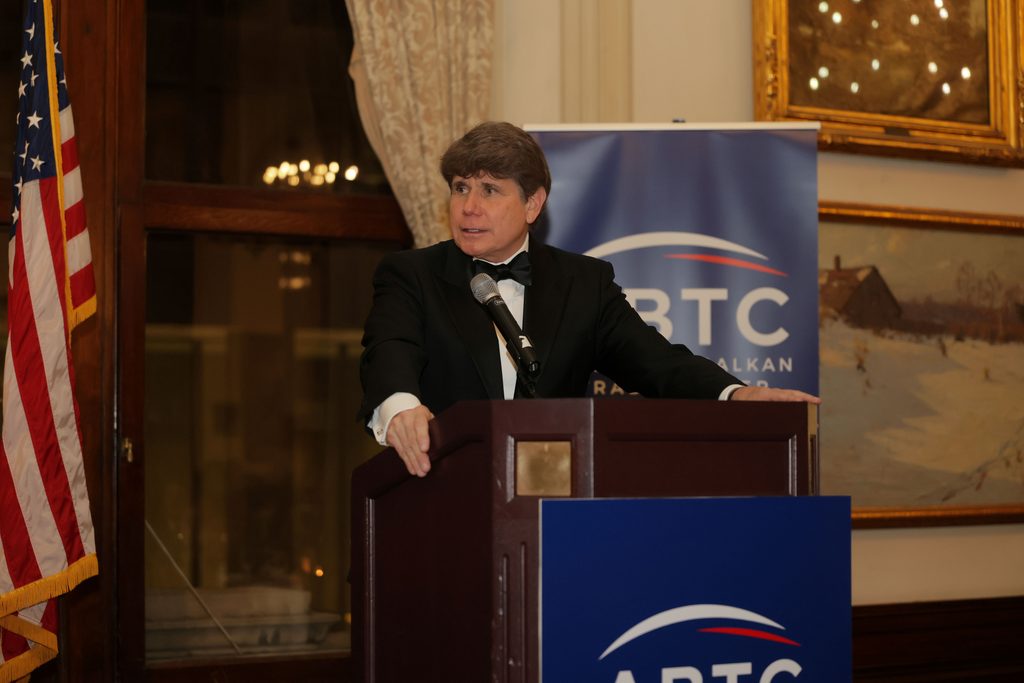
At the recent American Balkan Trade Center Leadership and Trade Forum, former Illinois Governor Rod Blagojevich attended the event as an honorary member of the organization.
For First Balkan Media, the former governor spoke openly about his Serbian roots, growing up as the son of immigrants in Chicago, entering politics, his years in federal prison, his relationship with President Donald Trump, and his vision for stronger connections between Balkan communities and the American business world.
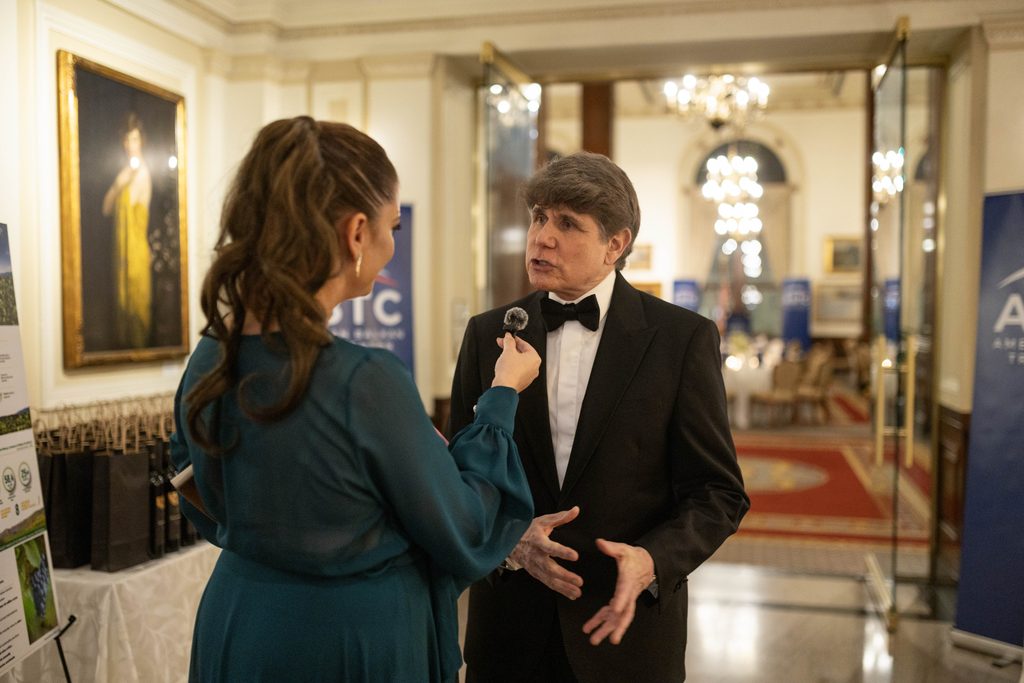
Blagojevich, known by his nickname “Blago,” served as the 40th Governor of Illinois from 2003 to 2009. Before becoming governor, he served in the Illinois House of Representatives and later represented Illinois’s 5th Congressional District in the U.S. House of Representatives.
Born and raised on Chicago’s Northwest Side, Blagojevich is the son of Serbian immigrants who came to the United States after World War II. His father, Rade B. Blagojevich, was a Serbian immigrant and steel plant worker who had spent years as a prisoner of war and later in a refugee camp before coming to America. His mother, Mila, was a Herzegovinian Serb whose family came from the Gacko region of Bosnia and Herzegovina.
Blagojevich has often described his parents’ generation as one defined by hard work, sacrifice and perseverance.
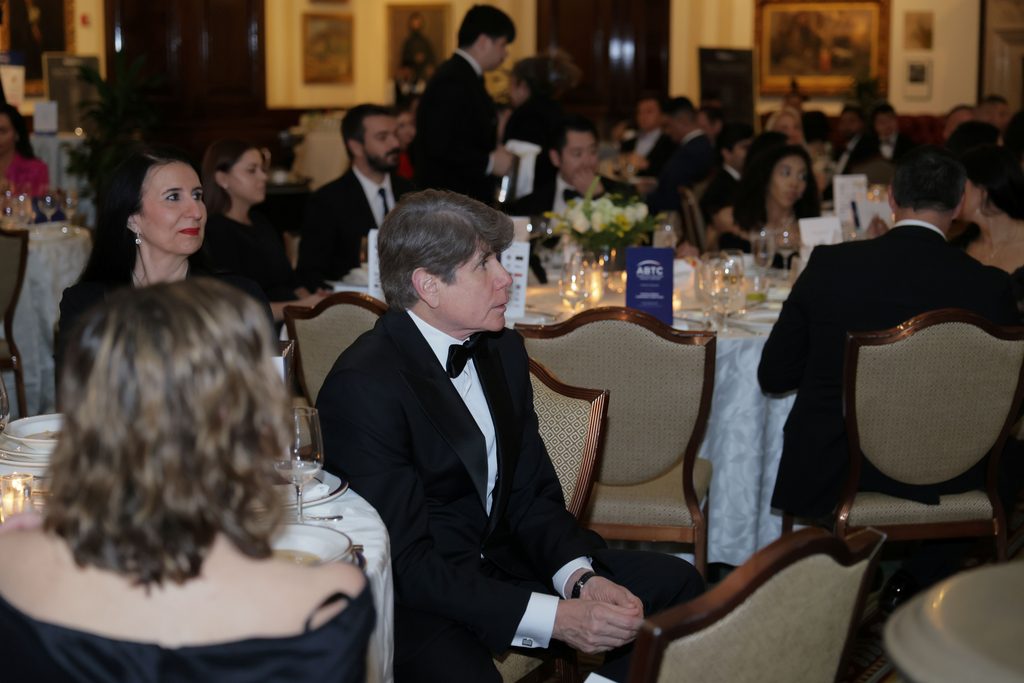
Growing Up Serbian in Chicago
Asked by First Balkan Media what it was like growing up as the child of Serbian immigrants in Chicago, Blagojevich said his generation experienced a very different America from the one facing young Balkan immigrants today.
“It’s a different generation back then,” he explained. “The young Serbs that have come here recently over the past 10, 15, 20 years are a different generation. They’re chasing different dreams. They have more opportunity in the business world.”
He recalled how difficult life was for his parents’ generation.
His father worked hard in factories and tried to build businesses of his own, including laundromats. At one point, the family business went bankrupt, but his father started over.
“He picked himself up and started doing that again,” Blagojevich recalled.
Despite the challenges, his father remained focused on giving his children an opportunity to succeed in America.
“It was all about working real hard to give me a chance to go to college and give me a chance as an American-born Serb to chase the American dream,” he said.
Blagojevich himself worked numerous jobs while growing up, including as a shoeshiner, pizza delivery worker and meatpacking employee. To help pay for university, he even worked as a dishwasher connected to the Trans-Alaska Pipeline System.
His determination eventually led him to Northwestern University, where he graduated in 1979, followed by Pepperdine University School of Law, where he earned his law degree in 1983.
He later became a criminal prosecutor in the Cook County State’s Attorney’s Office before entering politics.
Beyond his political career and public life, Rod Blagojevich is also a husband and father.
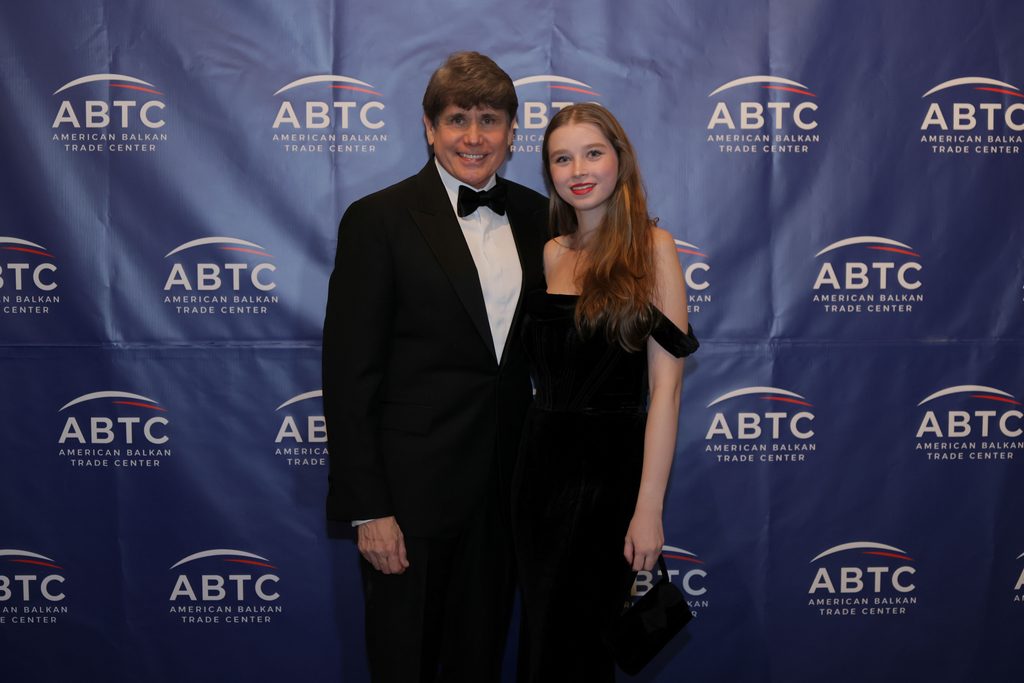
Why Politics?
First Balkan Media asked Blagojevich why, at a time when the children of immigrants were not commonly entering politics, he decided to pursue a political career.
His answer was characteristically direct.
“I didn’t want to be a doctor because I don’t like the sight of blood,” he joked.
Blagojevich said he had always been interested in history and that his entry into politics happened almost unexpectedly.
“I was a history major in school. And I always was interested in history. And when the opportunity came to run for public office, I didn’t push it. It just happened. I seized the moment and did it.”
His political career progressed rapidly. Within a decade of entering elected politics, he had become governor of Illinois, one of the largest and most influential states in the United States.
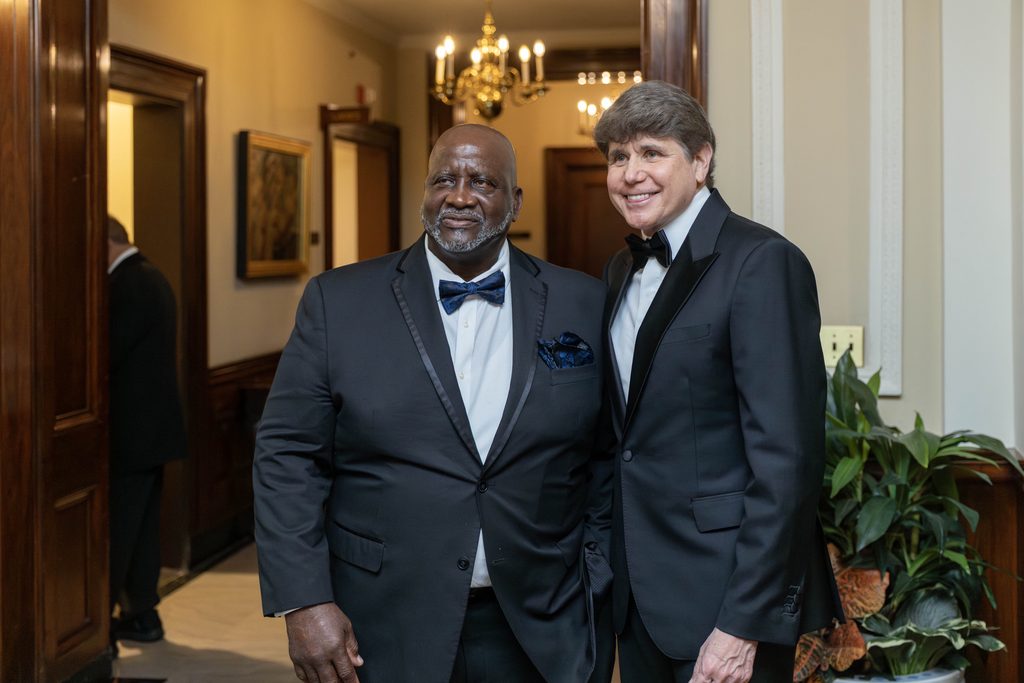
“My Story Is Sort of a Small Version of the Serbian Story”
Blagojevich’s political career later became overshadowed by a federal corruption investigation.
In December 2008, he was arrested after federal authorities accused him of corruption involving, among other allegations, the U.S. Senate seat vacated by Barack Obama after Obama was elected president.
Blagojevich was convicted in federal court in 2011 and ultimately sentenced to 14 years in federal prison. He spent nearly eight years incarcerated before President Donald Trump commuted his sentence in 2020. Trump later granted Blagojevich a full pardon in 2025.
First Balkan Media asked him how he views that difficult chapter of his life.
Blagojevich compared his experience to the history of the Serbian people.
“What they did to me is like what the Ottoman Turks have done to the Serbs,” he said, also referring to what he described as actions against Serbs by powerful international forces during the 1990s.
He said that during what he called his “wilderness years,” he drew inspiration from the Serbian example.
“To endure, persevere, overcome, and come back,” he said.
“In many ways, my story is sort of a small version of the Serbian story.”
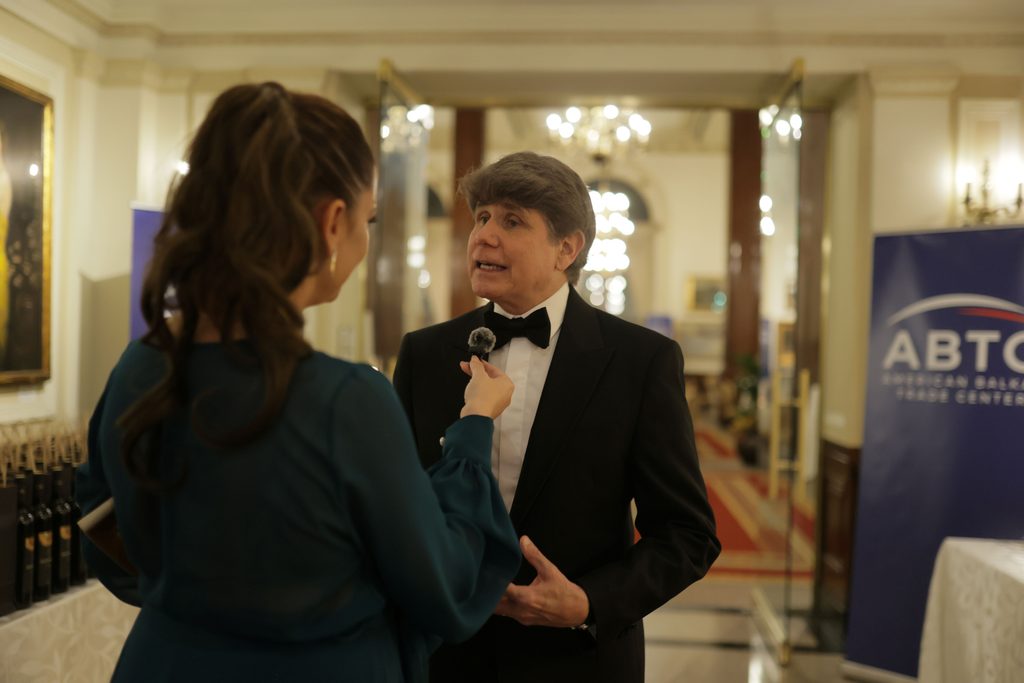
Helping the Balkan Community as Governor
Now back in public life, Blagojevich reflected on his years as governor and what he was able to do for Illinois’ Balkan communities.
He said one of the greatest aspects of being governor was having the authority and resources to make decisions that could directly help people.
“I had a lot of power. And I had a lot of money, access to a lot of money,” he said.
Blagojevich recalled supporting Serbian-American institutions and businesses during his administration.
He said his administration found ways to support churches despite legal restrictions, including providing funding for a library connected with the Serbian Orthodox community in Gracanica.
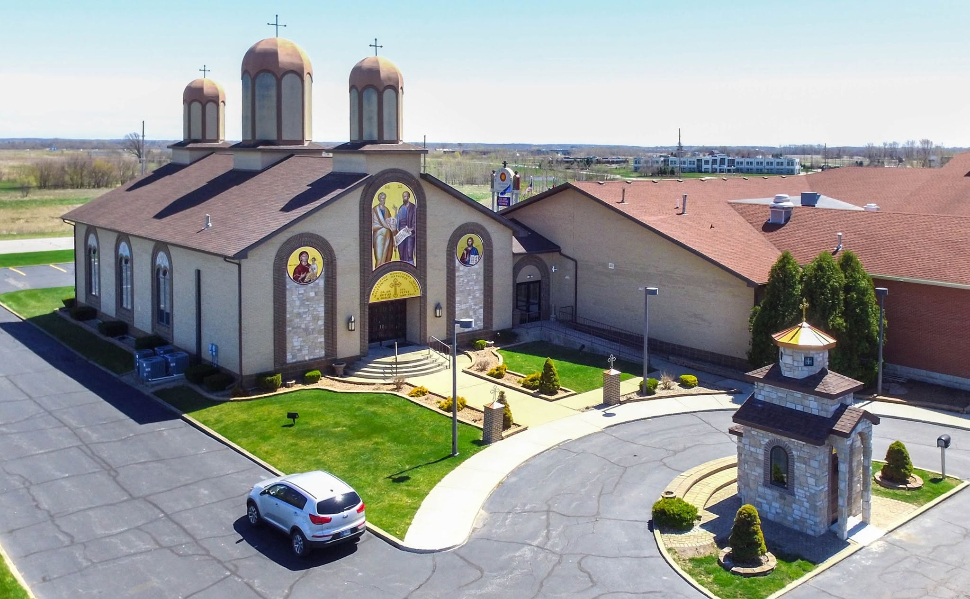
He also recalled providing property to Holy Resurrection Serbian Orthodox Church on Redwood Drive and creating opportunities for Serbian-Americans in state government.
Blagojevich also spoke about state programs that provided loans to businesses, saying Serbian entrepreneurs received support as they sought opportunities to grow.
He remembered meeting Serbian President Boris Tadić and establishing a sister-state and trade relationship between Serbia and Illinois.
“I miss having that power,” Blagojevich said. “It was always good to be able to do good things for people, especially people where I come from.”
Building Stronger Balkan-American Business Connections
As an honorary member attending the American Balkan Trade Center forum, Blagojevich also shared his thoughts on how Balkan communities and Americans can build stronger relationships through business.
He described the American Balkan Trade Center as an important and growing organization.
“American Balkan Trade Center is a very important organization. It is growing,” he said.
Blagojevich pointed to the participation of young Serbian, Macedonian, Montenegrin and Croatian-American entrepreneurs who are building businesses and pursuing the American dream.
Many, he noted, are active in industries such as transportation.
He emphasized that business relationships can extend beyond individual companies.
“What business relationships do between people, it also has a lot to do between nations and countries,” he said.
In his view, stronger networking and business relationships between Balkan-Americans and American business leaders can create opportunities for investment and ultimately strengthen ties between the United States and Balkan countries.
“The more the Serbs are active in the American business community, networking, developing mutual interests with business people, the more opportunities there will be for the Serbian people in Serbia itself,” Blagojevich said.
He described the qualities of Serbian-Americans that he believes contribute to their success: perseverance, hard work, resourcefulness and an entrepreneurial spirit.
“These are the things that make America great,” he said.
Could Blagojevich Become an Ambassador?
Although approaching 70, Blagojevich remains active in business, consulting and public affairs.
First Balkan Media asked whether he might consider serving as an ambassador in Serbia.
His answer left the door open.
“President Trump has been very good to me, as you know. And I will always have great profound gratitude to President Trump for all the good things he’s done for me and for my family,” Blagojevich said.
“And if he asked me to do just about anything, I would do it.”
A New Book Is Coming
Blagojevich also revealed that a new book is scheduled for release on November 10.
The book, titled “Framed, Freed and Fighting Back,” will revisit some of the most significant chapters of his life and political career. He said the book includes President Trump, Barack Obama, his own experiences and people he met during his years in prison.
“I’m very, very busy and I’m very grateful and blessed,” he said. “It’s just been so good to be home and reconnected with the Serbian community.”
“This Is What This Event Is About”
Finally, First Balkan Media asked Blagojevich what he believes is the best way for Balkan-Americans to create stronger connections and build successful businesses.
For him, the answer was already visible in the room.
“That’s what this event is,” he said.
He described the American Balkan Trade Center as a platform where members of the community can build relationships, create contacts and network with one another.
“This Balkan business organization is a way to be active in our community and help some of the young businessmen make the relationships, the contacts, and do the networking that’s necessary to grow their businesses.”
For Blagojevich, the message is ultimately one that connects his own immigrant family story with the next generation of Balkan-Americans: work hard, build relationships, persevere through challenges and use the opportunities America provides to create something greater for the future.