Founded on the vision of Serbian immigrants and brought to life through the determination of Bishop Mardarije and the support of Serbian-American communities, the St. Sava Monastery in Libertyville, Illinois, became one of the most important spiritual and cultural centers of the Serbian Orthodox Church in America.
The story of the St. Sava Serbian Orthodox Monastery in Libertyville, Illinois, began long before its church was built. It was born from a vision shared by Serbian immigrants, clergy and prominent members of the Serbian community who believed that their people needed more than a place of worship in America. They wanted a spiritual home, a center of education and a refuge where Serbian religious and national traditions could be preserved for generations to come.
Today, the monastery stands as a lasting symbol of that vision — a legacy built through faith, determination, sacrifice and the contributions of generations of Serbian Americans.
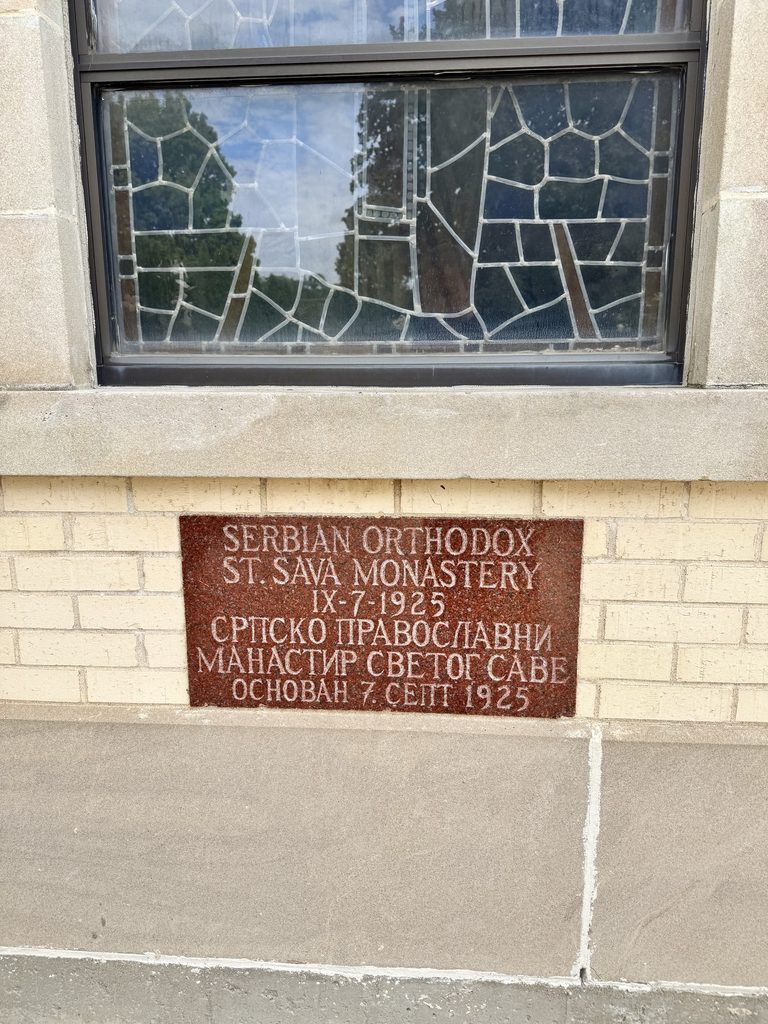

The Vision: A Serbian Spiritual Center in America
One of the earliest documented proposals for establishing a Serbian monastery in America came from St. Karamata, a Serb from Vojvodina who had lived in the United States for many years.
In a letter dated June 30, 1910, he suggested to Serbian Patriarch Lukian Bogdanović that land be purchased in America for the establishment of a Serbian center.
His vision was to build a monastery that would serve as the headquarters of the Serbian Orthodox Diocese and provide shelter and assistance to Serbian immigrants in need.
The proposal had the support of Professor Mihajlo Pupin, the renowned Serbian-American scientist and Columbia University professor, who would later become one of the project’s most important benefactors.
Bishop Nikolaj Velimirović also supported the idea of establishing a monastery that would serve as a religious center, a summer camp for children and a refuge for sick and elderly members of the Serbian community.
In September 1922, Hieromonk Pavle Marković formally appealed to Russian Metropolitan Platon for his blessing to establish a Serbian monastery.
Bishop Mardarije and the Beginning of the Project
Following the establishment of the Serbian Orthodox Diocese in America, the idea of building a permanent spiritual center gained momentum.
Bishop Nikolaj encouraged Bishop Mardarije to purchase property in the Chicago area, with plans to establish a monastery, seminary and printing house. The monastery was envisioned as the heart of Serbian Orthodox life in America.
Bishop Mardarije, who had previously served as director of the monastic school at Rakovica Monastery, shared this vision and took on the responsibility of turning it into reality.
He launched an extensive campaign to secure land for the project. In a letter responding to his efforts, Patriarch Dimitrije praised his direction, writing:
“The direction you are moving at is very good.”
The Serbian-American newspaper Srbobran welcomed the proposal in July 1923, expressing optimism that the long-awaited idea would finally become reality.
News of the project also reached Belgrade, where reports praised the Serbian community in America for its efforts to establish an orphanage and the St. Sava institution in Libertyville.
Building the Monastery: Faith Through Hardship
On September 24, 1923, Bishop Mardarije appealed to Serbian priests, church congregations and the wider community to support the project.
A conference was held in Chicago, where he explained the spiritual and national importance of establishing the monastery. The publication Christian Life also praised the initiative, describing it as essential to preserving Serbian religious and national identity in America.
The construction effort soon became a personal mission for Bishop Mardarije.
An August 1926 report in American Srbobran described the bishop working alongside construction crews, supervising the project and helping workers with their tasks.
One observer recalled seeing him among 12 to 15 workers, making sure that every stone was properly placed.
The bishop reportedly explained his determination with the words:
“This is built for eternity for my people.”
His commitment went beyond supervision. Dr. Božidar Purić, who served as a general counsel of the Yugoslav government, recalled seeing Bishop Mardarije personally carrying heavy stone slabs to reduce construction expenses.
The monastery church was dedicated to Saint Sava, the first Serbian archbishop and one of the most important figures in Serbian spiritual and national history.
The original plan was to consecrate the church on Labor Day, September 6, 1926. However, financial difficulties and organizational challenges slowed construction, and work was eventually suspended in 1927.
Bishop Mardarije: The Founder and Saint of the Serbian-American Community
The establishment of the monastery coincided with a difficult period in the organization of the Serbian Orthodox Church in America.
The Diocese faced financial problems, internal disagreements and resistance from some clergy and community leaders. Archimandrite Mardarije took on the responsibility of leading the growing Serbian Orthodox community and bringing the monastery project to completion.
He was consecrated as a bishop in Belgrade on April 15, 1926, and arrived in New York ten days later. His work required not only spiritual leadership but also extraordinary personal dedication and determination.
Bishop Mardarije worked to reconcile divisions, establish order within the Diocese and secure the future of the monastery. He personally participated in construction efforts, helped carry building materials and sought financial support wherever he could find it.
He also transferred the monastery property from his personal name to the Serbian Orthodox Church and the Diocese, ensuring that the institution would belong to the Church and the people it was built to serve.
His efforts received crucial support from Professor Mihajlo Pupin, who donated more than $30,000 to help resolve the monastery’s financial crisis and allow construction to continue.
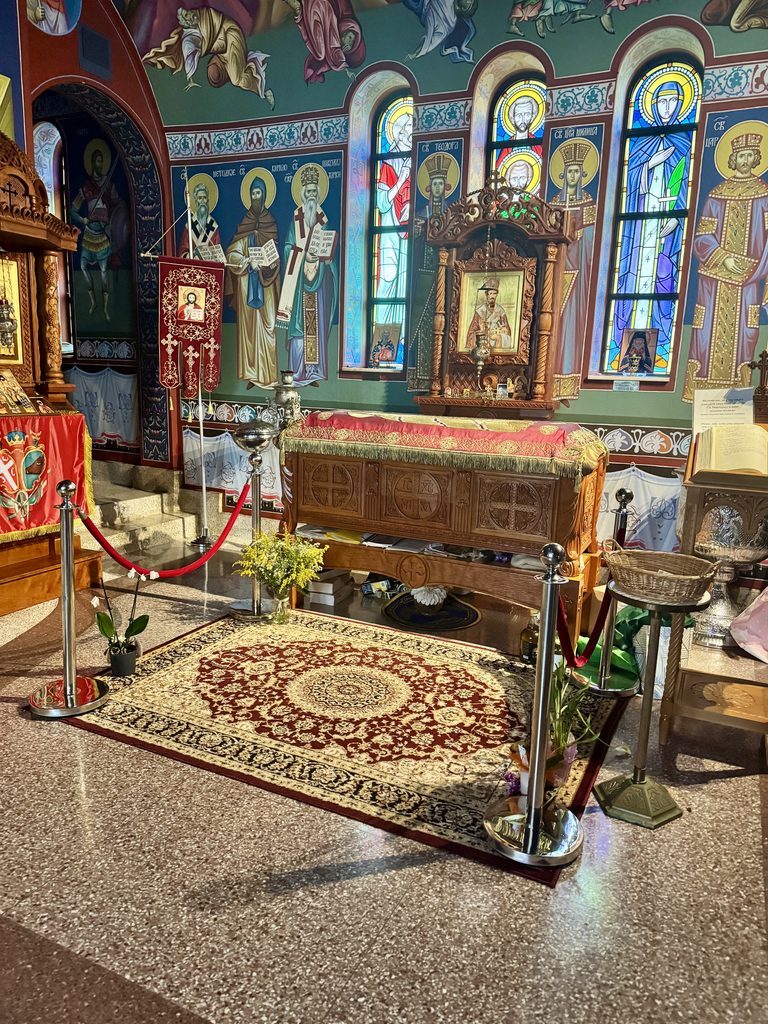
Bishop Mardarije died in 1935. His earthly remains were laid to rest at the St. Sava Monastery in Libertyville, the institution to which he had devoted so much of his life.
His legacy was formally recognized by the Serbian Orthodox Church decades later. During its regular session held from May 14 to 29, 2015, the Holy Assembly of Bishops of the Serbian Orthodox Church adopted a decision to add his name to the Diptych of Saints of the Holy Orthodox Church. He is venerated as Saint Mardarije of Libertyville, forever connected to the monastery that became the realization of his life’s vision.
A Saint’s Legacy in Libertyville
Saint Mardarije’s vision extended far beyond the construction of a church. He wanted the monastery to become a spiritual home for all Serbs in America — a place of worship, education, community gathering and preservation of Serbian identity.
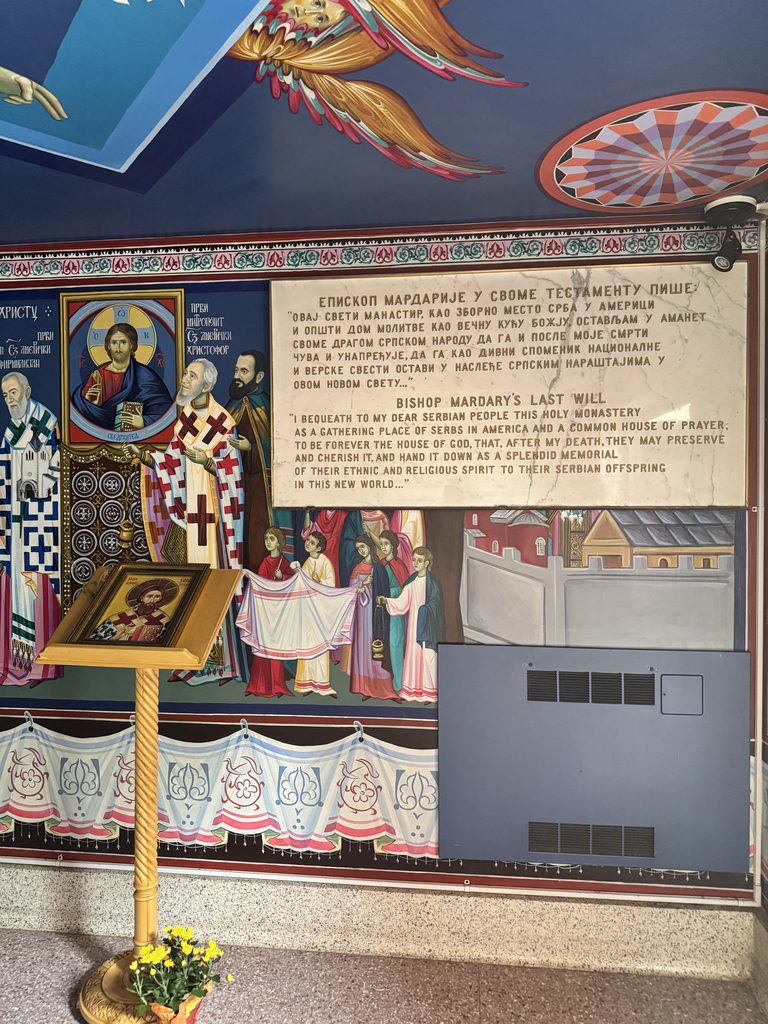
In his final will, he entrusted the monastery to the Serbian people in America, asking them to protect and preserve it as a lasting monument to Serbian religious and national heritage.
He described it as a gathering place for all Serbs in America and an eternal temple, intended to remind future generations that their ancestors had established a spiritual home on the other side of the Atlantic.
He also asked that the monastery remain the seat of his successors and that those who visited his grave light a candle and say a prayer for his soul.
Today, Saint Mardarije’s resting place at the monastery gives Libertyville a special significance for Serbian Orthodox faithful. The monastery is not only the fulfillment of his vision but also the place where the founder and first bishop of the American Serbian Orthodox Diocese rests.
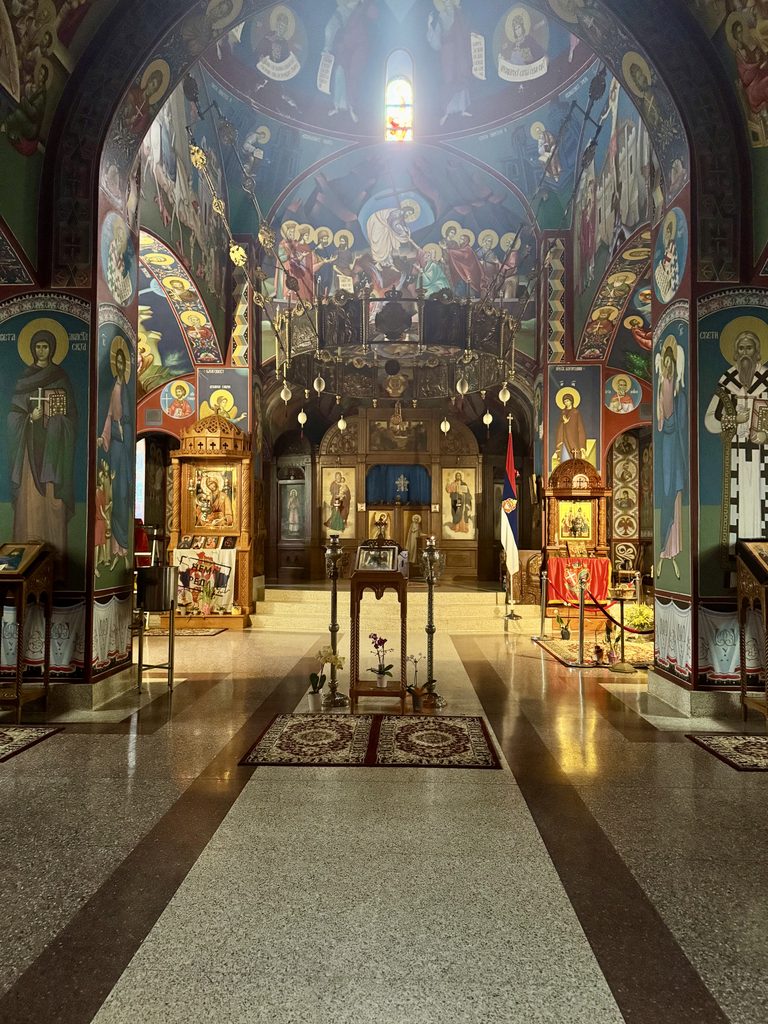
The Monastery Church Is Consecrated in 1931
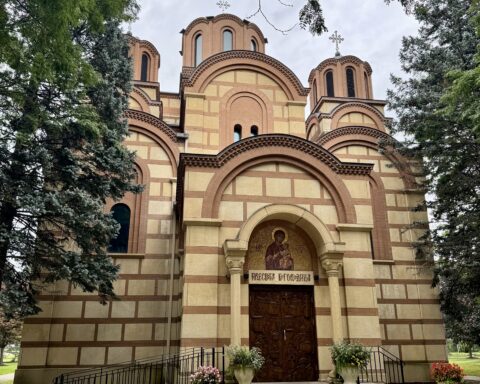
After years of effort, sacrifice and financial uncertainty, the monastery church was finally consecrated on September 6, 1931.
The event was described by American Srbobran as a historic day of pride for Serbs on the American continent.
More than 5,000 people attended the ceremony, according to Bishop Mardarije’s report to the Holy Synod.
He described the consecration as a major spiritual success, although the financial results were less encouraging.
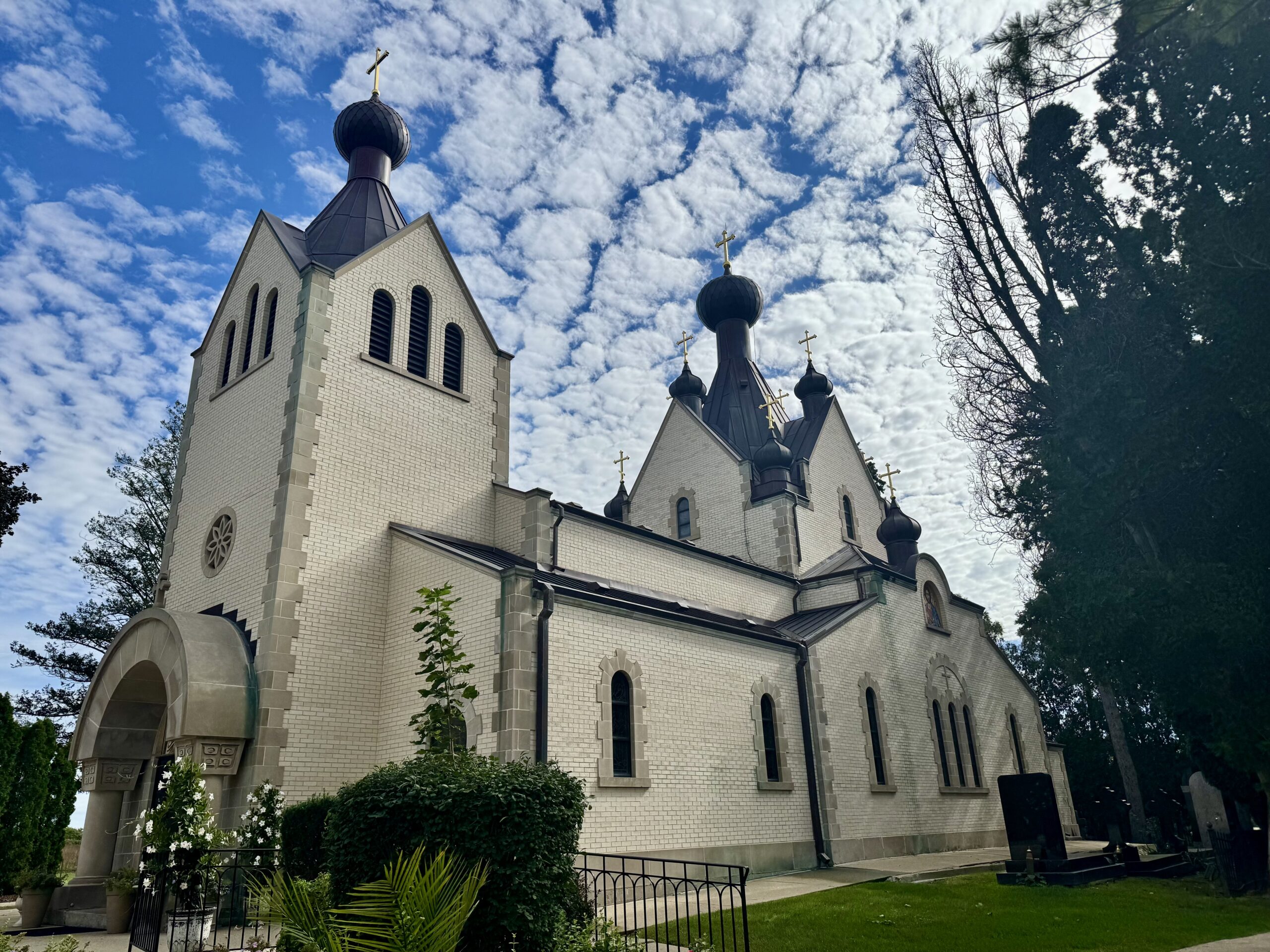
The church was built in a traditional Russian Novgorod architectural style, featuring twelve smaller domes surrounding a large central dome. Its distinctive design became an important part of the monastery’s identity.
The consecration marked the culmination of nearly two decades of planning and eight years of determined work to establish a permanent Serbian Orthodox center in America.
A Vision for Future Generations
For Bishop Mardarije, the monastery was never intended to be simply a church building.
He envisioned it as the spiritual center of Serbian Orthodoxy in America — a place where younger generations could remain connected to the faith of their ancestors, where future teachers and spiritual leaders could be educated, and where orphans, elderly people and those in need could find support.
The monastery was also intended to serve as a center of Serbian education and cultural life.
Its importance extended beyond religious services. It represented the determination of a community to preserve its identity while building a new life thousands of miles from its homeland.
Bishop Mardarije’s Final Legacy
Bishop Mardarije’s health gradually deteriorated, but he continued serving the Diocese and working for the future of the monastery.
He died in 1935 and was buried at the monastery he had devoted so much of his life to building.
Dr. Purić later wrote that the first bishop had largely accomplished his mission: he had built the monastery and helped stabilize the Diocese.
In his final will, Bishop Mardarije entrusted the monastery to the Serbian people in America, asking them to protect and preserve it as a lasting monument to Serbian religious and national heritage.
He wrote:
“This holy Monastery, as a gathering place of all Serbs in America, as a place of worship, as an eternal God’s temple, I leave to my beloved Serbian people with one request to be protected and nourished by them as I did, to be passed on as a fine monument of Serbian religious and national thought, to the new Serbian generations in this new world in order that they know forever that there were Serbs on this side of the Atlantic, far from homeland.”
He also asked that the monastery become the permanent seat of his successor and that future generations continue caring for it with the same devotion.
His final request was simple: that those visiting the monastery light a candle at his grave and say a prayer for his soul.
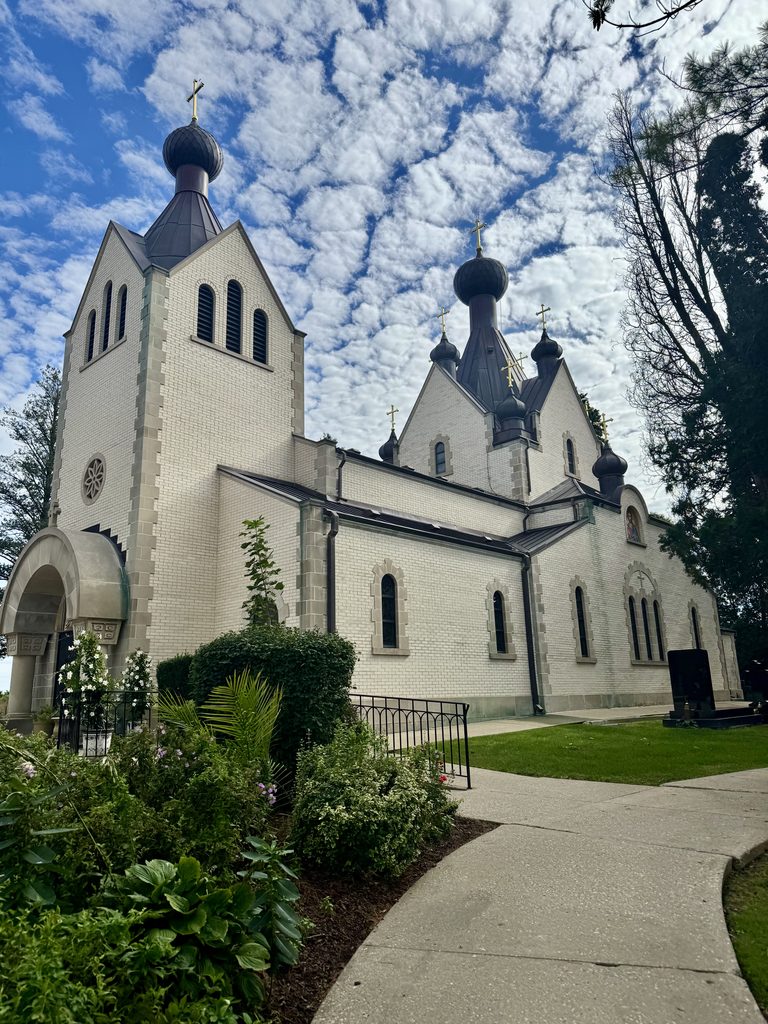
Growth and Development Through the Decades
After Bishop Mardarije’s death, the monastery continued developing under the leadership of subsequent bishops.
Bishop Dionisije, who led the Diocese from 1940 to 1963, reported that the monastery initially included a church, cemetery and other buildings on approximately 33 acres of land.
In 1941, he undertook renovations of the monastery church. He later acquired an additional 8.65 acres and paid off the monastery’s outstanding debts.
The monastery’s educational and community mission also expanded.
A children’s summer camp was established in 1946 through the efforts of the Federation of Sisters, with support from diocesan authorities, the Very Reverend Milan Brkić and his wife, Helen. The camp became an important tradition, helping younger generations connect with Serbian Orthodox faith and culture.
In 1945, a seminary was established at the monastery. Students completed three years of intensive studies before graduating and entering service in the Church.
The monastery cemetery, dating back to the 1930s, also became an important part of its history and spiritual identity.
Renovation and Preservation
In August 1979, the upper walls of the monastery church collapsed, making major reconstruction unavoidable.
Under the leadership of diocesan Bishop Firmilian, a comprehensive renovation project was initiated. The church was rebuilt and enlarged to approximately twice its original size.
The project represented another significant chapter in the community’s commitment to preserving the monastery for future generations.
The monastery was subsequently recognized as an historical landmark, further affirming its importance to Serbian-American religious and cultural heritage.
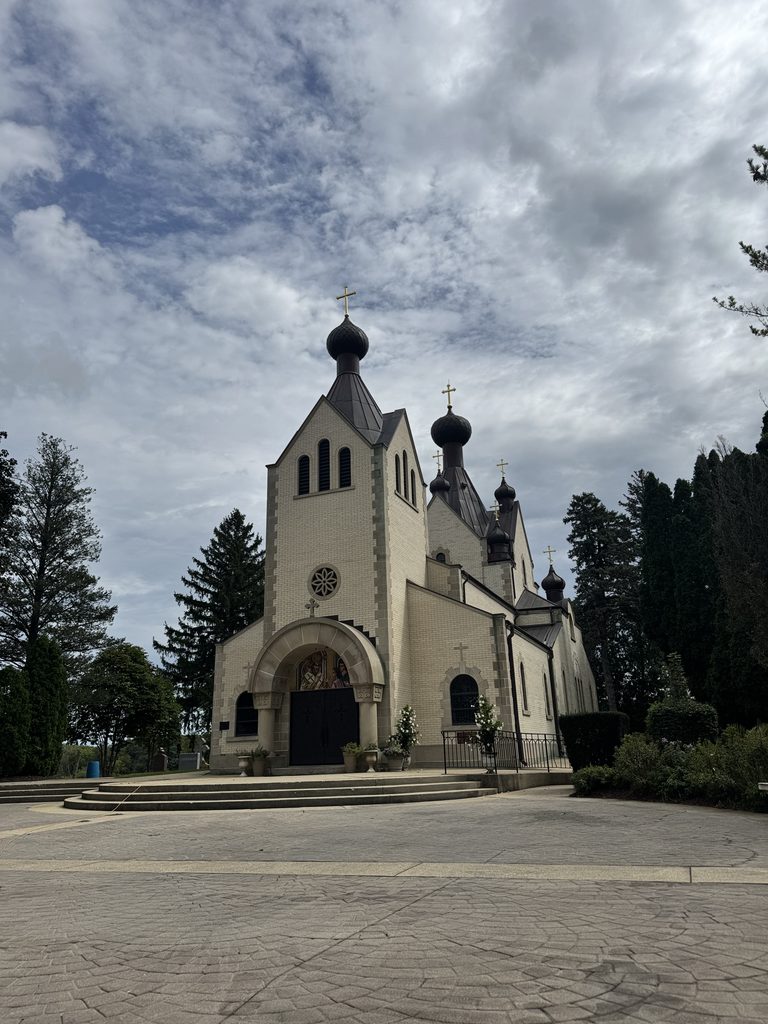
A Living Monument to Serbian-American History
The St. Sava Serbian Orthodox Monastery in Libertyville is more than a historic religious complex. It is the result of a vision that began with Serbian immigrants who wanted to preserve their faith, traditions and identity in a new country.
From the early proposal in 1910, through Bishop Mardarije’s determination, Professor Mihajlo Pupin’s generosity and the sacrifices of thousands of Serbian Americans, the monastery became a lasting institution.
Its church, cemetery, seminary, children’s camp and surrounding grounds tell the story of a community that believed its heritage should not disappear with distance or time.
More than a century after the first proposal, the words of Bishop Mardarije remain at the heart of its mission: to preserve a place where future generations will always remember that Serbs built a spiritual home on the other side of the Atlantic.
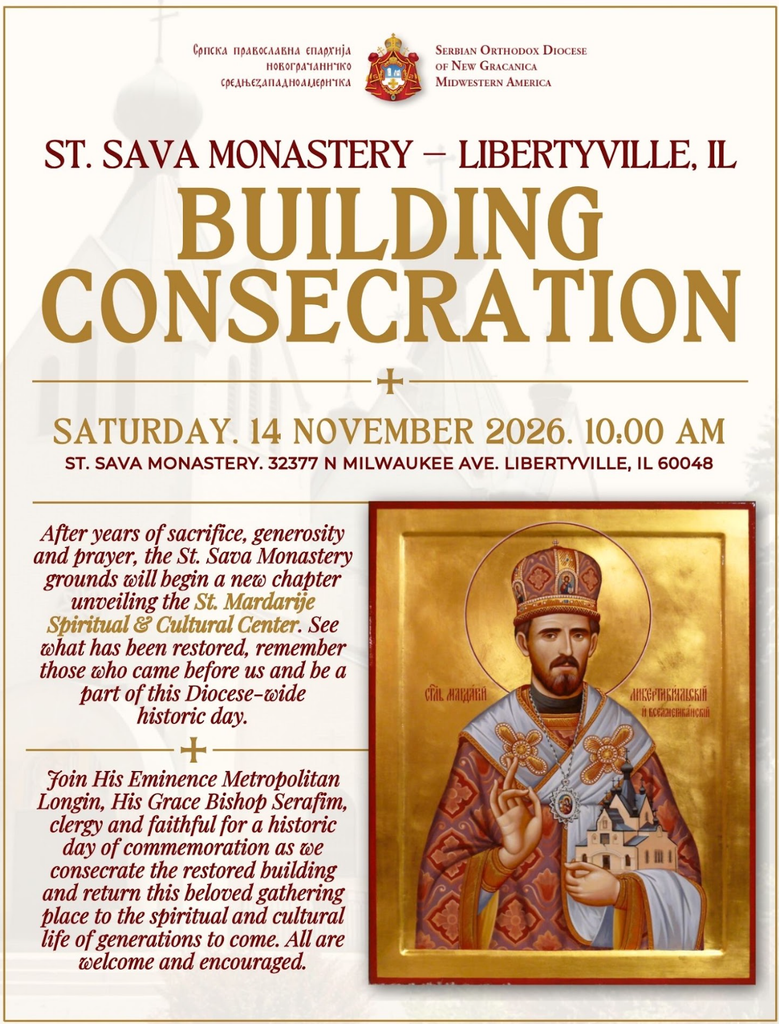
A New Chapter: St. Mardarije Spiritual & Cultural Center
The legacy of Saint Mardarije continues to grow in Libertyville with the consecration of the St. Mardarije Spiritual & Cultural Center, scheduled for November 14, 2026.
The celebration will begin with a Hierarchical Divine Liturgy at 10:00 a.m., followed by the consecration of the new building and a flag-raising ceremony.
The new center represents another milestone in the continuing development of the St. Sava Monastery and its mission to serve the Serbian Orthodox community. Named in honor of Saint Mardarije, whose earthly remains rest at the monastery and whose vision helped establish the Serbian Orthodox spiritual home in America, the center carries his legacy into a new generation.
More than a century after the first proposal to establish a Serbian spiritual center in America, Libertyville continues to be a place where faith, heritage and community come together.