The mayor of Montenegro’s Danilovgrad municipality has raised concerns over plans to build a large solar power plant near Ostrog Monastery, warning that the project could affect one of the country’s most important cultural and religious landmarks.
Aleksandar Grgurović said a construction permit had been issued for a 67-megawatt solar facility that, together with its supporting infrastructure, would cover more than 1 million square meters, or approximately 247 acres.
According to Grgurović, the size and location of the project, as well as its potential impact on the surrounding landscape, require closer examination by government institutions, experts and the public.
He emphasized that Danilovgrad does not oppose renewable energy investment or Montenegro’s transition to cleaner energy. However, he argued that energy development should not come at the expense of cultural heritage.
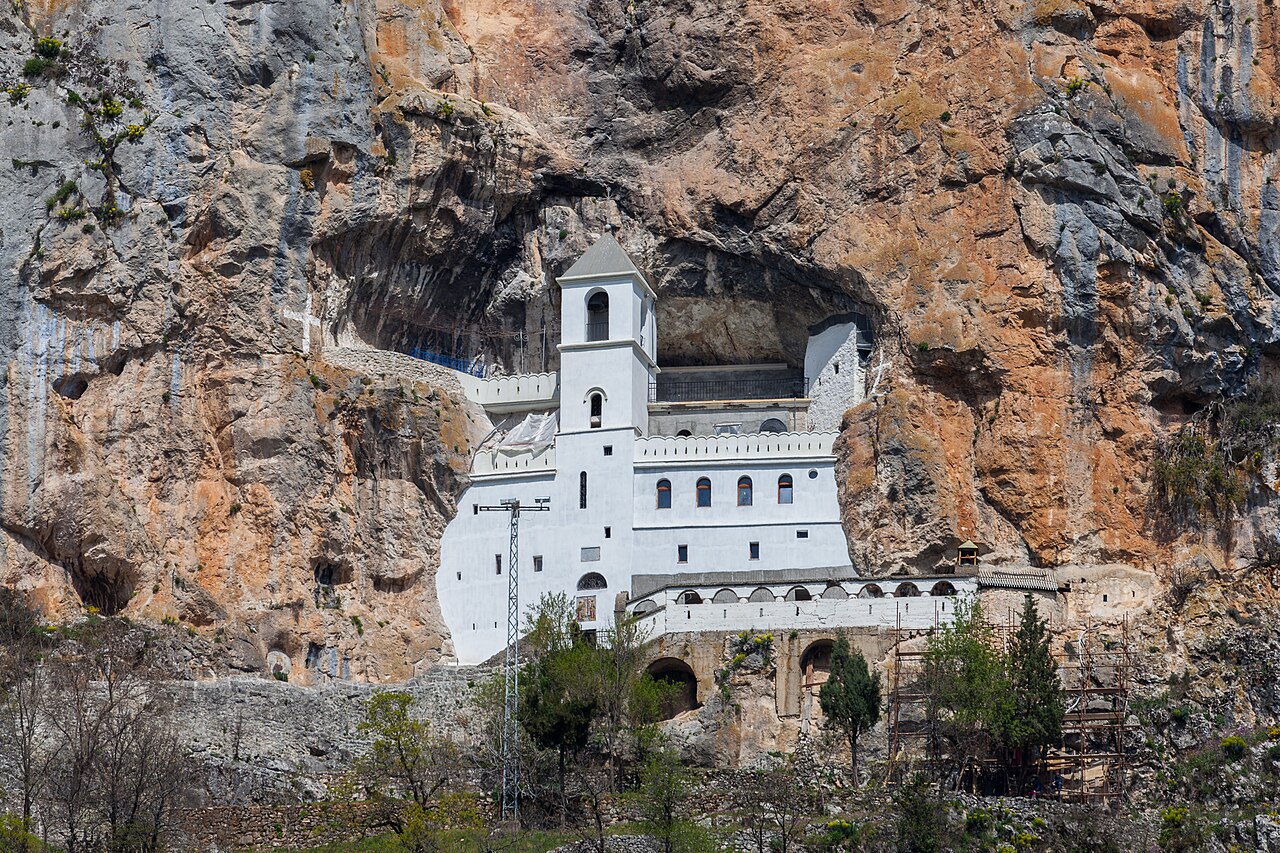
Ostrog Monastery is considered one of Montenegro’s most important religious, historical and cultural sites. Built into a steep rock face, it attracts pilgrims and visitors from across the Balkans and beyond.
Although the proposed solar plant would not be located within the municipality of Danilovgrad, Grgurović said its impact cannot be assessed solely according to administrative boundaries. The cultural landscape, natural surroundings and views around the monastery form a single area whose importance extends beyond municipal borders, he said.
Publicly available project documents reportedly considered the plant’s visual impact, including the possibility that the complex could be visible from the road leading to Ostrog Monastery. Grgurović said this raises questions about how authorities evaluated the project’s effect on the wider cultural landscape.
He called on Montenegro’s Ministry of Spatial Planning, Urbanism and State Property, along with other institutions involved in the permitting process, to disclose whether a special assessment was conducted before the construction permit was approved.
Grgurović also requested information on whether the country’s cultural heritage protection authority participated in the process and issued an official opinion or approval.
Among the other issues he raised were whether alternative designs or locations had been considered, and whether three-dimensional visualizations would be released so the public could see how the facility might appear from major routes leading to the monastery.
Grgurović said he was not drawing conclusions in advance or challenging the investor’s right to pursue a lawful project. However, he insisted that the public should have access to complete information when a development could affect a place of national importance.
He called for the full project documentation to be made public, saying that if the decisions were lawful and cultural heritage protections were properly applied, there should be no reason to withhold the records.
“Cultural heritage does not belong to any one municipality or generation,” Grgurović said, adding that it represents a lasting responsibility to Montenegro’s history and future generations.