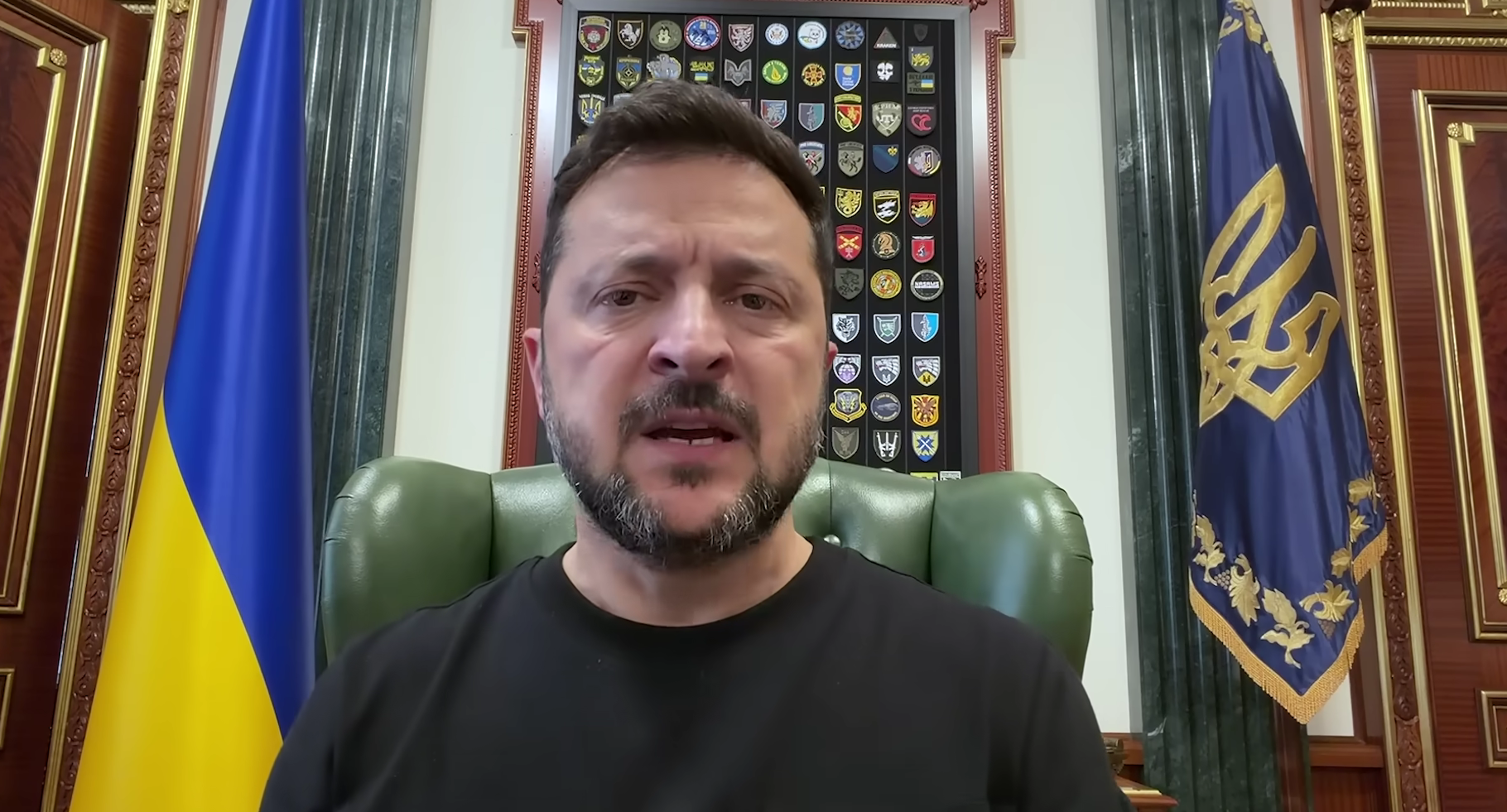
Ukrainian President Volodymyr Zelensky has revealed that Ukraine possesses only a fraction of the Patriot interceptor missiles it urgently needs to counter escalating Russian ballistic missile attacks. In an emotional interview, Zelensky said he spends his days making what he described as “millions” of phone calls and pursuing complicated deals to secure additional air defense systems. “This year we have two and a half times less interceptors than we had in 2025,” Zelensky said, while Russia is launching roughly twice as many ballistic missiles each month as before.
The shortage has become particularly serious as Russian attacks intensify. July was the deadliest month for Ukrainian civilians since April 2022, according to the United Nations, while Russian forces have increasingly targeted Kyiv and other cities with combinations of ballistic missiles, cruise missiles, drones and decoys. Zelensky said that if the United States sold Ukraine just 5% of its current Patriot stockpile, the country could make it through the winter and save lives. He claimed that 10% would be enough to destroy all Russian ballistic missiles targeting Ukraine, adding that his country currently has only “1%” of what it needs.
Patriot Shortage Puts Ukraine Under Growing Pressure
The global Patriot shortage has been intensified by simultaneous demands from the United States, Gulf states and Ukraine. The U.S.-Iran war has required hundreds of interceptors to counter Iranian missile and drone attacks, while Gulf states have reportedly fired more than 1,100 interceptors in recent months. Lockheed Martin produces approximately 600 Patriot interceptors annually, or around 60 to 65 per month, a production rate that cannot easily satisfy the combined demand from multiple conflicts.
Russia has also adapted its tactics to exploit Ukraine’s limited supply of high value interceptors. Its forces increasingly combine ballistic missiles, cruise missiles, drones and decoys in coordinated attack waves, forcing Ukrainian air defense crews to decide which incoming weapons justify the use of scarce Patriot missiles. Zelensky said Ukrainian cities can appear almost defenseless during some of the largest attacks, describing the population as resilient but increasingly exhausted after months of repeated strikes.
Zelensky also offered an unusual glimpse into the personal diplomacy involved in maintaining Ukraine’s air defenses. He said his daily focus is moving from “1% to 5%” of the Patriot capacity he believes Ukraine needs, while pursuing exchanges and other arrangements that he cannot publicly discuss. He emphasized that the undisclosed efforts are not necessarily outside the law but said revealing details could jeopardize them.
The Ukrainian president also confirmed a recent conversation with U.S. Vice President JD Vance but declined to say whether Vance had asked Kyiv to halt attacks on a Russian oil port in the Black Sea. Such attacks have reportedly raised concerns about the interests of U.S. companies and the potential impact on global energy prices. Zelensky has nevertheless expressed cautious optimism about the possibility of Ukraine eventually producing Patriot interceptors under license, following discussions about the proposal at the NATO summit in Ankara.
Even if a licensing agreement is reached, Ukrainian experts estimate that domestic Patriot production could take 18 to 24 months to begin. Some of the system’s most sensitive components, including its active radar seeker, may also remain difficult to produce domestically. Ukraine is therefore pursuing complementary technologies, including the lower cost FP-7.x interceptor developed through Fire Point’s FREYJA project, which is intended to handle less demanding threats while preserving Patriot missiles for high speed ballistic weapons such as the Iskander-M and Kinzhal.
For Zelensky, however, the immediate challenge is surviving the coming winter with enough air defenses to protect major population centers. His appeal for 5% of the U.S. Patriot stockpile highlights the widening gap between Ukraine’s air defense requirements and the available supply. With Russian missile attacks intensifying and global demand for interceptors continuing to rise, the Patriot shortage has become one of the most critical constraints on Ukraine’s ability to protect its cities.