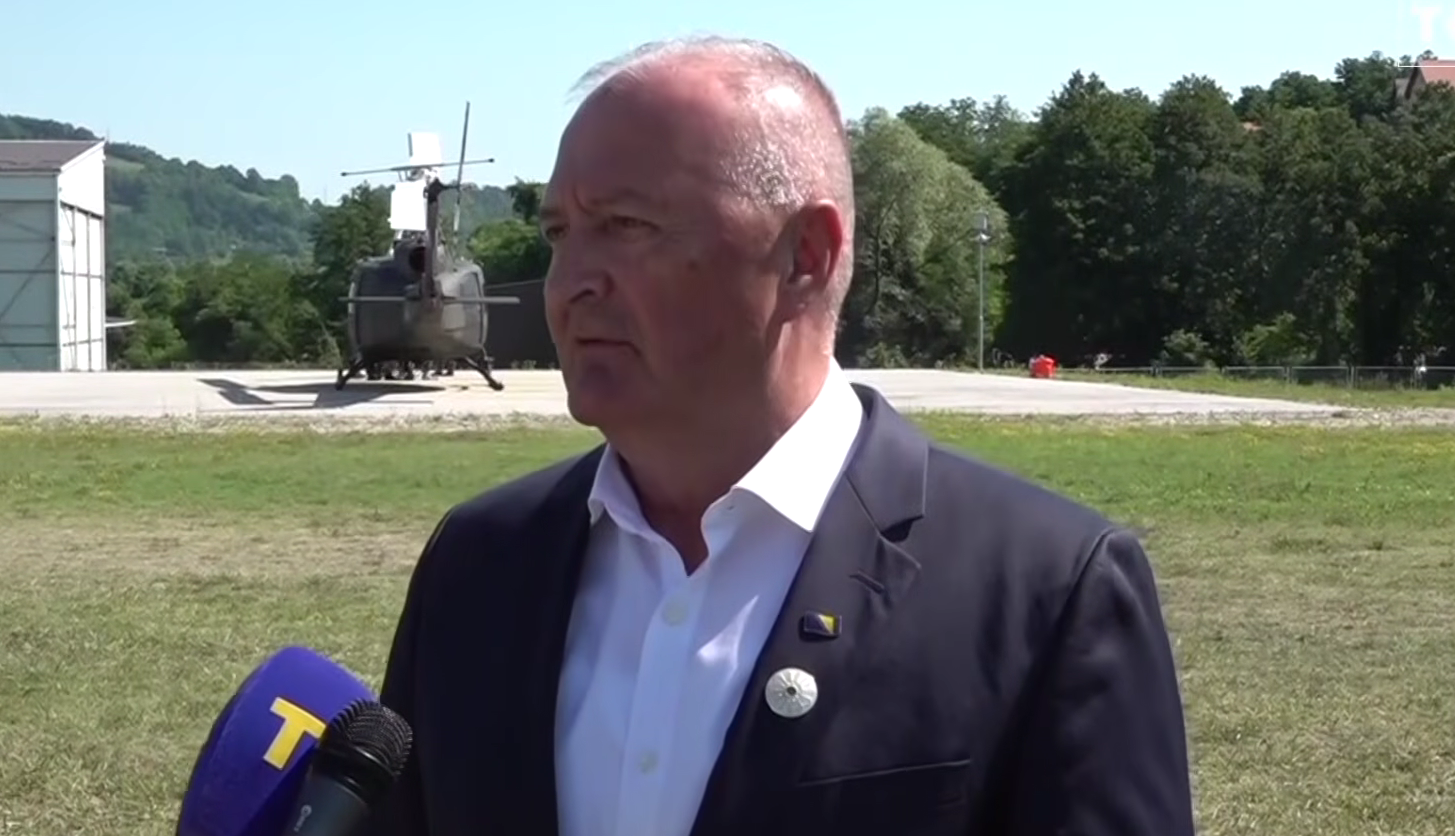
Bosnia’s Defense Minister Zukan Helez has reported 37 members of the Armed Forces of Bosnia and Herzegovina over alleged activities glorifying former Bosnian Serb commander Ratko Mladić, who was convicted of genocide, crimes against humanity and war crimes. Helez said 10 of the cases have already been classified as potentially involving criminal offenses and were forwarded, together with collected evidence, to the Prosecutor’s Office of Bosnia and Herzegovina. The remaining cases will first be examined by the Defense Ministry’s General Inspectorate.
The move comes amid renewed controversy surrounding Mladić following his death in August while serving a life sentence. His funeral in Belgrade drew thousands of people and included military honors and the presence of Serbian officials, prompting criticism from Bosnia, the European Union and other international actors. The controversy has once again placed the issue of war crime denial and the glorification of convicted figures at the center of political debate across Bosnia and the wider region.
Bosnia’s Defense Ministry Investigates 37 Cases
According to Helez, all 37 individuals were reported because of activities that he said amounted to glorification of Mladić. However, the cases are not all at the same stage. Ten have been sent directly to prosecutors after authorities determined that there were indications of a possible criminal offense, while the General Inspectorate will investigate the remaining reports. If those reviews establish evidence of criminal responsibility, additional cases could also be transferred to the Prosecutor’s Office.
The legal background is significant. Bosnia and Herzegovina amended its Criminal Code in 2021 to criminalize, under specified circumstances, the denial or gross trivialization of genocide, crimes against humanity and war crimes established by final court judgments. The amendments also introduced penalties for glorifying individuals convicted of such crimes. The Office of the High Representative said at the time that the changes were intended to address the impact of war crime denial and glorification on reconciliation and social stability.
The issue is particularly important within the Armed Forces of Bosnia and Herzegovina because the military operates under its own professional and ethical standards. The Defense Ministry’s General Inspectorate is responsible for examining issues involving legality, professional conduct and institutional accountability, while the Armed Forces also have codes governing the behavior of military personnel, including rules concerning conduct on social media and online platforms.
Two of the people included in the reports are reportedly new members of the Armed Forces who are currently undergoing training. Helez said that if responsibility is established in their cases, their service agreements could be terminated. His broader message was that military service must be based on respect for Bosnia and Herzegovina’s laws, the country’s institutions and final judicial decisions, rather than support for individuals convicted of serious international crimes.
Mladić’s conviction is not a matter of an unresolved historical allegation. The United Nations’ International Residual Mechanism for Criminal Tribunals states that the ICTY convicted him in 2017 of genocide, crimes against humanity and violations of the laws or customs of war and sentenced him to life imprisonment. In 2021, the Appeals Chamber upheld the convictions and life sentence.
Mladić Glorification Reopens Debate Over War Legacy
The latest military investigations also come at a time when Bosnia is experiencing renewed tensions over how the 1990s war is remembered. The Office of the High Representative has repeatedly warned that denial of genocide and glorification of convicted war criminals can deepen divisions and damage reconciliation. Its recent statements following Mladić’s death again emphasized that Bosnia’s future should be based on respect for victims and the findings of domestic and international courts.
At the same time, the outcome of the 37 cases will depend on evidence and the relevant legal procedures rather than political statements alone. The fact that 10 cases have been referred to prosecutors means that those files will now be subject to further examination by the competent judicial authorities, while the remaining reports have not yet reached the same stage. This distinction will be important as authorities determine whether individual actions meet the legal threshold for criminal responsibility.
The controversy therefore extends beyond the question of individual military personnel. It touches on how Bosnia and Herzegovina’s institutions deal with the legacy of the war, how professional standards are enforced within state institutions, and how the country balances freedom of expression with laws addressing the glorification of convicted war criminals. With Mladić’s death and funeral having reopened regional disputes over the past, the actions of Bosnia’s Defense Ministry show that the issue is continuing to have consequences inside the country’s institutions.
Ultimately, Helez’s decision represents a firm institutional response to allegations that members of the state military celebrated a figure whose convictions were confirmed by an international court. Whether the reports lead to prosecutions or disciplinary measures will depend on the investigations and prosecutors’ decisions. The broader challenge, however, remains unchanged: Bosnia and Herzegovina continues to confront competing narratives about its wartime past, while its institutions face pressure to uphold the rule of law, respect court judgments and prevent further glorification of those convicted of the conflict’s most serious crimes.